Skip to content
Watt Warden

Sizing

How Much Power Does a Boiler Use?

Hydronic heat is the cheapest heating system in an American house to back up, and the easiest one to size wrongly - because the nameplate maximum and the thing that actually runs are two very different numbers.

By Sawyer V.Updated Published How we work this out
A pressure gauge and steel pipework on a heating system, photographed close up.

Watt & Warden earns a commission on qualifying purchases made through links on this page, at no extra cost to you. It never changes a ranking, and our picks include products we tell you to skip. Full disclosure.

The verdict, in one paragraph

Two published figures bracket the whole question. Taco publishes its 006e ECM circulator at a maximum operating power of 44W, 0.54A at 120V — and that circulator is the component that must keep running for heat to reach the radiators. Navien publishes its NCB-190/060H condensing combi at 120V AC, 60Hz, maximum power consumption up to 15 amperes, which is a nameplate maximum of roughly 1,800 watts. Both numbers are honest and they describe different things: the first is what the system draws to move heat, the second is what the circuit must be sized for at full modulation. Size your battery against the first and your wiring against the second, and hydronic heat becomes the cheapest heating system in an American house to back up.

The published figures

ComponentPublished electrical figureWhat kind of figure it is
Taco 006e RECIRC, ECM circulator44 W max operating power; 0.54 A; 120 V, 50/60 HzA real maximum draw for one pump
Navien NCB-190/060H condensing combi120 V AC, 60 Hz; maximum power consumption up to 15 amperesA nameplate maximum for the whole appliance
Taco 00 Series cartridge circulators (007, 0010, 0013)No watts, amps or voltage published on the product pageNot published — see below
Taco 560 Series zone valves24 VAC powered, with isolated end switchVoltage only; no VA figure published

Manufacturer figures, cited under Sources. The 15-ampere figure is a maximum, not a steady draw — 15 A at 120 V is about 1,800 W, which is our arithmetic and is a circuit-sizing number rather than a consumption number.

The number nobody publishes

The most common circulator in American basements is a conventional permanent-split-capacitor cartridge pump — a Taco 007 or similar — and Taco does not publish a wattage, an amp rating or a voltage for the 00 Series on its product page at all. The only electrical descriptor is a horsepower range of 1/40 to 1/6 and the phrase “Direct Drive-Low Power Consumption”, with no figure attached.

What Taco does publish is a comparison. Its ECM product copy states that the high-efficiency motor “reduces power consumption by up to 85% compared to equivalent AC permanent split capacitor circulators”. So the manufacturer's own claim places a conventional circulator at several times the 44W of its ECM equivalent. We will not turn “up to 85%” into a specific wattage, because that is arithmetic the manufacturer declined to do.

The practical instruction is the one this site gives for every appliance where the catalog is quiet: read your own nameplate. A circulator has a label on the motor housing, and it will tell you more than any brand page.

Why a nameplate maximum is not a consumption figure

“Up to 15 amperes” on a combi boiler is the same species of number as the MCA on a heat pump: it exists so an electrician sizes the branch circuit correctly, and it describes the worst case with every internal component at maximum. A condensing combi contains its own circulating pump, a variable-speed combustion fan and an electronic control board, and the figure covers all of them at full output simultaneously.

That matters because sizing a battery against a nameplate maximum buys an enormous amount of capacity you will not use. It is the same error the heat pump page warns about — how much power a heat pump uses works through why MCA is not consumption. The difference is that for a heat pump the real figure is still thousands of watts, and for hydronic heat it is tens.

What actually has to keep running

  1. The circulator. No pump, no heat, regardless of whether the burner fires. This is the 44W component on an ECM system.
  2. The burner and its controls. On gas, an igniter and a board. On oil, a burner motor and pump, which is a meaningfully larger load than a gas igniter.
  3. Zone valves or zone pumps. Taco publishes its 560 Series as 24 VAC powered, which comes from a transformer on the boiler rather than from a separate circuit.
  4. The thermostat. Usually powered from the same 24 V transformer, occasionally by batteries.

Everything in that list is on the boiler's own circuit, which is why a transfer switch rather than an extension cord is the right answer for almost every house.

Boiler versus furnace versus heat pump

Heating systemWhat the electricity doesRealistic backup difficulty
Boiler, hydronicMoves water with a pump; fires a burnerEasiest in the house
Gas or oil furnaceMoves air with a blower against duct resistanceHarder — a blower is a far bigger motor than a circulator
Heat pumpRuns a compressor, and strip heat behind itHardest — kilowatt-scale, and no portable battery solves it

A qualitative comparison, not a measurement. The published figures behind each row are on the furnace page and the heat pump page.

The one thing hydronic heat does better than anything else

Water holds heat. A hydronic system that has been running carries a tank, a loop and a set of radiators or a slab full of warm water, and that mass keeps releasing heat for a while after the burner stops. A forced-air system has no such reservoir — when the blower stops, the heat delivery stops instantly.

It is also the reason the pipe-freezing deadline is different for a hydronic house, and not in a comforting way: the heating loop itself is full of water, and a long outage in deep cold puts that loop at risk along with the domestic plumbing — keeping pipes from freezing without power covers the deadline.

Sizing a battery for a boiler

  1. Read the circulator's own label rather than the boiler's. The pump is what has to run.
  2. Add the burner controls, generously. An oil burner motor is the component to check carefully; a gas igniter is not.
  3. Ignore the appliance nameplate maximum for capacity sizing, and use it only to confirm the inverter can supply the worst case. Anything over 1,800W continuous clears a 15-ampere nameplate.
  4. Solve the connection before the capacity. A hardwired boiler needs a transfer switch or an inlet, and that is the purchase most households have not made.
  5. Then add the rest of the house. With heat at tens of watts, the refrigerator and the lighting are the loads that actually determine the battery you buy — how many watts to run a house puts them together.

The short version

A modern ECM circulator is published at 44 watts, which makes hydronic heat the cheapest heating system in the house to keep alive. A combi boiler's published nameplate maximum of up to 15 amperes is a circuit-sizing figure, not a consumption figure, and sizing a battery against it wastes money. The real constraint on a boiler is not watts at all — it is that the whole system is hardwired, and a battery with nothing to plug into is not backup power.

Quick picks

#ProductBest forPrice
1
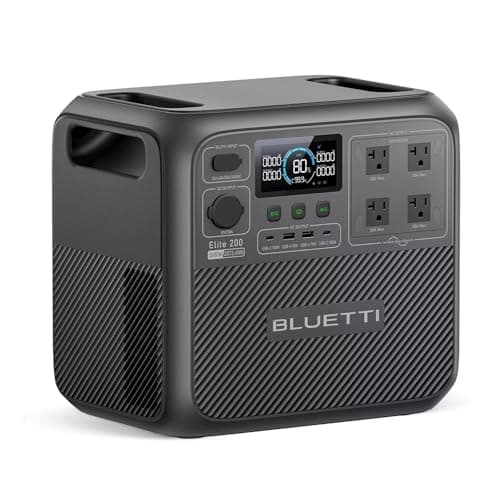
BLUETTI Elite 200 V2

The one that covers a winter night

BLUETTI Elite 200 V2

2,073.6Wh behind 2,600W - days of a published 44W circulator, and headroom for the burner controls alongside it.

A house heated entirely by a boiler
$1,399.00 · Check price on Amazon

#ad how this is funded · price as of October 20, 2026

2
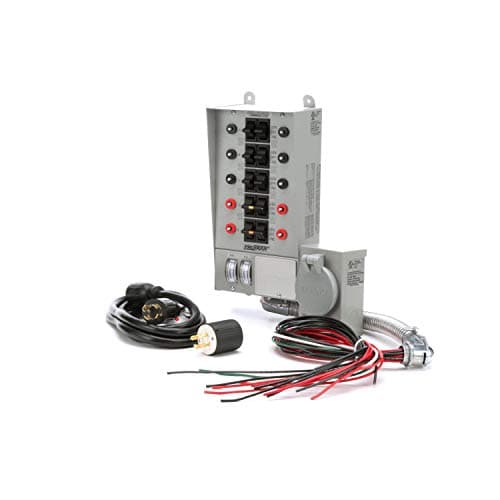
Reliance Controls 31410CRK Pro/Tran

The part most boiler owners are missing

Reliance Controls 31410CRK Pro/Tran

A 10-circuit, 30A manual transfer switch with break-before-make switching and backfeed mechanically prevented.

Getting power to a hardwired heating circuit at all
$470.22 · Check price on Amazon

#ad how this is funded · price as of October 20, 2026

3
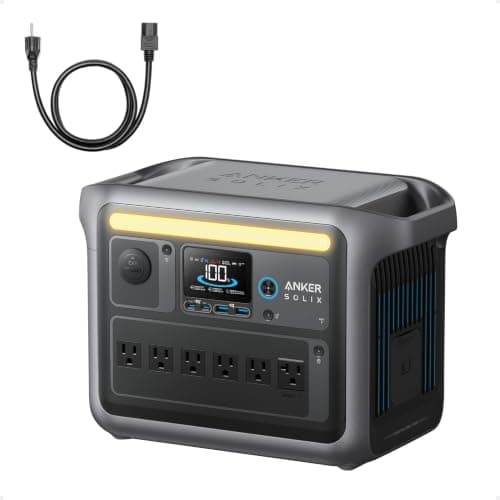
Anker SOLIX C1000

Enough for the heat alone

Anker SOLIX C1000

1,056Wh and 1,800W continuous - comfortably over a 44W circulator, with a published 58-minute full recharge.

Short outages, or a boiler that supplements another heat source
$499.99 · Check price on Amazon

#ad how this is funded · price as of October 20, 2026 · $599.99 17% off

Prices come from the retailer at page-build time and change constantly. Where no live price is available the button reads “Check price” rather than showing a number we cannot stand behind.

The picks in full

01 — The one that covers a winter night

BLUETTI Elite 200 V2

2,073.6Wh behind 2,600W - days of a published 44W circulator, and headroom for the burner controls alongside it.

A conventional boiler with an ECM circulator is close to the friendliest heating load in this entire catalog. Taco publishes a maximum operating power of 44W and a maximum amp rating of 0.54A for its 006e, and two kilowatt-hours against that is measured in days rather than hours.

The capacity is there for everything else. A boiler alone does not make a house livable: lighting, a refrigerator and a router take up more of this battery than the heat does.

The honest catch: this is a portable battery, and a boiler is hardwired. Without a transfer switch or an inlet there is nothing to plug it into — connecting a source to your house is the missing half.

Skip it ifyour system is a modern combi with a large internal pump and fan. Check the nameplate before you assume 44 watts.

BLUETTI Elite 200 V2
$1,399.00 · Check price on Amazon

#ad how this is funded · price as of October 20, 2026

Published specifications for the BLUETTI Elite 200 V2
SpecificationPublished figure
Usable capacity2,073.6 Wh
Cell chemistryAutomotive-grade LiFePO4 (LFP)
AC output2,600 W continuous / 3,900 W power lifting
Cycle life6,000+ cycles
Fast charge0–80% in 50 min via dual AC/DC input

Source: BLUETTI — Elite 200 V2 product specifications. These are the manufacturer's published figures, not ours — we have not tested this unit.

02 — The part most boiler owners are missing

Reliance Controls 31410CRK Pro/Tran

A 10-circuit, 30A manual transfer switch with break-before-make switching and backfeed mechanically prevented.

The electrical draw of hydronic heat is small and the connection problem is not. The boiler, the circulator and the thermostat are almost always hardwired, which means no battery and no generator can reach them without a switch between the panel and the source.

Ten circuits is generous for this job. The heating circuit, the refrigerator, a lighting circuit and the well pump covers a winter outage with room left over, and the two watt meters make it obvious when you have asked for too much.

The honest catch: this is electrician work and in most jurisdictions it is permitted work. Budget for that, not just for the hardware — transfer switch installation cost has the figures.

Skip it ifyour boiler is on a plug-in cord. A few modern units are, and then an extension lead is the whole answer.

Reliance Controls 31410CRK Pro/Tran
$470.22 · Check price on Amazon

#ad how this is funded · price as of October 20, 2026

Published specifications for the Reliance Controls 31410CRK Pro/Tran
SpecificationPublished figure
Circuits10 — six 15 A and four 20 A single-pole breakers
Rating30 A, up to 7,500 W
MeteringTwo watt meters for balancing the load
SwitchingBreak-before-make double-throw, Line / Off / Gen
BackfeedMechanically prevented — the grid cannot be energized
InstallationLicensed electrician; a permit is usually required

Source: Reliance Controls — Pro/Tran 31410CRK product page. These are the manufacturer's published figures, not ours — we have not tested this unit.

03 — Enough for the heat alone

Anker SOLIX C1000

1,056Wh and 1,800W continuous - comfortably over a 44W circulator, with a published 58-minute full recharge.

Most outages are short. A kilowatt-hour against a 44W circulator is not the constraint in any realistic version of this problem, and 1,800W of continuous output clears a combi boiler's internal pump and fan with margin.

The 58-minute refill is what makes it work across a flickering event, where the grid comes and goes over two days.

The honest catch: the same connection problem applies. A battery sitting in a hallway does nothing for a hardwired boiler in the basement.

Skip it ifyou want to run the heating and the refrigerator through a long night. That is the larger battery's job.

Anker SOLIX C1000
$499.99 · Check price on Amazon

#ad how this is funded · price as of October 20, 2026 · $599.99 17% off

Published specifications for the Anker SOLIX C1000
SpecificationPublished figure
Usable capacity1,056 Wh
Cell chemistryLiFePO4 (LFP)
AC output1,800 W continuous / 2,400 W SurgePad
Cycle life3,000 cycles
Wall recharge80% in 43 min, full in 58 min
Max solar input600 W (full solar recharge ~1.8 h)
Ports11 total, including 6 AC on panel-equipped bundles

Source: Anker — SOLIX C1000 product specifications. These are the manufacturer's published figures, not ours — we have not tested this unit.

How these were chosen

We did not test these. Nobody at Watt & Warden has plugged one in. What we did instead: read the manufacturer's published specifications, compile them into a table where the figures line up, and compute the numbers manufacturers leave out — runtime against a real appliance load, and what an hour of running actually costs.

Anything that could not be sourced was left out rather than estimated, and every pick names the buyer who should skip it. The full method is here, including where it is weaker than a publisher with a test bench.

Questions people actually ask

How many watts does a boiler use?

It depends which part you mean. Taco publishes its 006e ECM circulator at a maximum operating power of 44 watts, 0.54 amps at 120 volts, and that pump is what must keep running for heat to reach the radiators. Navien publishes its NCB-190/060H combi at 120V AC with a maximum power consumption of up to 15 amperes, which is a nameplate maximum of roughly 1,800 watts for the whole appliance at full output.

How many watts does a circulator pump use?

Taco publishes 44 watts maximum operating power and a 0.54 amp rating for its 006e ECM circulator. It does not publish a wattage for its conventional 00 Series cartridge circulators at all, though it states that the ECM motor reduces power consumption by up to 85% compared with an equivalent AC permanent split capacitor circulator. Read the label on your own pump housing.

Can a power station run a boiler?

Comfortably, as far as the electricity is concerned. A 2,073.6Wh battery against a 44W circulator is measured in days. The real obstacle is the connection: boilers, circulators and thermostats are almost always hardwired, so a transfer switch or an inlet box is required before any portable battery can reach them.

Why does my combi boiler say 15 amperes?

Because that is a nameplate maximum for sizing the branch circuit, not a consumption figure. A condensing combi contains its own pump, a variable-speed combustion fan and a control board, and the published maximum covers all of them running at full output at once. It is the same kind of number as the MCA on a heat pump.

Is a boiler easier to back up than a furnace?

Yes, usually by a wide margin. A boiler moves heat by pumping water, and a circulator is a very small motor. A furnace moves heat by pushing air through ductwork, and that blower is a far larger load. Heat pumps are harder again, because the compressor and any auxiliary strip heat are kilowatt-scale.

Does an oil boiler use more electricity than a gas boiler?

The burner side does. An oil burner has a motor and a fuel pump where a gas boiler has an igniter and a valve, and that motor is a real load rather than a trivial one. The circulator side is identical, so the difference sits entirely in the burner.

Will my radiators stay warm during a short outage?

For a while, yes. The water in the loop and in the radiators is a heat store that keeps releasing after the burner stops, which is something forced-air heating has no equivalent of. It is not a plan for a long outage, and in deep cold the heating loop itself becomes something to protect from freezing.

Sources