Why a rental is a different problem
Four constraints that do not apply to your own house, and together they eliminate most of what this site otherwise recommends.
1. The operator is a stranger. A generator needs someone to fuel it, start it, site it twenty feet away and keep the exhaust pointed out. A guest will not do any of that correctly, and the consequences of them doing it incorrectly are severe.
2. You are not there. Anything requiring intervention fails by default, unless you have a neighbor or a manager who will go.
3. The failure costs money twice. A refund for the stay, and a review that costs future bookings for far longer.
4. Liability is yours. A guest who runs a generator in the garage is your problem in a way a family member is not.
The conclusion follows directly: batteries, not generators, unless you have on-site management.
What guests actually notice
Ranked by how quickly it becomes a message to you, which is not the same as ranked by importance.
| What fails | Time until you hear about it | Cost to back up |
|---|
| Wifi | Minutes | Trivial — about 20 W |
|---|
| Smart lock or keypad entry | Immediately, at check-in | Trivial, and it may have its own battery |
|---|
| Lighting | At dusk | Trivial — put lanterns in a labeled drawer |
|---|
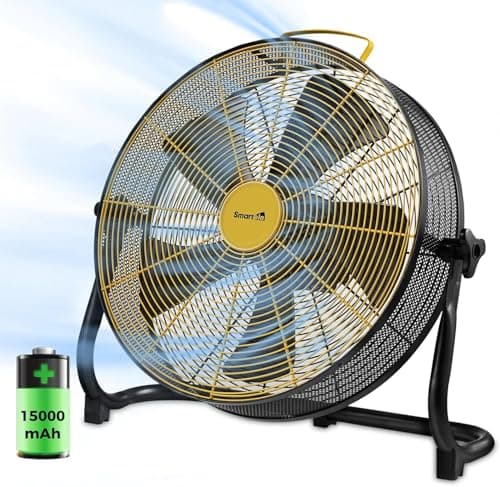
| Air conditioning | Within an hour in summer | High. A fan is the realistic answer |
|---|
| Refrigerator | Next morning | Moderate — a few hundred watt-hours a day |
|---|
| Hot water | Next morning, if electric | High, and usually not worth it |
|---|
| Well pump, if applicable | Within an hour | High — 240V and an installation |
|---|
The top three rows are cheap and solve most of the complaint volume. The bottom rows are expensive and solve less than you would think — a guest who has cold water and no air conditioning for six hours writes a different review from one who cannot get in the door.
The three-tier approach
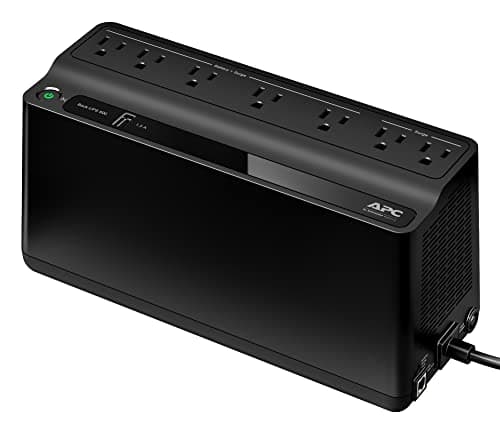
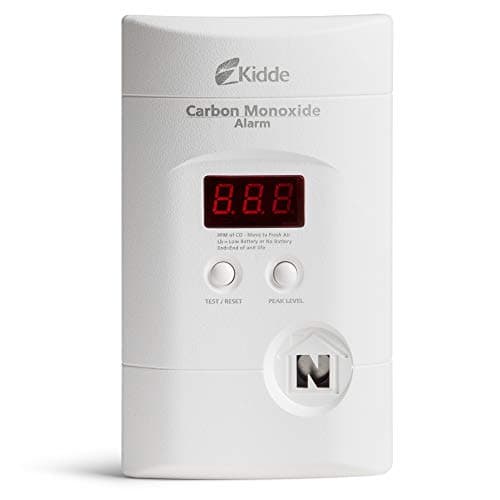
Tier one, for every property: a small UPS on the router and the lock, battery lanterns and headlamps in a labeled drawer, a working CO alarm, and a one-page note in the house manual explaining what to do.
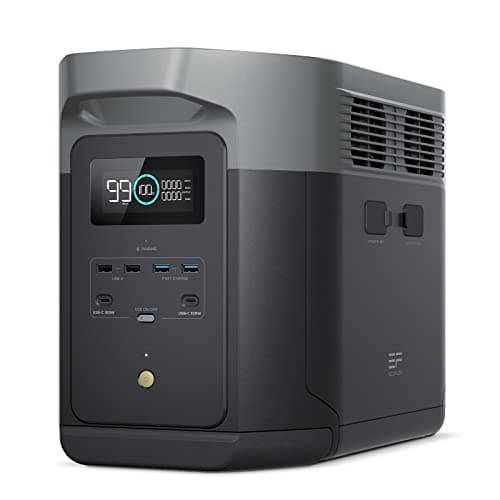
Tier two, where outages are common: a 2,000Wh-class battery on passthrough, feeding the refrigerator and the network so the changeover is invisible. Guests never learn there was an outage.
Tier three, for a remote property or a well: a standby generator with an automatic transfer switch, which is the only arrangement that works with nobody on site — the ATS explainer covers what automatic actually means, and the standby comparison covers the decision.
The house manual page
Cheap, and it prevents the expensive failures. One page, laminated, in an obvious place.
- Where the flashlights and lanterns are. Be specific about the drawer.
- How to open the garage door manually, if there is one — the release cord is not obvious to someone who has never seen one.
- The physical key location for a smart lock.
- An explicit instruction not to use a grill, camp stove or generator indoors or in the garage. State it plainly. This is the sentence that matters most.
- Your number, and the utility outage line.
Protect the property, not just the stay
Two failures cost more than a refund and are worth engineering against even in an empty property.
Freezing pipes. A winter outage in an empty rental can burst plumbing, which is a claim rather than a complaint. Backing up the furnace blower is comparatively cheap — the furnace page covers it — and a low-temperature alarm that texts you costs very little.
A flooded basement. If the property has a sump pump, an outage during heavy rain with nobody there is the classic loss. A battery backup pump runs itself — the sump pump page covers that.
Both of these argue for remote monitoring more than for more power. Temperature and water sensors that alert a phone are inexpensive, and they turn a discovered disaster into an intercepted one — provided the network is on a UPS, which brings this back to tier one.
Say something in the listing
Worth considering as marketing rather than as disclosure. In areas with frequent outages, "backup power for essentials during outages" is a genuine differentiator, and it sets expectations honestly.
Be precise about what it covers. A listing implying whole-house backup, met by a battery running the fridge and the wifi, produces the review you were trying to avoid.
The short version
- Batteries, not generators. Guests will not operate a generator safely.
- Wifi and the lock first. Cheapest fix, loudest complaint.
- A laminated page beats more equipment. Especially the sentence about grills indoors.
- Alarm the pipes and the sump. Those are claims, not complaints.