Start with revenue per hour
This is the calculation that makes a business purchase different from a household one, and almost nobody does it.
Work out roughly what an hour of trading is worth. Then add what an outage costs beyond lost sales: spoiled stock, staff you are paying anyway, appointments that do not get rebooked, and customers who go somewhere else and stay there.
Multiply by the outage hours you actually experience in a year. That number is your budget, and for a lot of small businesses it turns out to be larger than the equipment — which is the opposite of the household case, where backup power is bought for comfort and safety rather than return.
What has to keep running, in order
| Load | Typical draw | Why it ranks there |
|---|
| Payment system and network | ~50-150 W | No payments means no trading, whatever else works |
|---|
| Refrigerated stock | 150-500 W each, cycling | Loss is immediate and unrecoverable |
|---|
| Lighting | 50-300 W on LED | A dark shop is a closed shop |
|---|
| Security and alarms | ~20-60 W | Insurance may require it to be live |
|---|
| Computers and printers | 100-400 W | Depends entirely on the trade |
|---|
| Heating and cooling | Thousands of watts | Comfort, and usually out of reach on a battery |
|---|
These are working estimates from typical equipment power-supply ratings rather than manufacturer measurements, and commercial refrigeration varies enormously. Read the nameplate on your own units — how to read one covers what the numbers mean.
The pattern is clear: the loads that let you keep trading are small, and the loads that make the premises comfortable are large. A modest battery covers the first group entirely.
Payments are the whole question
For most retail and hospitality, this is where the outage actually bites, and it fails in more places than people expect.
- Your till and terminal. Yours to solve, cheaply, with a UPS.
- Your internet. Also yours, also cheap — the router and modem draw around 20W.
- Your provider's street equipment. Not yours. Runs on backup batteries with finite life.
- Cell towers, if you fail over to mobile data. Same problem, and they go down when their fuel runs out.
Which means the plan needs a manual fallback: an offline card terminal mode if your provider offers one, a written record procedure, and enough cash float to trade. Powering your own equipment perfectly does not help if the network is down two streets away.
The lease is a constraint most guides ignore
In a leased commercial unit — a strip mall, a high street shop, a shared building — a generator is frequently not an option at all.
- Fuel storage on the premises is usually prohibited.
- Exhaust near a shared entrance or a neighboring unit's intake is unacceptable and often unlawful.
- Anything hardwired is an alteration requiring landlord consent, and a transfer switch is hardwired.
- Common-area power is not yours to back up regardless.
A battery sidesteps all four. It plugs in, stores nothing flammable, vents nothing, and leaves when you do. For a leased unit that is not a preference, it is usually the only compliant answer.
If you own the building, a permanently installed unit becomes viable — and the load calculation, permits and gas sizing work the same way as a residential installation, at commercial scale.
Food businesses have a deadline, not a preference
If you hold refrigerated stock, the clock starts immediately and it is set by regulation rather than by judgment.
USDA guidance for domestic refrigeration is four hours for a fridge and about 48 hours for a full freezer, with a 40°F threshold above which food should be discarded. Commercial food safety rules in your jurisdiction will be stricter and are what you will be held to.
Two consequences:
- Log temperatures. An outage that you can document as having stayed below threshold is stock you can still sell. One you cannot document is stock you throw away.
- Refrigeration is the load worth powering first after payments, because the loss is immediate and the equipment pays for itself in one event.
The freezer page covers the holding times and the temperature rule in detail.
A staged plan that fits most small businesses
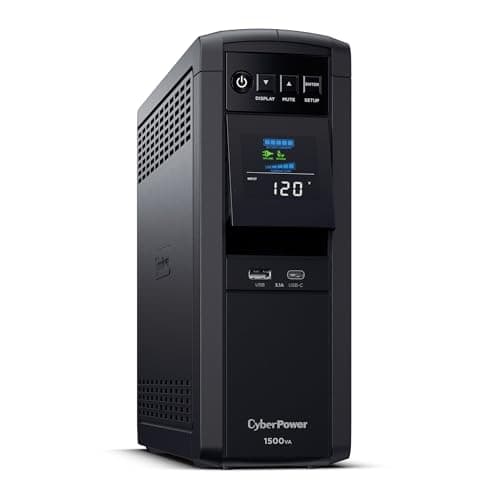
- A UPS on the till, terminal and router. Under a hundred dollars of protection against the most expensive failure. Nothing else on this list matters if payments stop.
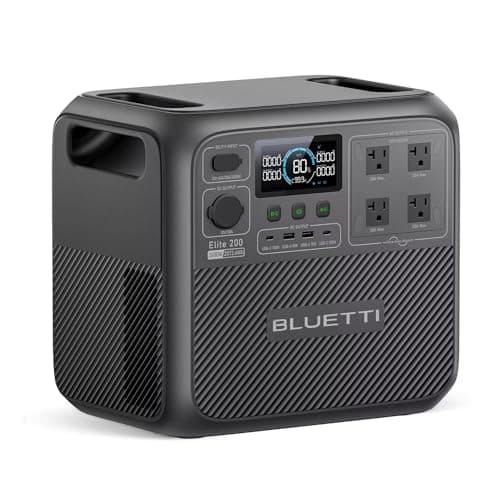
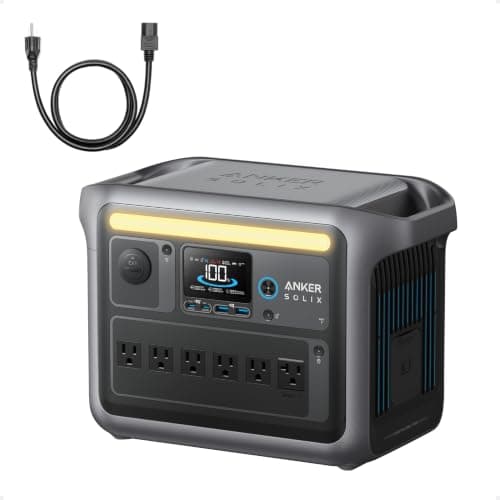
- A battery sized to refrigeration plus lighting. One to two kilowatt-hours covers most independent retail for a working day.
- A written procedure. Who does what, in what order, including the decision to close. Staff will not improvise this well at the time.
- A manual payment fallback and a cash float.
- A generator only if you own the premises and outages run past a day.
Most of the value is in the first three, and they cost very little. The 2kWh tier is where step two usually lands, and UPS versus power station explains why steps one and two are different products rather than competing ones.