Skip to content
Watt Warden

Accessories

The Best Carbon Monoxide Detectors (2026)

Every other page on this site is about convenience. This one is not. Carbon monoxide has no color and no smell, and portable generators kill people with it every year.

By Sawyer V.Updated Published How we work this out
An alarm mounted on a white ceiling.

Watt & Warden earns a commission on qualifying purchases made through links on this page, at no extra cost to you. It never changes a ranking, and our picks include products we tell you to skip. Full disclosure.

Quick picks

#ProductBest forPrice
1
No photo

Best overall

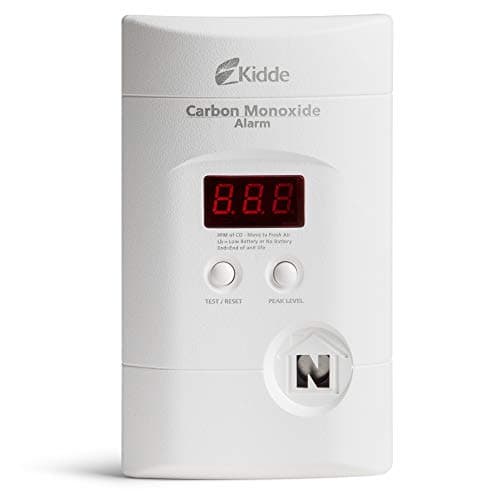
Kidde Nighthawk KN-COPP-3 CO alarm

Plug-in with 9V battery backup, an electrochemical sensor and a digital readout refreshed every 15 seconds.

The main living level
2
No photo

Best second and third unit

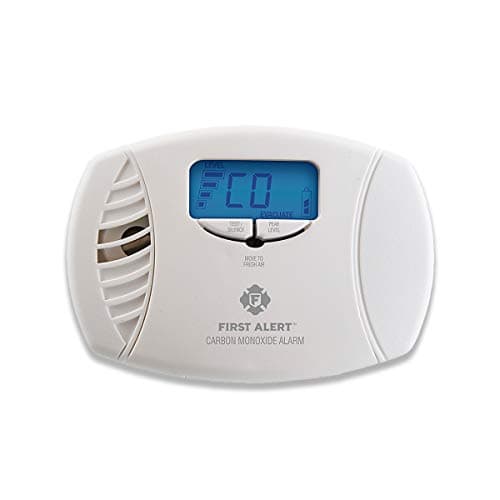
First Alert CO615 CO alarm

Plug-in with AA battery backup and a backlit digital ppm display, 85 dB at 10 feet.

Bedrooms and the basement

Prices come from the retailer at page-build time and change constantly. Where no live price is available the button reads “Check price” rather than showing a number we cannot stand behind.

Why this page exists

Portable generators produce carbon monoxide in quantities that kill, and the U.S. Consumer Product Safety Commission publishes fatality statistics on it every year because people keep misjudging the risk.

The three recurring mistakes are the same every season: running the machine in a garage with the door open, running it under a deck or a window, and assuming that because it is technically outdoors it is far enough away. It generally is not.

CO has no color, no smell and no taste. Early symptoms — headache, dizziness, nausea — read as tiredness, and people go to bed. An alarm is the only thing between you and that.

Placement

The guidance is one alarm on every level of the home, plus outside each sleeping area, tested monthly. Practically, for a two-story house with a basement that means three units.

  • Outside every bedroom. The alarm has to wake a sleeping person through a closed door.
  • On every level, including the basement. Attached garages and basements are where exhaust accumulates first.
  • Not right beside fuel-burning appliances. Normal brief emissions from a furnace or a water heater cause nuisance alarms.
  • Not in humid or very cold spaces. Bathrooms and unheated garages are outside most units' rated conditions.

Height is less critical than people assume — CO mixes fairly evenly with air rather than rising or sinking strongly — so follow the manufacturer's instruction for your specific unit rather than a general rule.

Alarms expire, and almost nobody checks

Electrochemical sensors degrade. Every CO alarm carries a manufacture or replacement date printed on the back or side of the housing, and once past it the unit may power up, chirp on test, and still fail to detect carbon monoxide.

Two habits, both free:

  • Read the date on the housing now. Not the battery date — the unit's own end-of-life date.
  • Test every alarm twice a year, at the same time you exercise the generator. The test button checks the horn and the circuit; it does not verify the sensor, which is why the printed date is the real answer.

What the numbers on the display mean

ReadingWhat it indicates
0 ppmNormal indoor air
Any sustained reading above 0Something is producing CO indoors — investigate before it climbs
Alarm soundingGet everyone outside into fresh air, then call emergency services. Do not re-enter to investigate

Displays on these units begin reporting at 30 ppm; below that they show zero. Alarm thresholds are time-weighted by UL standard — higher concentrations trigger faster. Treat any non-zero reading as information, not as permission to wait.

The rules that make the alarm a backstop rather than the plan

An alarm is the last line, not the first. The generator rules that prevent it ever mattering:

  • At least 20 feet from windows, doors and attached garages, per Ready.gov, with the exhaust pointed away from the house.
  • Never in a garage, even with the door fully open.
  • Never under a deck, an awning or an overhang. Exhaust collects under anything that traps it.
  • Never in a shed or under a tarp. A purpose-made running cover is the rain answer.
  • Check where the wind is going. A safe position in the morning can be the wrong one by evening.

The full safety guidance covers placement, weather and the specific mistakes that recur.

If you own a battery instead

A power station produces no exhaust of any kind and can sit in a bedroom. That is the strongest safety argument in the category and one of the real reasons batteries have taken share from small generators.

You still want CO alarms — furnaces, water heaters, fireplaces and attached garages all produce CO independently of any generator — but the backup power itself stops being a source. Generator versus power station weighs the rest of the trade.
The picks in full

01Best overall

Kidde Nighthawk KN-COPP-3 CO alarm

Plug-in with 9V battery backup, an electrochemical sensor and a digital readout refreshed every 15 seconds.

The digital display is the reason to choose this over a horn-only alarm. It shows concentrations from 30 ppm upward and refreshes every 15 seconds, so a slow build-up is visible long before the 85 dB alarm point.

That matters specifically for generator use, where the failure mode is gradual: exhaust drifting toward a window over an hour, not a sudden release. A number you can watch is actionable; a silent alarm that has not triggered yet tells you nothing.

Peak-level memory records the highest reading since the last reset, which tells you whether anything happened while you were out. Electrochemical sensing, UL certified, 10-year limited warranty.

Skip it ifyou need a hardwired interconnected system. This is a plug-in unit, not part of a wired chain.

Published specifications for the Kidde Nighthawk KN-COPP-3 CO alarm
SpecificationPublished figure
SensorElectrochemical
Power120 V AC plug-in with 9 V battery backup
DisplayDigital, 30–999 ppm, refreshed every 15 s
Alarm85 dB
MemoryPeak-level memory of the last detection or test
Warranty10-year limited; UL certified

Source: Kidde — Nighthawk KN-COPP-3 product page. These are the manufacturer's published figures, not ours — we have not tested this unit.

02Best second and third unit

First Alert CO615 CO alarm

Plug-in with AA battery backup and a backlit digital ppm display, 85 dB at 10 feet.

Guidance is one alarm on every level of the home plus outside sleeping areas, so the realistic purchase is two or three units rather than one. This is the sensible second and third.

The backlit display is the practical difference — you read it in a dark hallway during an outage without hunting for a flashlight, which is precisely the moment you want to.

AA backup rather than 9V, which is a preference rather than a quality difference. Note the shorter 5-year warranty against Kidde's 10.

Skip it ifyou want one brand throughout. Mixed brands are fine, but matching makes testing simpler.

Published specifications for the First Alert CO615 CO alarm
SpecificationPublished figure
SensorElectrochemical
Power120 V AC plug-in with AA battery backup
DisplayBacklit digital ppm readout
Alarm85 dB at 10 ft
FeaturesPeak level memory, test/silence button
Warranty5-year limited

Source: First Alert — CO615 product page. These are the manufacturer's published figures, not ours — we have not tested this unit.

How these were chosen

We did not test these. Nobody at Watt & Warden has plugged one in. What we did instead: read the manufacturer's published specifications, compile them into a table where the figures line up, and compute the numbers manufacturers leave out — runtime against a real appliance load, and what an hour of running actually costs.

Anything that could not be sourced was left out rather than estimated, and every pick names the buyer who should skip it. The full method is here, including where it is weaker than a publisher with a test bench.

Questions people actually ask

Do I need a carbon monoxide detector if my generator runs outside?

Yes. Exhaust travels much further than people expect, wind shifts through the night, and a generator run overnight is unattended while everyone sleeps. The CPSC publishes portable-generator CO fatality statistics every year precisely because outdoors is not automatically far enough.

How many carbon monoxide detectors do I need?

CPSC's guidance is one on every level of the home plus outside sleeping areas, tested monthly. For a two-story house with a basement that is three units -- still the cheapest item in the whole backup-power category.

Do carbon monoxide detectors expire?

Yes. Electrochemical sensors degrade, and every unit has a replacement date printed on the housing. Past it the alarm can still power up and pass its own test button while failing to detect CO. Read the date on the housing rather than trusting the chirp.

Where should I put a carbon monoxide alarm?

Outside every sleeping area and on every level including the basement. Avoid mounting right beside fuel-burning appliances, which causes nuisance alarms, and avoid humid or unheated spaces that fall outside the unit's rated conditions. Height matters less than people assume -- follow your unit's instructions.

What should I do if my CO alarm goes off?

Get everyone outside into fresh air immediately, then call emergency services from outside. Do not go back in to open windows or find the source. If a generator is running, it is the first thing to suspect -- but treat the alarm as real regardless of what you think caused it.

Sources

Every figure on this page comes from a published source. We have not tested this equipment, so the specifications are the manufacturer's and the statistics are the dataset's — the arithmetic on top of them is ours, and it is shown in full so you can check it. How we work this out.