Skip to content
Watt Warden

Outage Prep

Backup Power for a Garage Door

This is the one problem on the site that usually needs no equipment at all. It needs you to know where a red cord is, and to have pulled it once in daylight.

By Sawyer V.Updated Published How we work this out
A closed garage door on a house.

Watt & Warden earns a commission on qualifying purchases made through links on this page, at no extra cost to you. It never changes a ranking, and our picks include products we tell you to skip. Full disclosure.

The answer is a red cord

Every residential garage door opener sold has a manual release — universally a red cord with a handle, hanging from the trolley on the rail above the door.

Pulling it disconnects the door from the opener motor, after which the door can be lifted by hand. That is the whole solution, it takes ten seconds, and it costs nothing.

The reason this page exists is that most people have never done it, do not know where the cord is, and discover both facts in the dark with a car they need.

Do it once, in daylight, now

  1. Close the door fully first. Releasing a partly open door lets it drop, and it is heavy.
  2. Find the red cord hanging from the trolley on the rail.
  3. Pull it straight down. You should hear the trolley disengage.
  4. Lift the door by hand using the handle or the bottom edge. It should move with moderate effort and stay where you put it.
  5. Lower it, and re-engage. On most openers you pull the cord toward the door and then run the opener once, which re-latches the trolley automatically.
  6. Note where the cord is so you can find it by feel.

If the door is very heavy, will not stay where you put it, or crashes down — stop. That is a spring problem, and it is covered below.

Why the door is heavier than you expect

A garage door is counterbalanced by springs, not lifted by the motor. The opener is only supplying the small difference between the door's weight and the spring tension.

Which means:

  • A correctly balanced door lifts easily by hand and stays put at any height. That is what right feels like.
  • A door that is very heavy has weak or broken springs, and the opener has been compensating for it. That is a fault waiting to happen and it is why some people cannot lift their door in an outage.
  • A door that slams down is dangerous. Do not put hands or anyone underneath it.

Garage door springs store a great deal of energy and are genuinely dangerous to work on — this is not a DIY repair, and the failure mode is severe injury. Call a garage door technician.

The two situations where this matters

Getting a car out. The common case, and the manual release solves it. Worth knowing that a door left disengaged can be opened by anyone outside, which matters for security if you are leaving the property.

Getting into a locked garage from outside. Harder, and worth planning for. If your garage has no other door and you are outside with the power off, an emergency release kit — a cable through the top of the door operated by a key barrel — is the retrofit that solves it. Check whether you have one; many houses do and the owners have never noticed.

If you would rather power it

A garage door opener is an intermittent motor load, which makes it easy on energy and demanding on surge.

  • Energy per cycle is trivial. Fifteen seconds of operation is a rounding error against any battery.
  • The surge is what matters. A motor starting under load draws several times its running figure — the same mechanism as a compressor.
  • It is usually hardwired or on a dedicated ceiling outlet. Which may mean an extension cord run across the garage, or a transfer switch.

Some modern openers include an integrated battery backup that operates the door a limited number of times after a power failure. If yours has one, the battery is a consumable — check it periodically, because it will be flat when you need it otherwise.

The safety point that is not obvious

A garage is exactly where people are tempted to run a generator during an outage, and this page is a good place to say why not.

A generator in a garage kills people every year, and opening the door does not fix it. Exhaust accumulates faster than it disperses in a partially enclosed space, and an attached garage shares air with the house through a door that is rarely airtight.

Ready.gov requires generators outdoors and at least 20 feet from windows, doors and attached garages. The garage counts as indoors.

The full safety guidance covers it, and a CO alarm belongs on the level adjoining an attached garage regardless of whether you own a generator.

The five-minute checklist

  1. Locate the red release cord and pull it once, with the door closed.
  2. Lift the door by hand and confirm it moves easily and stays put.
  3. Re-engage the trolley and confirm the opener works normally afterwards.
  4. Check for an outside emergency release if the garage has no other door.
  5. Show everyone in the household where the cord is.
  6. If the door is heavy or drops, call a technician rather than adding it to the outage plan.

That is the entire page. It is one of the few problems in backup power where the answer is knowledge rather than equipment — and it belongs alongside the rest of the outage checklist.

Quick picks

#ProductBest forPrice
1
No photo

Enough for a few cycles

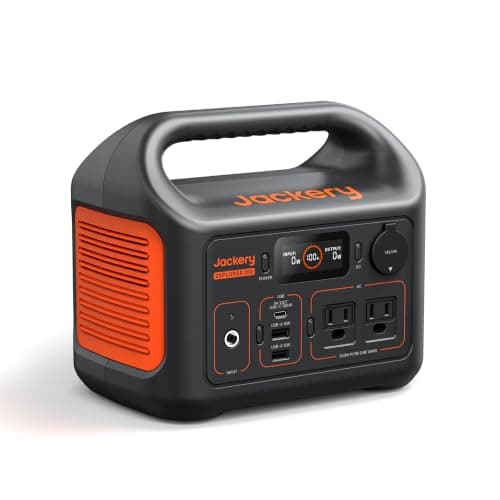
Jackery Explorer 300 Plus

A compact LiFePO4 station with enough output for an opener motor in bursts.

Opening and closing the door a handful of times
2
No photo

Surge headroom that will definitely cover it

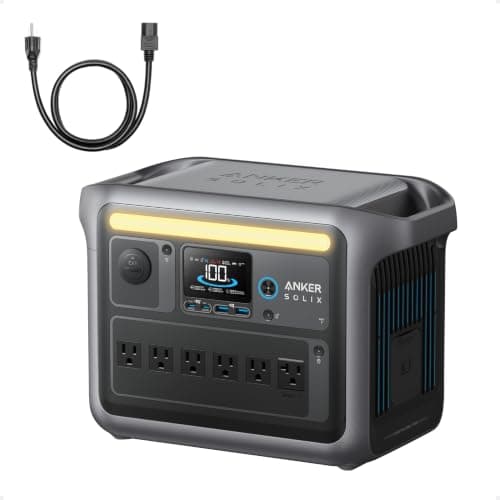
Anker SOLIX C1000

1,056Wh of LiFePO4 with 1,800W of continuous output.

An opener plus everything else
3
No photo

For finding the release in the dark

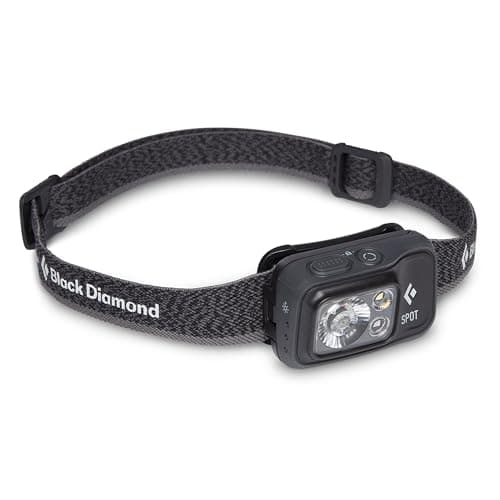
Black Diamond Spot 400 headlamp

400 lumens on three AAA cells, IPX8, with a red mode rated to 200 hours.

A garage with no windows

Prices come from the retailer at page-build time and change constantly. Where no live price is available the button reads “Check price” rather than showing a number we cannot stand behind.

The picks in full

01Enough for a few cycles

Jackery Explorer 300 Plus

A compact LiFePO4 station with enough output for an opener motor in bursts.

An opener runs for perhaps fifteen seconds per cycle, so the energy per operation is trivial. What matters is the surge — a garage door opener is a motor lifting a heavy door, and the starting draw is several times the running figure.

Check your opener's nameplate before assuming any small station covers it. How to read one.

Skip it ifyou are happy using the manual release, which works and costs nothing.

Published specifications for the Jackery Explorer 300 Plus
SpecificationPublished figure
Usable capacity288 Wh
Cell chemistryLiFePO4 (LFP)
AC output300 W continuous
Weight8.3 lb (3.75 kg)
Solar compatibilitySolarSaga 40/60/80/100 W panels
ControlWi-Fi and Bluetooth app monitoring

Source: Jackery — Explorer 300 Plus product specifications. These are the manufacturer's published figures, not ours — we have not tested this unit.

02Surge headroom that will definitely cover it

Anker SOLIX C1000

1,056Wh of LiFePO4 with 1,800W of continuous output.

1,800W comfortably covers any residential opener's starting surge, and the same unit does the fridge, the lights and the phones — which is the honest reason to buy it.

Nobody should buy backup power for a garage door. They should buy it for the fridge and get the garage door as a bonus.

Skip it ifthe garage door is the only thing on your list — it should not be.

Published specifications for the Anker SOLIX C1000
SpecificationPublished figure
Usable capacity1,056 Wh
Cell chemistryLiFePO4 (LFP)
AC output1,800 W continuous / 2,400 W SurgePad
Cycle life3,000 cycles
Wall recharge80% in 43 min, full in 58 min
Max solar input600 W (full solar recharge ~1.8 h)
Ports11 total, including 6 AC on panel-equipped bundles

Source: Anker — SOLIX C1000 product specifications. These are the manufacturer's published figures, not ours — we have not tested this unit.

03For finding the release in the dark

Black Diamond Spot 400 headlamp

400 lumens on three AAA cells, IPX8, with a red mode rated to 200 hours.

A garage in an outage is usually the darkest room in the house — no windows, and the opener's own light is out. Hands free matters because pulling the release and lifting the door both take two hands.

Skip it ifyour garage has good natural light.

Published specifications for the Black Diamond Spot 400 headlamp
SpecificationPublished figure
OutputUp to 400 lumens, beam to 100 m
RuntimeHigh 2.5 h, Medium 5 h, Low up to 200 h
Power3x AAA included; compatible with a rechargeable Li-ion pack
Water ratingIPX8 — tested to 1.1 m for 30 minutes
ModesRed night vision, brightness memory, PowerTap, digital lockout

Source: Black Diamond — Spot 400 headlamp listing. These are the manufacturer's published figures, not ours — we have not tested this unit.

How these were chosen

We did not test these. Nobody at Watt & Warden has plugged one in. What we did instead: read the manufacturer's published specifications, compile them into a table where the figures line up, and compute the numbers manufacturers leave out — runtime against a real appliance load, and what an hour of running actually costs.

Anything that could not be sourced was left out rather than estimated, and every pick names the buyer who should skip it. The full method is here, including where it is weaker than a publisher with a test bench.

Questions people actually ask

How do I open a garage door during a power outage?

Pull the manual release -- a red cord hanging from the trolley on the rail above the door. It disconnects the door from the opener motor so you can lift it by hand. Close the door fully before releasing, because releasing a partly open door lets it drop.

Why is my garage door so heavy to lift by hand?

The springs are weak or broken and the opener has been compensating. A correctly balanced door lifts easily and stays where you put it -- that is what right feels like. Springs store a great deal of energy and are dangerous to work on, so this is a technician's job rather than a DIY repair.

Can a power station run a garage door opener?

Usually, though check the nameplate. Energy per cycle is trivial -- fifteen seconds of operation is a rounding error -- but the surge is real, because a motor starting under load draws several times its running figure. An 1,800W inverter comfortably covers any residential opener.

How do I get into my garage from outside without power?

An emergency release kit -- a cable through the top of the door operated by a key barrel outside. Many houses already have one and the owners have never noticed. If your garage has no other door and no release kit, that is worth fixing before an outage rather than during one.

Can I run a generator in the garage with the door open?

No. Exhaust accumulates faster than it disperses in a partially enclosed space, and an attached garage shares air with the house through a door that is rarely airtight. Ready.gov requires generators outdoors and at least 20 feet from windows, doors and attached garages -- the garage counts as indoors.

Sources

Every figure on this page comes from a published source. We have not tested this equipment, so the specifications are the manufacturer's and the statistics are the dataset's — the arithmetic on top of them is ours, and it is shown in full so you can check it. How we work this out.