First: do nothing for 48 hours
USDA guidance is that a full freezer holds its temperature for about 48 hours, or about 24 hours if it is half full. A refrigerator keeps food safe for up to four hours.
That single fact reframes the whole purchase. A full freezer is already a two-day thermal battery, and every time you open the door you spend part of it. For most outages the correct action is to keep the lid shut and wait.
What that means practically:
- Keep it full. Frozen mass holds cold; air does not. If your freezer is half empty, fill the space with water containers and freeze them. They cost nothing, extend the holding time toward the 48-hour figure, and become drinking water later.
- Do not open it to check. Every opening costs you hours.
- Consolidate. If an outage is going to run long, moving freezer contents together — or into a neighbor's working freezer — beats any equipment decision.
How to know afterwards what is safe
This is where people lose food unnecessarily, or keep food they should not. USDA's rule is a temperature rule, not a time rule:
If food in the refrigerator or freezer is still at or below 40°F, it is safe to keep or to refreeze. Above 40°F, discard it.
Refreezing partially thawed food that stayed at or below 40°F is explicitly allowed — quality suffers, safety does not. And you cannot judge this by looking or smelling, which is why the two things worth owning are trivially cheap:
- An appliance thermometer in the freezer. A few dollars, and it converts guesswork into a number. Freezers should sit at 0°F or below and refrigerators at 40°F or below.
- The frozen-cup test. Freeze a cup of water solid, then put a coin on top of the ice and leave it in the freezer. If you come home to the coin at the bottom of the cup, everything thawed and refroze while you were away, however cold it reads now.
Neither needs power, and both answer the question a power station cannot.
Dry ice, and how much
USDA publishes a working figure: 50 pounds of dry ice should hold an 18-cubic-foot freezer for two days. That buys a second 48-hour window without any electricity.
The cautions are real. Do not touch dry ice with bare hands or let it contact food directly. It sublimates into carbon dioxide, so the space needs ventilation — never seal it in a closed room or a vehicle cabin. And it is a plan you make in advance, because suppliers sell out in a widespread outage exactly when everyone needs it.
What it takes to actually power one
| Figure | Value | Where it comes from |
|---|
| Freezer running watts | 100–500 W | Champion published chart |
|---|
| Freezer starting watts | 500–1,000 W | Champion published chart |
|---|
| Typical duty cycle | ~30% | Working estimate, not a measurement |
|---|
| Daily energy | ~600–1,200 Wh | Calculated from the rows above |
|---|
Wattage figures are Champion Power Equipment's published ranges. Duty cycle and the daily total are working estimates derived from them, not measurements — an older upright unit in a hot garage will be worse than a new chest freezer in a basement.
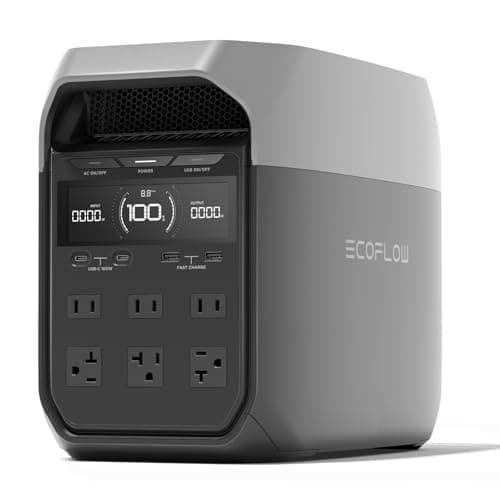
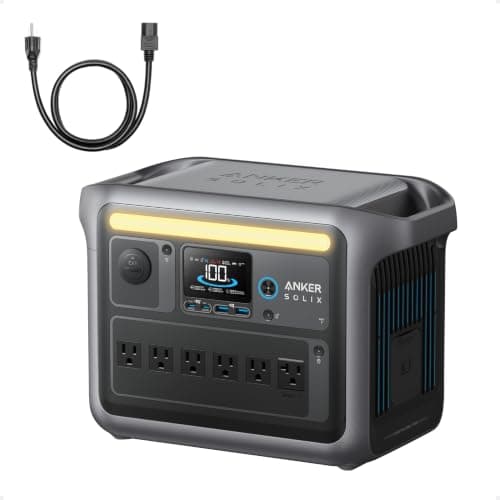
Two consequences follow. First, the starting surge is what your equipment has to clear: 1,000W of surge is well inside a 1,800W inverter but will defeat a small UPS or a 300W station. Second, the daily energy is small, which is why a freezer is one of the cheapest things in the house to keep running.
Sizing the whole load matters more than sizing this one appliance, because in practice the freezer shares whatever you buy with the fridge.
Block running is the whole trick
A freezer stores cold, which makes it the single best load to run intermittently. Bring it down to temperature, switch off, and it coasts for hours.
Two hours in the morning and two in the evening keeps a freezer safely frozen through an outage of any length, and it uses roughly a quarter of the fuel or battery that continuous running would. The same pattern lets one battery cover a fridge and a freezer alternately rather than needing capacity for both at once.
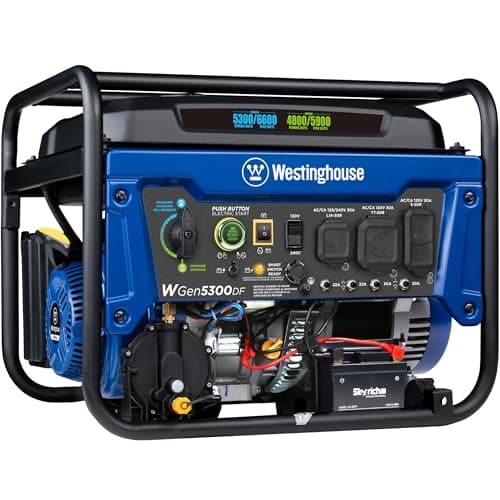
It also means a generator does not have to run at night, which is the difference between tolerable and intolerable for everyone within earshot. Quiet generators help; not running at all helps more.
Is it worth powering at all?
Sometimes not, and that is a legitimate conclusion. Work out roughly what is in the freezer. If it holds a few weeks of ordinary groceries and your outages last four hours, the freezer needs nothing — it will not warm up in the first place.
The case for equipment gets strong when any of these are true:
- The freezer holds something irreplaceable — a hunting season's meat, a share of a butchered animal, breast milk. This is the strongest case there is, and it is usually worth more than the equipment.
- Your outages run past two days. Rural lines, ice storm country, wildfire shutoffs.
- The freezer is in a hot garage. Ambient temperature shortens the holding window considerably.
- You already need backup power for something else. Then the freezer is nearly free — it is a small load sharing equipment you were buying anyway.
And if you are buying anyway, the same battery that covers the freezer covers the fridge, the router and the lights. The refrigerator comparison and the runtime math cover the shared case.