Evacuation inverts every assumption on this site
Sheltering in place optimizes for capacity, output and duration. You want the biggest battery you can afford and a generator that runs for days.
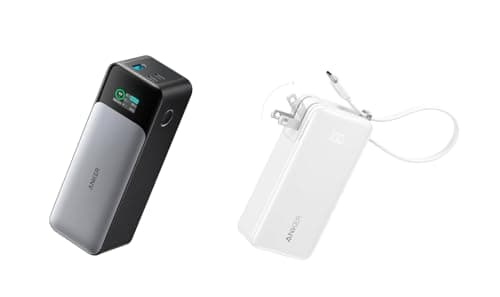
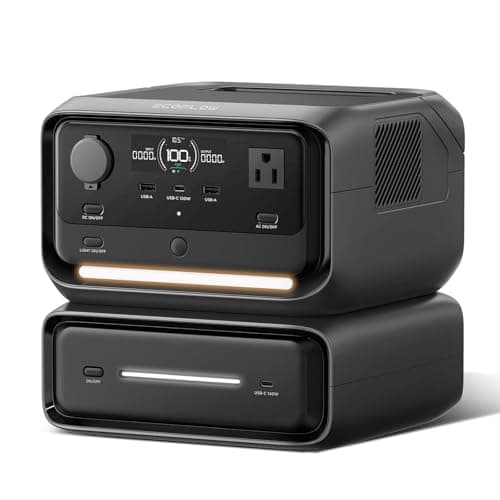
Evacuating optimizes for the opposite: weight, recharge speed and the ability to charge from a car. A 3,000Wh unit that weighs 60 lb is outstanding at home and close to useless in a hotel room on the third night.
| Priority | Sheltering in place | Evacuating |
|---|
| First | Capacity | Weight |
|---|
| Second | Inverter output | Recharge speed and car charging |
|---|
| Third | Fuel or solar to extend it | Device compatibility — USB-C over AC |
|---|
| Irrelevant | Portability | Anything over about 25 lb |
|---|
The thing most people get wrong
Batteries that live in a closet are usually somewhere between a third and two-thirds charged, because nobody tops them up on a schedule.
An evacuation gives you hours of notice at best, and the power often goes before you leave. A half-charged battery is half a battery, and no purchase decision fixes that.
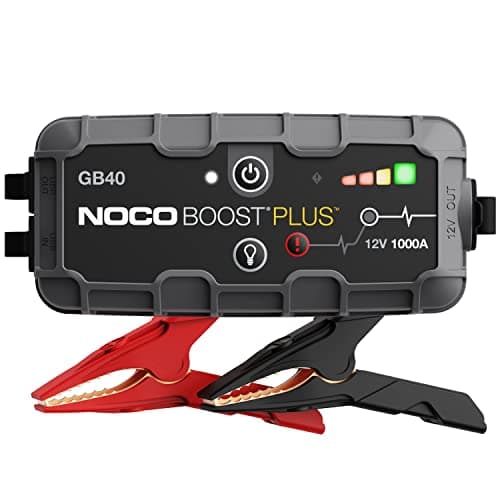
The fix is a habit rather than a product: charge everything when a storm gets a name, not when the evacuation order comes. Batteries, power banks, laptops, the jump pack, and the vehicles.
LiFePO4 units tolerate sitting at full charge far better than older chemistries, which is one more reason they dominate — the storage page covers keeping one healthy between seasons.
What you actually need power for
The list is shorter than at home, and two items dominate it.
| Need | Per day | Why it matters |
|---|
| Phones, two to four | 30-60 Wh | Navigation, alerts, reaching family |
|---|
| CPAP, no humidifier | 250-350 Wh per night | The one genuinely non-negotiable load |
|---|
| Laptop or tablet | 50-200 Wh | Work, documents, keeping children occupied |
|---|
| Refrigerated medication | Varies — a cooler is usually better | Insulin and similar |
|---|
| Lighting | Under 20 Wh | Headlamps run on their own cells for days |
|---|
CPAP figures are the band used across this site; the CPAP page covers running one from a battery in detail.
A 572Wh battery therefore covers phones and devices for several days, or a CPAP for two nights. That is the honest shape of it.
Fuel is the real constraint, not electricity
Worth saying because it is where evacuations actually go wrong. Stations along evacuation routes run dry, and stations without power cannot pump at all.
- Fill the tank when the storm gets a name. Not when the order comes.
- Leave early. The difference between leaving on the first advisory and the last is measured in hours of traffic and whether fuel exists.
- Do not carry loose gasoline in the passenger cabin. If you carry fuel at all it goes in an approved can, secured, outside the cabin — the fuel can page covers what approved means.
- An electric vehicle changes the plan. Charging infrastructure along an evacuation route is thinner than fuel, and it needs power too — the EV page covers the two-way relationship between a car and a house.
Leaving the house behind
Two power decisions matter for the house you are leaving.
Do not leave a generator running. An unattended generator through a hurricane is a fire and carbon monoxide risk with nobody there to notice, and it will be stolen if the machine survives.
Consider shutting off at the panel. Utilities restore power without knowing what state your house is in, and a damaged circuit re-energized is how post-storm fires start. Ask your utility what they advise for your area.
The freezer is the other question, and the answer is usually to accept the loss — the freezer page covers the food safety timings. A full freezer holds about 48 hours unopened, which covers a short evacuation and not a long one.
What to leave at home
Being blunt: the generator stays. It is heavy, it needs fuel you will struggle to buy, running it at a shelter or hotel is not permitted, and it is the single most stolen item after a storm.
The same goes for any battery over about 25 lb. Capacity you cannot carry into a building is capacity you do not have. The storm outage page covers the sheltering-in-place case those machines are for.
The short version
- Weight and recharge speed beat capacity. Under 25 lb, charges in an hour.
- Charge everything when the storm gets a name. This is the whole game.
- A CPAP is the one load that sets the size. Everything else is devices.
- Fuel is the real constraint. Full tank, leave early.