mAh is not a capacity you can compare
Power banks are sold in milliamp-hours and power stations in watt-hours, and the two are not directly comparable because mAh means nothing without a voltage.
The conversion is simple: watt-hours = milliamp-hours ÷ 1,000 × cell voltage, and the cell voltage inside almost every power bank is 3.6 or 3.7 V.
| Rated capacity | Roughly, in watt-hours | What that covers |
|---|
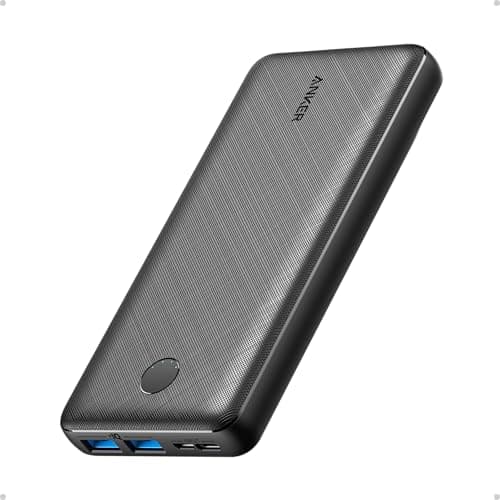
| 10,000 mAh | ~36 Wh | Two phone charges |
|---|
| 20,000 mAh | ~72 Wh | Three to four phone charges |
|---|
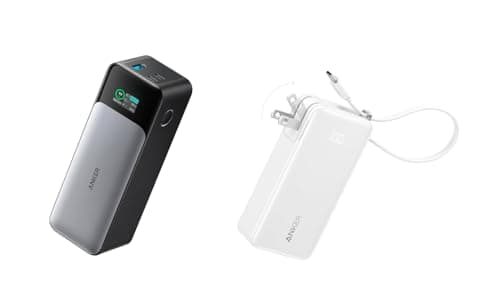
| 24,000 mAh | 86.4 Wh (published) | A laptop and a half, or 7-8 phones |
|---|
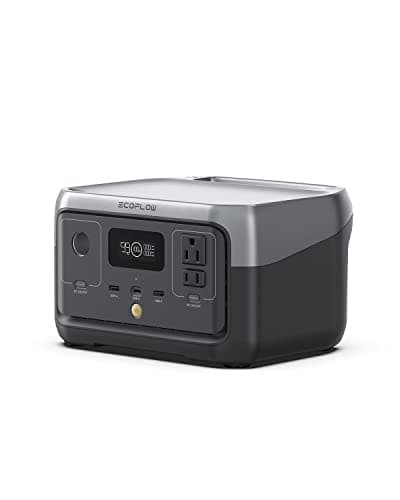
| Small power station | 256 Wh | A CPAP overnight, with AC outlets |
|---|
| Mid power station | 1,024 Wh | A fridge for most of a day |
|---|
The 86.4 Wh figure is Anker's own published number for the 737. The other watt-hour conversions are calculated at a nominal 3.6 V cell voltage and are approximate. Real delivered energy is lower again — see conversion losses below.
Seen this way the category makes sense: the largest sensible power bank holds about a third of what the smallest power station holds, and about a twelfth of what a mid-sized one holds.
Why you never get the rated capacity
A 20,000 mAh bank does not deliver 20,000 mAh to your phone, and the gap is not the manufacturer being dishonest.
The cells inside sit at about 3.7 V. Your phone charges at 5 V or higher over USB. Converting between them costs energy as heat, and there is a second conversion inside the phone. Real-world delivery is commonly in the region of 60 to 70% of the rating.
Which is why Anker publishes charge counts rather than leaving you to divide: 3.6 iPhone 15 charges from 20,000 mAh, not the five or six the arithmetic would suggest. Use the manufacturer's charge count if they publish one.
Watts matter as much as capacity
Two banks of identical capacity can be completely different products, because the output rating decides what will charge at all.
- 15W — phones at a normal rate, tablets slowly. Fine for a phone-only kit.
- 30-65W — a tablet properly, a small laptop slowly.
- 100W+ — a laptop at full speed while you use it. This is the threshold that matters for anyone working through an outage.
- 140W — the current USB-C Power Delivery 3.1 ceiling, and what the Anker 737 delivers.
Check your laptop charger's rating and match it. A 100W laptop on a 30W bank will discharge while plugged in, which feels like the bank being broken and is simply arithmetic.
The 100Wh airline rule
This is why the best banks stop at around 24,000 mAh rather than going bigger.
Lithium batteries above 100 Wh are restricted in airline carry-on and generally need airline approval; above 160 Wh they are usually prohibited outright. Manufacturers cluster just under the limit so the product can fly without a conversation at the gate.
For outage use at home the rule is irrelevant — but it explains the shape of the market, and it is why "just buy a bigger power bank" stops working at exactly the point where a power station takes over.
Where a power bank is the right answer
- Outages of a few hours. Phones stay alive, nothing else needs to.
- Apartments with nowhere to put anything larger. The apartment guide works through that constraint.
- A go-bag. Weight and size dominate every other consideration.
- Alongside a power station. The bank handles phones so you are not waking the station's inverter for a 5W load — which is genuinely wasteful, because the inverter's own idle draw can exceed what the phone is taking.
Where it is not
Anything with a wall plug. A CPAP, a lamp, a router with a barrel connector, a fridge — none of these can be run from a USB bank, and no amount of capacity changes that. You need AC outlets, which means a power station.
The honest test: write down what you actually need to keep running. If every item on the list charges over USB, buy two good banks and stop there. The moment one item has a wall plug, start at the beginners guide instead.
Keep them charged, which nobody does
- Top up twice a year, at the same time you exercise everything else. Lithium self-discharges slowly but not to zero effect.
- Do not store at 100% for years. High state of charge accelerates calendar aging, which is the same reason the chemistry page recommends part-charged storage for older stations.
- Charge them when the forecast appears, not when the lights go out.
- Keep the cables with them. A charged bank and no USB-C cable is a paperweight.