Skip to content
Watt Warden

Scenarios

Using an Electric Vehicle as Backup Power

The battery in the driveway holds more energy than any backup product on this site. Whether you can get it out depends entirely on what your specific car supports.

By Sawyer V.Updated Published How we work this out
An electric car charging in a driveway.

Watt & Warden earns a commission on qualifying purchases made through links on this page, at no extra cost to you. It never changes a ranking, and our picks include products we tell you to skip. Full disclosure.

The scale, first, because it is genuinely striking

A mid-sized electric vehicle carries somewhere in the region of 60 to 100 kilowatt-hours. The largest portable power station on this site holds just over two.

Put another way: the car in the driveway holds roughly thirty times what a 2kWh battery does, and it is already paid for.

At a household critical load of 1.5 to 2.5 kWh a day, a full EV battery is theoretically weeks of backup power. That is why the idea gets so much attention, and why the practical constraints matter so much.

Three letters decide whether you can use it

CapabilityWhat it doesWhat you need
V2L — vehicle to loadAn AC outlet on the car, or an adapter on the charge port, that runs appliances directlyA supported vehicle and usually a manufacturer adapter
V2H — vehicle to homeThe car back-feeds the house through a transfer switch, like a standby generatorA supported vehicle plus a specific bidirectional charger and an electrician
V2G — vehicle to gridThe car exports to the utility grid, usually under a programAll of the above plus a utility that offers it
NeitherThe pack cannot be discharged externally at allNothing helps — this is most vehicles currently on the road

Support varies enormously by manufacturer, model and model year, and it changes between years within the same nameplate. We deliberately do not publish a compatibility list here because it would be wrong within months — check your specific vehicle's manual and your manufacturer's current documentation.

The honest headline: most electric vehicles on the road today cannot export power, and a large pack you cannot discharge is not backup power. Find out which category yours is in before planning around it.

What V2L actually gives you

Where a vehicle supports it, V2L is usually a household outlet — either built into the car or provided through an adapter that plugs into the charge port.

Practically that is a large, quiet, already-charged generator sitting in the driveway. Its limits:

  • The outlet is rated in the low thousands of watts on most implementations. That covers a fridge, lighting and electronics — not central air or electric heating.
  • It is outside. You are running extension cords from the driveway, with all the same gauge and length considerations a generator would have.
  • It cannot reach hardwired circuits. The furnace, the well pump and the sump pump have no plugs, so V2L does not touch them.
  • The car cannot leave while it is powering things.
  • Manufacturers often reserve a floor. Many systems stop exporting at a set state of charge so you are not stranded.

For a household whose critical list is refrigeration, lighting and communications — which is most households — V2L covers it for days without touching the driving range meaningfully.

V2H is a different, larger project

Vehicle-to-home back-feeds the house properly, through a transfer switch, the way a standby generator does. That means hardwired circuits work, no cords run through doors, and the changeover can be automatic.

It also means an installation:

  • A specific bidirectional charger, matched to the vehicle. These are not interchangeable.
  • A transfer switch or interlock so the car cannot energize the utility line — the same backfeed problem a generator connection has, with the same solutions.
  • Permits, an electrician and an inspection.
  • Utility notification in many jurisdictions, because you are installing a device capable of exporting.

Cost-wise this sits closer to a standby generator installation than to a power station purchase — and unlike a standby generator, the power source drives away when someone takes the car to work.

The honest objections

  • The car may need to leave. In a wildfire shutoff or an evacuation, range is the thing you least want to have spent. A battery that stays home does not have this conflict.
  • Battery wear. Cycling a traction pack for household loads uses cycles, and warranty treatment of export use varies by manufacturer. Read yours.
  • You cannot refill it. An outage takes the public chargers down too. Unlike a generator with a fuel can, what is in the pack is what you have.
  • Cold weather costs range twice — once to the household load, once to the reduced capacity.
  • Compatibility changes. A capability that exists on this year's model may not on last year's.

What we would actually recommend

If your vehicle supports V2L: use it, and pair it with a modest battery indoors. The car refills the battery twice a day, the battery runs the house, and the car stays free to drive. That arrangement removes almost every objection above at the cost of one mid-sized power station.

If your vehicle supports V2H and you own the house: it is a serious alternative to a standby generator, with the standing caveat that the power source is also your transport. Get quotes for both and compare on total installed cost.

If your vehicle supports neither: which is most people — buy backup power the ordinary way. The pack in the driveway is not available to you, and no adapter makes it so. Start at the beginners guide.

One thing worth adding regardless of category: an EV is a very good reason to have a plan for charging it during a long outage, and the honest answer is usually that you cannot. Keeping the car above half charge through a storm season costs nothing and is the single most useful habit here.

Quick picks

#ProductBest forPrice
1
No photo

What to buy if your car cannot do it

BLUETTI Elite 200 V2

2,073Wh of LiFePO4 with 2,600W output and a ten-year design life.

The overwhelmingly common case
2
No photo

The complement to a V2L car

Anker SOLIX C1000

1,056Wh of LiFePO4 with 1,800W output and a fast recharge.

Running loads indoors while the car sits outside
3
No photo

The information channel either way

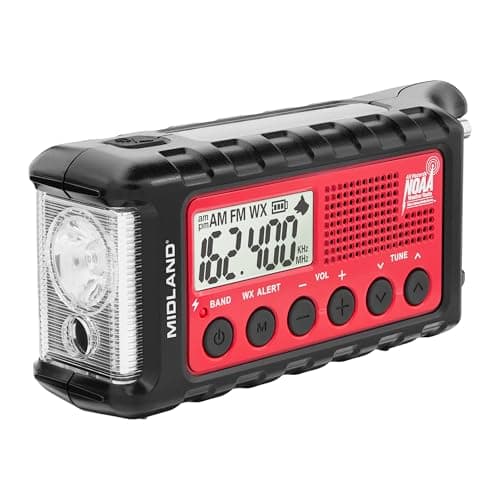
Midland ER310 emergency crank radio

Seven NOAA channels with crank, solar and AA backup, plus a 130 lumen flashlight.

Knowing how long the outage will last

Prices come from the retailer at page-build time and change constantly. Where no live price is available the button reads “Check price” rather than showing a number we cannot stand behind.

The picks in full

01What to buy if your car cannot do it

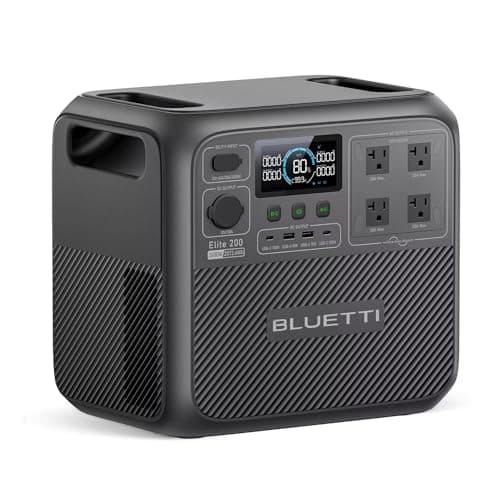
BLUETTI Elite 200 V2

2,073Wh of LiFePO4 with 2,600W output and a ten-year design life.

Most electric vehicles on the road today cannot export power at all, and no amount of capacity in the pack changes that. If yours is one of them, this is the purchase — and it covers a fridge, a freezer and the essentials overnight.

2,600W of continuous output handles two compressors starting near each other, which is what defines this tier.

Skip it ifyour vehicle genuinely has a V2L port and you have tested it.

Published specifications for the BLUETTI Elite 200 V2
SpecificationPublished figure
Usable capacity2,073.6 Wh
Cell chemistryAutomotive-grade LiFePO4 (LFP)
AC output2,600 W continuous / 3,900 W power lifting
Cycle life6,000+ cycles
Fast charge0–80% in 50 min via dual AC/DC input

Source: BLUETTI — Elite 200 V2 product specifications. These are the manufacturer's published figures, not ours — we have not tested this unit.

02The complement to a V2L car

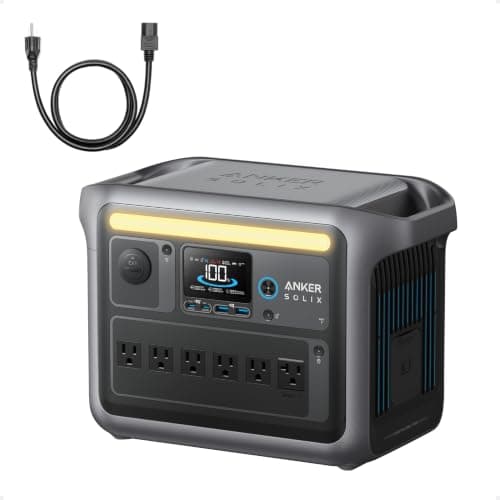
Anker SOLIX C1000

1,056Wh of LiFePO4 with 1,800W output and a fast recharge.

The practical arrangement if your car does support export: the vehicle refills the battery a couple of times a day, and the battery runs the house indoors without a cord through a door.

It also means the car can leave. A battery that has just been topped up from the vehicle keeps working when you drive somewhere.

Skip it ifyou are happy running extension cords from the driveway continuously.

Published specifications for the Anker SOLIX C1000
SpecificationPublished figure
Usable capacity1,056 Wh
Cell chemistryLiFePO4 (LFP)
AC output1,800 W continuous / 2,400 W SurgePad
Cycle life3,000 cycles
Wall recharge80% in 43 min, full in 58 min
Max solar input600 W (full solar recharge ~1.8 h)
Ports11 total, including 6 AC on panel-equipped bundles

Source: Anker — SOLIX C1000 product specifications. These are the manufacturer's published figures, not ours — we have not tested this unit.

03The information channel either way

Midland ER310 emergency crank radio

Seven NOAA channels with crank, solar and AA backup, plus a 130 lumen flashlight.

Relevant here for a specific reason: how much of the car's battery you are willing to spend depends entirely on how long the outage will last and whether you may need to drive.

A radio that works with no power at all is how you find that out when the cell network is down.

Skip it ifyou already keep a SAME alert radio.

Published specifications for the Midland ER310 emergency crank radio
SpecificationPublished figure
Battery2,600 mAh rechargeable lithium-ion
Radio run timeup to 32 hours
Backup powerSix AA batteries
ChargingUSB, hand crank dynamo, or built-in solar panel
Weather7 NOAA weather channels with alert
Flashlight130 lumen Cree LED with SOS beacon
Also doesUSB power bank for phones

Source: Midland — ER310 product page. These are the manufacturer's published figures, not ours — we have not tested this unit.

How these were chosen

We did not test these. Nobody at Watt & Warden has plugged one in. What we did instead: read the manufacturer's published specifications, compile them into a table where the figures line up, and compute the numbers manufacturers leave out — runtime against a real appliance load, and what an hour of running actually costs.

Anything that could not be sourced was left out rather than estimated, and every pick names the buyer who should skip it. The full method is here, including where it is weaker than a publisher with a test bench.

Questions people actually ask

Can an electric car power my house?

Only if it supports vehicle-to-load or vehicle-to-home export, and most cars on the road today support neither. A large traction pack you cannot discharge externally is not backup power. Check your specific vehicle's manual and current manufacturer documentation, because support varies by model and model year.

What is the difference between V2L and V2H?

V2L gives you an AC outlet on the car or through an adapter -- effectively a quiet generator in the driveway, running extension cords, unable to reach hardwired circuits. V2H back-feeds the house through a transfer switch like a standby generator, which needs a matched bidirectional charger, permits and an electrician.

How long could an EV power a house?

Theoretically weeks. A mid-sized pack of 60 to 100kWh against a household critical load of 1.5 to 2.5kWh a day is a very large reserve -- roughly thirty times a 2kWh power station. The constraints are export capability, the outlet's wattage limit, hardwired circuits, and whether the car needs to leave.

Does using an EV for backup power damage the battery?

It uses cycles, and how manufacturers treat export use under warranty varies -- read yours. Many systems also reserve a floor state of charge so you are not stranded. The larger practical concern is that in an evacuation or wildfire shutoff, range is exactly what you least want to have spent.

Should I buy a power station if I have an EV?

If the car supports V2L, yes -- a modest battery indoors is the ideal complement. The car refills it twice a day, the battery runs the house without cords through doors, and the car stays free to drive. If the car supports neither V2L nor V2H, buy backup power the ordinary way.

Sources

Every figure on this page comes from a published source. We have not tested this equipment, so the specifications are the manufacturer's and the statistics are the dataset's — the arithmetic on top of them is ours, and it is shown in full so you can check it. How we work this out.