Skip to content
Watt Warden

Outage Prep

Emergency Preparedness Gifts People Actually Use

The best preparedness gift is the thing the recipient knows they should own and has never got round to buying. Every pick here is on that list, and none of them is a power station.

By Sawyer V.Updated Published How we work this out
Sawyer SP129 Squeeze Filter System

Watt & Warden earns a commission on qualifying purchases made through links on this page, at no extra cost to you. It never changes a ranking, and our picks include products we tell you to skip. Full disclosure.

Quick picks

#ProductBest forPrice
1
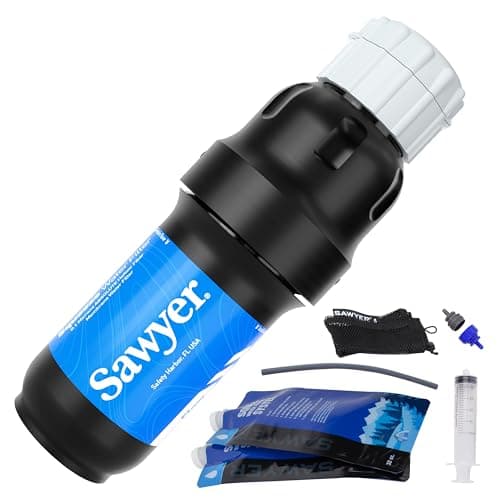
Sawyer SP129 Squeeze Filter System

Best gift overall

Sawyer SP129 Squeeze Filter System

A 3 oz 0.1 micron hollow-fiber filter rated to remove 99.99999% of bacteria, with a manufacturer lifetime limited warranty.

Anyone on a well, a rural supply, or a boil-water advisory map
$45.95 · Check price on Amazon

#ad how this is funded · price as of October 20, 2026

2
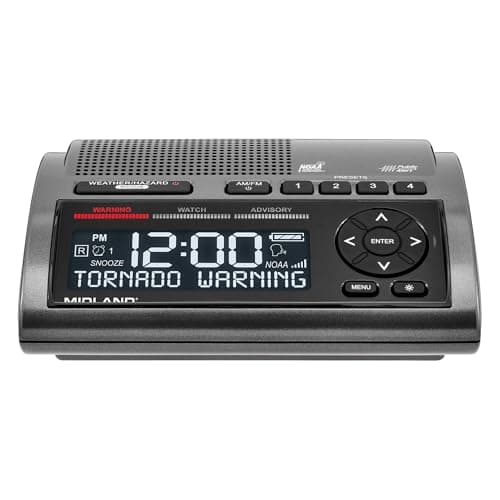
Midland WR400 desktop weather alert radio

Best gift for someone in a storm belt

Midland WR400 desktop weather alert radio

SAME programming for up to 25 counties and 80 alert types, with an 85 dB siren and AA battery backup behind the AC adapter.

A household that sleeps through phone alerts
$89.00 · Check price on Amazon

#ad how this is funded · price as of October 20, 2026

3
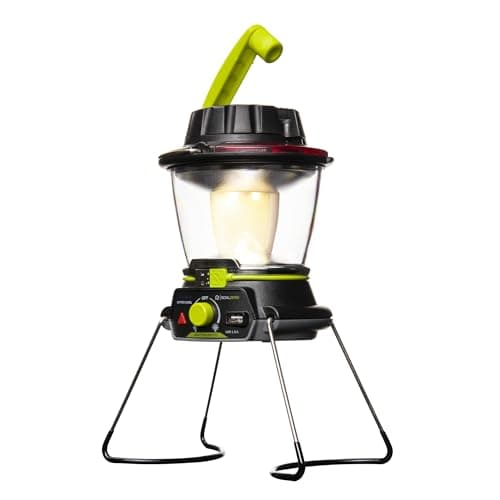
Goal Zero Lighthouse 600 lantern

Best light, and it charges a phone

Goal Zero Lighthouse 600 lantern

600 lumens with a 5,200mAh battery, USB output and a hand crank published at 1 W — a light that doubles as a power bank.

A household with one flashlight and four people
$79.95 · Check price on Amazon

#ad how this is funded · price as of October 20, 2026

4
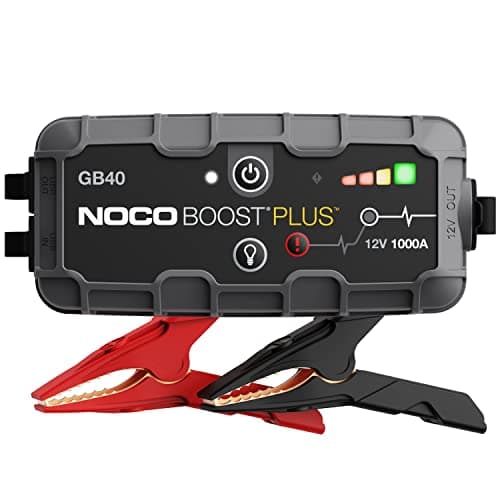
NOCO Boost Plus GB40

Best gift for someone with a driveway

NOCO Boost Plus GB40

1,000 peak amps at 12 V with spark-proof clamps and reverse-polarity protection, plus a USB power bank and an LED.

Cold mornings, old batteries and anyone who parks outside
$99.95 · Check price on Amazon

#ad how this is funded · price as of October 20, 2026

5
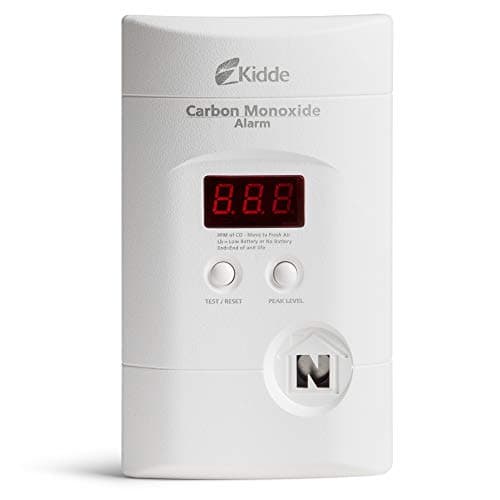
Kidde Nighthawk KN-COPP-3 CO alarm

The one that is not optional

Kidde Nighthawk KN-COPP-3 CO alarm

A plug-in electrochemical CO alarm with 9V battery backup and a digital readout from 30 to 999 ppm, refreshed every 15 seconds.

Anyone who owns a generator, a propane heater or a fireplace
$44.99 · Check price on Amazon

#ad how this is funded · price as of October 20, 2026

6
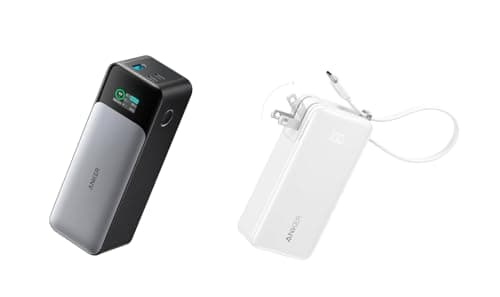
Anker 737 Power Bank (PowerCore 24K)

Best gift for someone who already owns everything

Anker 737 Power Bank (PowerCore 24K)

86.4Wh and 140W out over USB-C Power Delivery, under the 100Wh airline carry-on limit.

A laptop worker, a student, a frequent traveler
$162.98 · Check price on Amazon

#ad how this is funded · price as of October 20, 2026

Prices come from the retailer at page-build time and change constantly. Where no live price is available the button reads “Check price” rather than showing a number we cannot stand behind.

The verdict, in one paragraph

The best preparedness gift is the item the recipient already believes they should own. For most people that is a water filter — the Sawyer Squeeze at 0.1 micron and three ounces is the one that actually travels. For anyone in a storm belt it is a SAME weather radio, because phone alerts are silenced overnight and cell networks fail in exactly the weather that generates the alert. For a family, a lantern that is also a power bank beats another flashlight. For a driveway, a 1,000-amp jump starter. And if they own a generator or a propane heater, a CO alarm with a digital readout is the only item on this page that is not a nice-to-have. If what you actually want to give is a battery, the power station gift guide is the right page — deliberately, there is not one on this one.

How these were chosen

This site runs no test bench, so nothing here is a measurement. Every figure is the manufacturer's published specification, cited at the foot of the page. Three rules applied:

  • Every item had to be currently in stock, checked before writing rather than assumed.
  • It had to be something people genuinely do not buy for themselves. That is the entire logic of a preparedness gift: the items that are obviously sensible and never quite urgent.
  • No power stations. They are the obvious answer, they have their own guide, and a page that recommends one in every band is not a second guide — it is the same one twice.

The comparison

GiftPublished headline specNeeds power?Who it suits
Sawyer Squeeze filter0.1 micron; 99.99999% of bacteria; 3 ozNoWells, rural supplies, travel
Midland WR400 radioSAME, 25 counties, 80 alert types, 85 dBAC with 4x AA backupStorm and tornado belts
Goal Zero Lighthouse 600600 lumens; 5,200mAh; 1 W hand crankSelf-powered, rechargeableFamilies, whole-room light
NOCO Boost Plus GB401,000 A peak at 12 V; 2.4 lbRechargeableAnyone who parks outside
Kidde KN-COPP-330-999 ppm digital; 85 dB; 10-yr warranty120 V with 9 V backupGenerator and propane owners
Anker 737 Power Bank86.4 Wh; 140 W USB-C PDRechargeableLaptop workers, travelers

Published manufacturer specifications, cited under Sources. Live prices sit inside the buy buttons above, each with the date it was last refreshed.

Matching the gift to the person

  • Parents or in-laws in a rural area: the SAME radio, then the lantern. Rural outages are long and rural alerts matter more because help is further away.
  • Someone who just bought their first house: the CO alarm. New owners inherit a fireplace, a furnace and a water heater they know nothing about.
  • A camper, hiker or overlander: the water filter. It is the only item here that is as useful in July as in January.
  • A commuter with an older car: the jump starter, and tell them to charge it the day it arrives.
  • Someone who already owns a power station: anything on this page. People who buy the battery almost never buy the radio, and a battery with no information about the storm is half a plan.
  • Someone with no interest in any of this: the lantern. It is useful during a two-hour outage, which is the only kind most people ever have.

Three things worth saying when you hand it over

  1. Charge it now, and twice a year after that. A jump starter, a lantern and a power bank are all batteries, and all three fail in the same way: slowly, in a cupboard, unnoticed.
  2. Program it before you need it. A SAME radio is a far better device once its county codes are set, and nobody sets them during a warning.
  3. Check the date on what they already own. CO alarms and smoke alarms expire. The most valuable five minutes of the gift is walking round the house reading the stamped replacement dates.

What this page deliberately leaves out

No freeze-dried food buckets, because shelf-stable food a household already eats is both cheaper and more likely to be eaten. No generators, because a generator is a decision rather than a surprise and it needs a conversation about where it will run and how it connects — connecting a generator to your house is that conversation.

And no power stations, which is the deliberate gap above. If the budget stretches that far, the band-by-band guide is a better tool than a single pick, and a battery given without a word about charging it is a gift that fails on its first real night.

The short version

Buy the thing they would be mildly embarrassed not to own: a water filter, a county-specific alert radio, a lantern that charges a phone, a jump starter if they park outside, and a CO alarm if there is anything in the house that burns. Charge whatever has a battery before you wrap it, and spend five minutes reading the dates on the alarms they already have.
The picks in full

01 — Best gift overall

Sawyer SP129 Squeeze Filter System

A 3 oz 0.1 micron hollow-fiber filter rated to remove 99.99999% of bacteria, with a manufacturer lifetime limited warranty.

This is the preparedness item with the best ratio of usefulness to likelihood-of-already-owning-it. The published figures are unusually specific for the category: 0.1 micron absolute hollow fiber, 99.99999% of bacteria including salmonella, cholera and E. coli, and 99.9999% of protozoa including giardia and cryptosporidium.

It weighs three ounces and threads onto a standard bottle, which means it ends up in a car or a bag rather than in a cupboard. A gift that travels gets used.

The honest catch: a filter is not a purifier. It does not remove viruses or chemical contamination, and the honest first move in a long outage is still stored water — emergency water storage covers the quantities.

Skip it ifthey already store water properly. A filter is a second line, not a first one.

Sawyer SP129 Squeeze Filter System
$45.95 · Check price on Amazon

#ad how this is funded · price as of October 20, 2026

Published specifications for the Sawyer SP129 Squeeze Filter System
SpecificationPublished figure
Filtration0.1 micron absolute hollow fiber
BacteriaRemoves 99.99999% including salmonella, cholera and E. coli
ProtozoaRemoves 99.9999% including giardia and cryptosporidium
Also removesSediment and 100% of microplastics
IncludedFilter, two 32 oz pouches, straw and hydration pack adapter
Weight3 oz; fits standard 28 mm bottle threads
WarrantyManufacturer lifetime limited

Source: Sawyer — Squeeze water filter system product page. These are the manufacturer's published figures, not ours — we have not tested this unit.

02 — Best gift for someone in a storm belt

Midland WR400 desktop weather alert radio

SAME programming for up to 25 counties and 80 alert types, with an 85 dB siren and AA battery backup behind the AC adapter.

Phone alerts are opt-out, silenced overnight and dependent on a cell network that storms take down. A SAME radio is none of those things: it is programmed to a specific county list, it stays silent for everyone else's warnings, and it screams at 85 dB for yours.

That specificity is the entire point. Weather radios get unplugged because they alert for three counties away at two in the morning; SAME programming is what stops that happening and keeps the thing switched on.

The honest catch: it runs from an AC adapter with four AA cells as backup, so the batteries need checking twice a year or it is a brick during the outage it was bought for.

Skip it ifthey want something portable. This is a desk radio — the crank version is a different product.

Midland WR400 desktop weather alert radio
$89.00 · Check price on Amazon

#ad how this is funded · price as of October 20, 2026

Published specifications for the Midland WR400 desktop weather alert radio
SpecificationPublished figure
Alert technologySAME — Specific Area Message Encoding
CoverageUp to 25 counties, 80 emergency alert types
Alerting85 dB siren, voice alert or LED flasher, color-coded levels
Channels7 weather channels, 8 presets (4 AM / 4 FM)
PowerAC adapter with 4 AA battery backup
ExtrasAlarm clock, LCD display, USB output

Source: Midland — WR400 Deluxe NOAA Weather Radio product page. These are the manufacturer's published figures, not ours — we have not tested this unit.

03 — Best light, and it charges a phone

Goal Zero Lighthouse 600 lantern

600 lumens with a 5,200mAh battery, USB output and a hand crank published at 1 W — a light that doubles as a power bank.

A lantern lights a room; a flashlight lights wherever one person is pointing it. For a family sitting out an evening without power, the lantern is the one that stops people bumping into furniture and holding phones in their teeth.

The USB output is what lifts it above the category. 5,200mAh is a phone charge or more, and the hand crank means the lantern is never completely dead — Goal Zero publishes one minute of cranking as about ten minutes of light on low.

The honest catch: the crank is an emergency feature, not a charging method. At a published 1 W you are not cranking a phone back to life, and anyone who tells you otherwise has not tried it.

Skip it ifthey want a pocket light. This is a lantern, and it is a deliberate 1.1 lb of one.

Goal Zero Lighthouse 600 lantern
$79.95 · Check price on Amazon

#ad how this is funded · price as of October 20, 2026

Published specifications for the Goal Zero Lighthouse 600 lantern
SpecificationPublished figure
OutputUp to 600 lumens, 360° or half-lantern
Battery5,200 mAh lithium with USB output
ChargingUSB, solar panel, or built-in hand crank
Hand crank1 W at 130 rpm — 1 minute gives about 10 minutes on low
Size4.5 x 5 x 6.5 in open, 1.1 lb
DesignCollapsible legs, built-in hanging handle

Source: Goal Zero — Lighthouse 600 product page. These are the manufacturer's published figures, not ours — we have not tested this unit.

04 — Best gift for someone with a driveway

NOCO Boost Plus GB40

1,000 peak amps at 12 V with spark-proof clamps and reverse-polarity protection, plus a USB power bank and an LED.

Cold is what kills marginal car batteries, and it does it on the morning of the storm rather than in June. A 2.4 lb lithium pack in the trunk removes the single most common winter inconvenience there is.

It is also a quietly good outage item. The same pack is a USB power bank and a 100-lumen light, so it earns its space in a car whether or not anything ever fails to start.

The honest catch: up to 20 jump starts on a charge is a published figure for a charged unit. A jump starter left flat in a cold trunk for two years is a paperweight, which is the same six-monthly discipline every battery on this site needs.

Skip it ifthey have a newer car and a garage. This is insurance against a failure mode they may never meet.

NOCO Boost Plus GB40
$99.95 · Check price on Amazon

#ad how this is funded · price as of October 20, 2026

Published specifications for the NOCO Boost Plus GB40
SpecificationPublished figure
Peak current1,000 A at 12 V
Engine rangeUp to 6.0 L gasoline, 3.0 L diesel
Jump startsUp to 20 on a single charge
SafetySpark-proof connections and reverse polarity protection
ExtrasUSB power bank, 100-lumen LED with seven modes
Weight2.4 lb
Warranty1 year

Source: NOCO — Boost Plus GB40 specifications. These are the manufacturer's published figures, not ours — we have not tested this unit.

05 — The one that is not optional

Kidde Nighthawk KN-COPP-3 CO alarm

A plug-in electrochemical CO alarm with 9V battery backup and a digital readout from 30 to 999 ppm, refreshed every 15 seconds.

This is a strange gift and it is the most defensible item on the page. Winter outages are when households run generators, fire up propane heaters and light fireplaces that have not been swept, and carbon monoxide is the hazard that follows all three.

The digital readout is the feature worth paying for. An alarm tells you to leave; a ppm number tells you whether the level is rising, and the peak-level memory tells a responder what happened before they arrived.

The honest catch: CO alarms expire. This one carries a 10-year limited warranty, and a detector older than its stamped replacement date is decoration — generator carbon monoxide safety explains why the placement matters as much as the device.

Skip it ifevery level of the house already has a working one under ten years old. Then buy nothing — check the dates instead.

Kidde Nighthawk KN-COPP-3 CO alarm
$44.99 · Check price on Amazon

#ad how this is funded · price as of October 20, 2026

Published specifications for the Kidde Nighthawk KN-COPP-3 CO alarm
SpecificationPublished figure
SensorElectrochemical
Power120 V AC plug-in with 9 V battery backup
DisplayDigital, 30–999 ppm, refreshed every 15 s
Alarm85 dB
MemoryPeak-level memory of the last detection or test
Warranty10-year limited; UL certified

Source: Kidde — Nighthawk KN-COPP-3 product page. These are the manufacturer's published figures, not ours — we have not tested this unit.

06 — Best gift for someone who already owns everything

Anker 737 Power Bank (PowerCore 24K)

86.4Wh and 140W out over USB-C Power Delivery, under the 100Wh airline carry-on limit.

For the person who has the radio, the lantern and the filter, this is the gap. 140 W of USB-C Power Delivery runs a laptop rather than trickling a phone, which turns an outage from lost work into an inconvenient afternoon.

Staying under the 100 Wh carry-on threshold is the detail that makes it a year-round object instead of a storm-box object — 86.4Wh goes on a plane, and a 500Wh power station does not.

The honest catch: it is a power bank, not backup power. Nothing with a motor or a heating element will run from it — the power bank roundup draws that line properly.

Skip it ifthey only ever charge a phone. This is laptop-class capacity and priced like it.

Anker 737 Power Bank (PowerCore 24K)
$162.98 · Check price on Amazon

#ad how this is funded · price as of October 20, 2026

Published specifications for the Anker 737 Power Bank (PowerCore 24K)
SpecificationPublished figure
Capacity24,000 mAh (86.4 Wh)
Output140 W maximum total
Ports2x USB-C, 1x USB-A
StandardUSB Power Delivery 3.1, bi-directional
DisplaySmart digital readout
Size6.13 x 2.15 x 1.95 in
Air travelUnder the 100 Wh carry-on limit

Source: Anker — 737 Power Bank (PowerCore 24K) product page. These are the manufacturer's published figures, not ours — we have not tested this unit.

How these were chosen

We did not test these. Nobody at Watt & Warden has plugged one in. What we did instead: read the manufacturer's published specifications, compile them into a table where the figures line up, and compute the numbers manufacturers leave out — runtime against a real appliance load, and what an hour of running actually costs.

Anything that could not be sourced was left out rather than estimated, and every pick names the buyer who should skip it. The full method is here, including where it is weaker than a publisher with a test bench.

Questions people actually ask

What is a good emergency preparedness gift?

A water filter, a SAME-programmable weather radio, a lantern that doubles as a power bank, a jump starter, or a carbon monoxide alarm with a digital readout. The common thread is that all five are items people know they should own and never quite buy, which is what makes them good gifts rather than clutter.

What do you buy a prepper who has everything?

Something consumable or something with a date on it. Filter cartridges, fresh batteries for an alert radio, or a replacement for a carbon monoxide alarm that is approaching its stamped expiry. People who own all the hardware are usually the worst at replacing the parts of it that age.

Is a power station a good preparedness gift?

Often yes, but it is a different kind of purchase and it has its own guide on this site. A battery needs a conversation about capacity, about what it can and cannot run, and about charging it twice a year. The items on this page work without any of that.

Why a weather radio when phones already get alerts?

Because phone alerts are silenced overnight, can be switched off, and depend on a cell network that severe weather takes down. A SAME radio is programmed to specific county codes, stays silent for other areas, and sounds an 85 dB alarm for yours - which is why it stays plugged in rather than being disabled after the third false alarm.

What is the single most useful item in an outage kit?

Light, then information, then water. A lantern changes an evening immediately, a weather radio tells you how long the event will last, and water is the thing that becomes urgent after a day. Backup power sits above all three in cost and below them in how often it is needed.

Do carbon monoxide alarms expire?

Yes. The sensor has a service life and every unit carries a stamped replacement date, typically between seven and ten years from manufacture. An alarm past that date may not alarm at all, which is why checking the dates on alarms a household already owns is often more valuable than giving another device.

Sources