Skip to content
Watt Warden

Home Standby

All-in-One Home Backup Power Systems (2026)

UL is blunt about this: combining independently certified products in the field does not create a certified system. That is the whole argument for buying the kit.

By Sawyer V.Updated Published How we work this out
EcoFlow DELTA Pro Ultra with Smart Home Panel 2

Watt & Warden earns a commission on qualifying purchases made through links on this page, at no extra cost to you. It never changes a ranking, and our picks include products we tell you to skip. Full disclosure.

Quick picks

#ProductBest forPrice
1
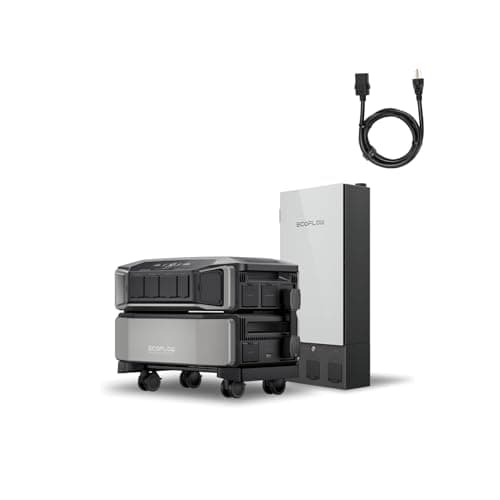
EcoFlow DELTA Pro Ultra with Smart Home Panel 2

Best all-in-one overall

EcoFlow DELTA Pro Ultra with Smart Home Panel 2

6,144Wh and 7,200W of native 120/240V with the Smart Home Panel 2 and its 12 circuits, bought as one listed kit.

A house that wants panel-level backup from one purchase
$5,499.00 · Check price on Amazon

#ad how this is funded · price as of October 20, 2026

2
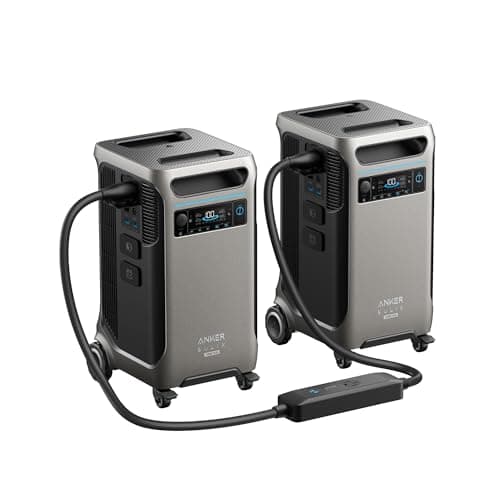
Anker SOLIX F3800 Plus with Double Power Hub

Most capacity in a single bundle

Anker SOLIX F3800 Plus with Double Power Hub

7,680Wh as one listed bundle, in the paired configuration Anker publishes at 12kW and up to 53.8kWh with expansion.

A rural house that needs 240V and real runtime together
$5,398.99 · Check price on Amazon

#ad how this is funded · price as of October 20, 2026 · $9,897.00 45% off

3
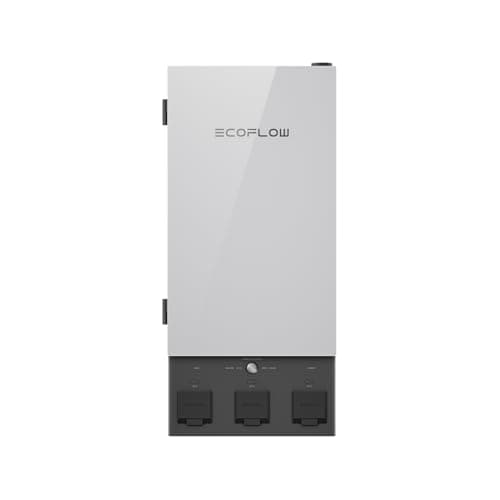
EcoFlow Smart Home Panel 2

The piece that turns a battery into a system

EcoFlow Smart Home Panel 2

A 12-circuit sub-panel with 20ms switchover, a wall display and published support for 3-12kW gas generators.

Someone who already owns a DELTA Pro, Pro 3 or Pro Ultra
$1,598.99 · Check price on Amazon

#ad how this is funded · price as of October 20, 2026 · $1,899.00 16% off

4
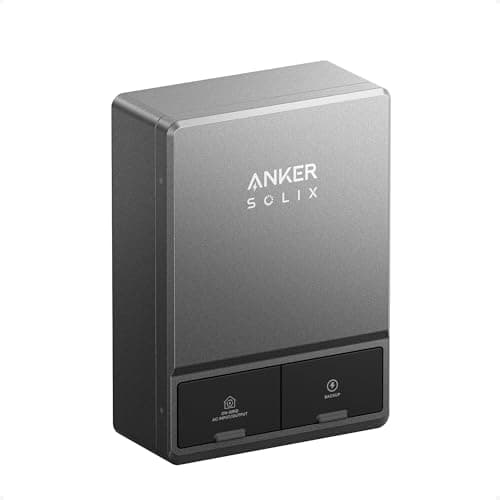
Anker SOLIX Smart Inlet Box

The cheapest route to whole-home, manually

Anker SOLIX Smart Inlet Box

A NEMA 3R weatherproof inlet for manual whole-home backup, plug and play, with a Storm Guard mode.

Whole-home coverage without a sub-panel budget
$399.17 · Check price on Amazon

#ad how this is funded · price as of October 20, 2026

5
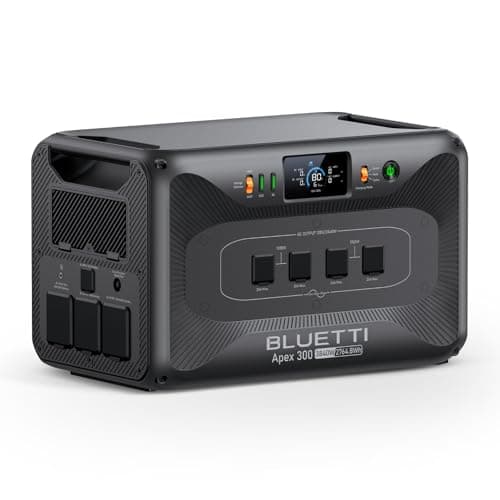
BLUETTI Apex 300

Best entry point into a scalable system

BLUETTI Apex 300

2,764.8Wh with simultaneous 120V/240V and a B300K expansion path, at the price of a component rather than a kit.

Starting small and adding over several seasons
$1,498.98 · Check price on Amazon

#ad how this is funded · price as of October 20, 2026 · $1,699.00 12% off

6
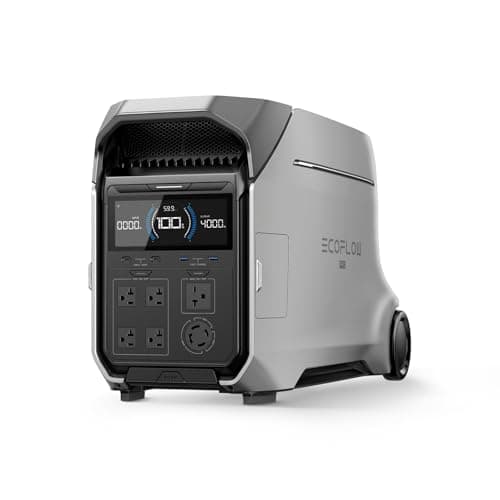
EcoFlow DELTA Pro 3

The component that upgrades into a system

EcoFlow DELTA Pro 3

4,096Wh and 4,000W with 240V on demand, UL 9540 certified, and documented compatibility with the Smart Home Panel 2.

Buying a battery now and the panel later
$2,799.00 · Check price on Amazon

#ad how this is funded · price as of October 20, 2026 · $3,699.00 24% off

Prices come from the retailer at page-build time and change constantly. Where no live price is available the button reads “Check price” rather than showing a number we cannot stand behind.

The verdict, in one paragraph

If you want whole-home backup as one purchase, the EcoFlow DELTA Pro Ultra with Smart Home Panel 2 is the most complete matched kit: 6,144Wh, 7,200W of native 120/240V, 12 circuits and a 20ms switchover in a single listed package. The Anker SOLIX F3800 Plus with Double Power Hub brings more raw capacity at 7,680Wh in Anker's paired configuration. At the other end, an Anker SOLIX Smart Inlet Box gets a battery into house circuits manually for a fraction of a sub-panel budget. The reason to buy a kit rather than assemble one is published by UL and is not a matter of opinion: combining independently certified products in the field does not create a certified, Listed system.

How these were chosen

This site runs no test bench and owns none of this equipment. Every figure below is the manufacturer's published number, cited at the foot of the page. Two rules shaped the list:

  • It has to be buyable as a unit. Every entry resolves to a specific, currently in-stock listing — checked before writing, not assumed. A system you have to assemble from four part numbers across three vendors is the thing this page exists to compare against.
  • Published integration, not inferred compatibility. Where a manufacturer states which inverter works with which panel, we use that. Where it does not, the row says so.

Standby generators are not in the lineup. They are installer-mediated equipment not sold through a retail buy button — the whole-house generator page covers that route.

What each package actually includes

SystemBatteryOutputSwitching includedCircuits
EcoFlow DPU + Smart Home Panel 26,144 Wh7,200 W, 120V/240V; 10.8 kW surgeYes - 20 ms auto12
Anker F3800 Plus + Double Power Hub7,680 WhUp to 12 kW paired, 120V/240VNo - hub links units, panel sold separately12 with Home Power Panel
EcoFlow Smart Home Panel 2 aloneNone - add an inverterDepends on the paired unitYes - 20 ms auto12
Anker SOLIX Smart Inlet BoxNone - add a stationDepends on the paired unitManualWhole-home, manually switched
BLUETTI Apex 3002,764.8 Wh, B300K expandable3,840 W, simultaneous 120V/240VNo - Home Integration Kit separateNot published
EcoFlow DELTA Pro 34,096 Wh4,000 W, 240V as a selected modeNo - Smart Home Panel 2 separate12 with the panel

Manufacturer figures, cited under Sources. "Not published" means we could not find it on the maker's own pages. Current prices sit inside the buy buttons above, each with the date it was refreshed — and the gap between a bundle and the sum of its parts moves, so compare them on the day.

The listing argument, which is the real reason to buy a kit

UL's code-authority guidance contains one sentence that settles most of this debate: combining independently certified products in the field does not create a certified (Listed) system.

That matters in four concrete places:

  1. Inspection. IRC Section R328 and NFPA 855 Chapter 15 require a residential ESS to be listed to UL 9540 and installed in accordance with its listing. A field assembly of separately listed parts does not satisfy that cleanly, and an inspector can say so.
  2. Insurance. A claim involving a non-listed installation is a harder conversation than one involving a manufacturer's matched kit.
  3. Warranty. Two manufacturers each blaming the other component is the standard failure mode of a mixed system. One vendor for the whole chain removes that.
  4. It actually works on day one. Switchover timing, circuit control and app monitoring are integration features. They exist between the battery and the panel, which is precisely the seam a mixed build has to invent.

What an all-in-one still does not include

"All-in-one" describes the equipment, not the project. None of these kits includes:

  • The electrician. Anything wired to a panel needs a licensed install, a permit and an inspection.
  • The siting work. Published residential rules put a hardwired system in a garage, a basement, a utility space, on an exterior wall or outdoors — never living space — with 80 kWh aggregate in the garage tier and 40 kWh in interior non-habitable spaces. Unfinished framing may need 5/8-inch Type X gypsum board.
  • Solar. Panels, racking and the roof work are a separate project with separate approvals.
  • A generator. Even where the panel supports one — EcoFlow publishes 3 to 12kW gas generator support on the Smart Home Panel 2 — the engine is yours to buy.

Kit versus components: when assembling is the right call

Buying the package is not always correct. Three cases where components win:

  • You already own the battery. Adding a Smart Home Panel 2 to a DELTA Pro 3 you bought last year is cheaper than replacing the lot, and it is still a single-manufacturer pairing.
  • You are scaling over years. The Apex 300 route — a capable split-phase unit now, B300K modules later — spreads the cost without ever leaving one ecosystem.
  • Manual switching is genuinely enough. If somebody is home for most outages, an inlet box plus a station does the job for a fraction of a smart panel, and connecting a source to your house covers the legal ways to wire it.

What does not work is mixing brands across the battery, the inverter and the switching. That is the specific case UL's sentence is about.

Which one, for which house

  • Whole house, automatic, one purchase: EcoFlow DELTA Pro Ultra with Smart Home Panel 2.
  • Rural, 240V loads, maximum runtime: Anker F3800 Plus with Double Power Hub, adding the Home Power Panel for automatic circuits.
  • You already own a DELTA Pro-family battery: the Smart Home Panel 2 on its own.
  • Whole-home on a budget, somebody is home: Anker Smart Inlet Box plus a station you already have.
  • Building up over several seasons: BLUETTI Apex 300, then B300K modules, then the Home Integration Kit.
  • A critical-load list, not a house: none of these. A single plug-in unit is the better buy — the home battery roundup covers it.

The short version

An all-in-one is worth paying for because the integration is the product: switchover timing, circuit control and monitoring all live between the battery and the panel, and UL is explicit that bolting separately listed parts together in the field does not produce a listed system. EcoFlow's DELTA Pro Ultra with Smart Home Panel 2 is the most complete package, Anker's paired F3800 bundle brings the most capacity, and an inlet box is the honest budget route. Whichever you choose, stay inside one manufacturer's matched components and budget for the electrician the box does not contain.
The picks in full

01 — Best all-in-one overall

EcoFlow DELTA Pro Ultra with Smart Home Panel 2

6,144Wh and 7,200W of native 120/240V with the Smart Home Panel 2 and its 12 circuits, bought as one listed kit.

This is the package the category is built around: the inverter unit and the panel as a single line item rather than three purchases and an integration problem. EcoFlow publishes 7,200W continuous at 120V/240V with 10.8kW surge, and the Smart Home Panel 2 brings 12 circuits and a 20ms switchover.

Monitoring arrives with it rather than as an afterthought — app, wall-mounted PowerInsight screen and a web dashboard, which is the most complete set of surfaces any system here publishes.

The honest catch: this is installed equipment. Permit, electrician, inspection, and a siting decision governed by the residential ESS rules — what can legally go indoors covers where it may actually go.

Skip it ifyour keep-list is a refrigerator and a modem. This is a whole-house system priced accordingly.

EcoFlow DELTA Pro Ultra with Smart Home Panel 2
$5,499.00 · Check price on Amazon

#ad how this is funded · price as of October 20, 2026

Published specifications for the EcoFlow DELTA Pro Ultra with Smart Home Panel 2
SpecificationPublished figure
Battery6,144 Wh per inverter unit
AC output7,200 W continuous, 120V/240V; 10.8 kW surge
PanelSmart Home Panel 2, 12 circuits, 20 ms switchover
Expansion30 kWh on one inverter; 90 kWh and 21.6 kW across three
Cycle life3,500 cycles to 80% capacity
Warranty5 years

Source: EcoFlow — DELTA Pro Ultra product specifications. These are the manufacturer's published figures, not ours — we have not tested this unit.

02 — Most capacity in a single bundle

Anker SOLIX F3800 Plus with Double Power Hub

7,680Wh as one listed bundle, in the paired configuration Anker publishes at 12kW and up to 53.8kWh with expansion.

Anker publishes the paired F3800 configuration at 12kW and 53.8kWh with expansion batteries, and this bundle gets you the first step of it — two units' worth of capacity plus the hub that links them — without sourcing three separate part numbers.

Native 120/240V from the units themselves means no autotransformer and no voltage hub in the path for the 240V loads that actually matter on a rural property.

The honest catch: a hub is not a panel. For automatic circuit-level switching you still add the Home Power Panel, which Anker publishes at 12 backed-up circuits with a sub-20ms switchover.

Skip it ifone night of critical loads is enough. Two units is a lot of battery to buy at once.

Anker SOLIX F3800 Plus with Double Power Hub
$5,398.99 · Check price on Amazon

#ad how this is funded · price as of October 20, 2026 · $9,897.00 45% off

Published specifications for the Anker SOLIX F3800 Plus with Double Power Hub
SpecificationPublished figure
Capacity7,680 Wh as listed
Paired-unit output12,000 W AC, per the listing
Paired-unit ceiling53.8 kWh with expansion batteries, per Anker's F3800 specifications
Voltage120V and 240V dual voltage
Solar input3,200 W
GeneratorGenerator-ready, per the listing
Cell chemistryLiFePO4, 3,000+ cycles
Warranty5 years

Source: Anker SOLIX — F3800 Plus with Double Power Hub retail listing. These are the manufacturer's published figures, not ours — we have not tested this unit.

03 — The piece that turns a battery into a system

EcoFlow Smart Home Panel 2

A 12-circuit sub-panel with 20ms switchover, a wall display and published support for 3-12kW gas generators.

Bought separately, this is the component that converts a wheeled battery into something wired into the house. Twelve circuits, a 20ms auto-switchover, and a system ceiling of three inverters and fifteen 6kWh batteries.

The published generator support is the quietly important part: 3 to 12kW portable gas generators can feed it, which is what makes a battery-plus-generator hybrid work unattended through a multi-day event.

The honest catch: EcoFlow states the DELTA Pro Ultra and DELTA Pro 3 cannot be used with it simultaneously. Decide which inverter family you are in before buying the panel.

Skip it ifyou own a DELTA 3 or a smaller unit. EcoFlow lists compatibility with the Pro line, not the whole range.

EcoFlow Smart Home Panel 2
$1,598.99 · Check price on Amazon

#ad how this is funded · price as of October 20, 2026 · $1,899.00 16% off

Published specifications for the EcoFlow Smart Home Panel 2
SpecificationPublished figure
Circuits12-circuit sub-panel
Switchover20 ms auto-switchover on grid loss
Works withDELTA Pro Ultra, DELTA Pro, DELTA Pro 3 (not Ultra and Pro 3 together)
Generator inputSupports 3-12 kW portable gas generators
System ceilingUp to 3 inverters and 15 stackable 6 kWh batteries
MonitoringApp, wall-mounted PowerInsight screen and web dashboard

Source: EcoFlow — Smart Home Panel 2 product page. These are the manufacturer's published figures, not ours — we have not tested this unit.

04 — The cheapest route to whole-home, manually

Anker SOLIX Smart Inlet Box

A NEMA 3R weatherproof inlet for manual whole-home backup, plug and play, with a Storm Guard mode.

Not every all-in-one needs to be automatic. An inlet box is the low-cost end of the category: it gets a battery's output into house circuits without a smart sub-panel, a controller or a four-figure installation.

For a household that is home during most outages and simply wants more than extension cords, this is the honest value pick in the lineup.

The honest catch: it is a manual inlet, not an automatic transfer switch. There is no switchover figure because there is no automatic switchover — manual versus automatic is the page on that trade.

Skip it ifyou want it to happen while you are asleep. Manual means somebody has to connect it.

Anker SOLIX Smart Inlet Box
$399.17 · Check price on Amazon

#ad how this is funded · price as of October 20, 2026

Published specifications for the Anker SOLIX Smart Inlet Box
SpecificationPublished figure
FunctionManual whole-home backup inlet
EnclosureNEMA 3R weatherproof
InstallPlug and play, per the listing
ModesStorm Guard Mode; Smart Daily Savings for the E10
SwitchoverManual — not an automatic transfer switch

Source: Anker SOLIX — Smart Inlet Box retail listing. These are the manufacturer's published figures, not ours — we have not tested this unit.

05 — Best entry point into a scalable system

BLUETTI Apex 300

2,764.8Wh with simultaneous 120V/240V and a B300K expansion path, at the price of a component rather than a kit.

Not everyone can commit a whole-home budget at once. The Apex 300 produces split-phase from a single box at 3,840W, which means the capability arrives first and the capacity follows as B300K modules are added.

BLUETTI also publishes a Home Integration Kit for this unit, so the path from plug-in to wired exists without changing inverter family.

The honest catch: buying in stages is how people end up field-combining parts. Stay inside one manufacturer's own matched components, for the reason set out below.

Skip it ifyou want it all working on day one. This is the buy-it-in-stages route.

BLUETTI Apex 300
$1,498.98 · Check price on Amazon

#ad how this is funded · price as of October 20, 2026 · $1,699.00 12% off

Published specifications for the BLUETTI Apex 300
SpecificationPublished figure
Capacity2,764.8 Wh
Cell chemistryLiFePO4 (LFP)
AC output3,840 W continuous pure sine / 7,680 W lifting
Voltage120V and 240V simultaneous output
Max solar input2,400 W (2 x 1,200 W, 12-60 V, 20 A each)
ExpansionB300K at 2,764.8 Wh each, or B500K at 5,120 Wh each
Cycle life6,000 cycles to 80% capacity
Weight83.78 lb (38 kg)
Warranty5 years

Source: BLUETTI — Apex 300 RV power system guide (published specifications). These are the manufacturer's published figures, not ours — we have not tested this unit.

06 — The component that upgrades into a system

EcoFlow DELTA Pro 3

4,096Wh and 4,000W with 240V on demand, UL 9540 certified, and documented compatibility with the Smart Home Panel 2.

This is the sensible staged entry into EcoFlow's ecosystem: a capable wheeled battery today, with a documented route to a wired 12-circuit system when the budget allows.

It is also the only portable unit on this site that publishes a UL 9540 certification, which matters if the end state is a permitted installation.

The honest catch: EcoFlow's 48kWh figure for this unit is a system number, not a single-unit one, and the DELTA Pro 3 cannot share a Smart Home Panel 2 with a DELTA Pro Ultra.

Skip it ifyou are certain you want whole-home. The kit above costs less than this plus a panel bought separately.

EcoFlow DELTA Pro 3
$2,799.00 · Check price on Amazon

#ad how this is funded · price as of October 20, 2026 · $3,699.00 24% off

Published specifications for the EcoFlow DELTA Pro 3
SpecificationPublished figure
Capacity4,096 Wh
Cell chemistryLiFePO4 (LFP)
AC output4,000 W, 120V / 240V
Cycle life4,000+ cycles to 80% capacity
Wall recharge0-80% in about 1 hour
Max solar input2,600 W
Expansion4 kWh to 48 kWh

Source: EcoFlow — DELTA Pro 3 product listing. These are the manufacturer's published figures, not ours — we have not tested this unit.

How these were chosen

We did not test these. Nobody at Watt & Warden has plugged one in. What we did instead: read the manufacturer's published specifications, compile them into a table where the figures line up, and compute the numbers manufacturers leave out — runtime against a real appliance load, and what an hour of running actually costs.

Anything that could not be sourced was left out rather than estimated, and every pick names the buyer who should skip it. The full method is here, including where it is weaker than a publisher with a test bench.

Questions people actually ask

What is the best all-in-one home backup power system?

The EcoFlow DELTA Pro Ultra with Smart Home Panel 2 is the most complete matched kit - 6,144Wh, 7,200W of native 120/240V with 10.8kW surge, 12 circuits and a 20ms switchover in one listed package. The Anker SOLIX F3800 Plus with Double Power Hub carries more capacity at 7,680Wh in the paired configuration Anker publishes at 12kW.

Can I build my own all-in-one system from separate parts?

You can assemble the hardware, but UL states plainly that combining independently certified products in the field does not create a certified, Listed system. Since IRC Section R328 and NFPA 855 Chapter 15 require a residential ESS to be listed to UL 9540 and installed per its listing, a mixed-brand field build is a harder conversation with an inspector and an insurer.

What is included in an all-in-one home backup kit?

Typically the battery and inverter, the transfer switching or sub-panel, and the monitoring. What is never included is the electrician, the permit and inspection, any solar, and the generator - even where the panel supports one, as EcoFlow's Smart Home Panel 2 does for 3 to 12kW portable gas generators.

How many circuits does an all-in-one system back up?

Twelve is the published figure for both EcoFlow's Smart Home Panel 2 and Anker's Home Power Panel. That is a critical-load subpanel rather than an entire service, so the design work is choosing which twelve circuits matter - typically refrigeration, heating controls, well or sump pumps, lighting and the network.

Is an all-in-one system cheaper than buying the parts separately?

Sometimes, and the gap moves. The reason to prefer a kit is usually not price but integration and listing - switchover timing, circuit control and app monitoring all live in the seam between the battery and the panel. Compare the bundle against the sum of its parts on the day, since the buy buttons on this page carry current prices with their refresh date.

Do I need a permit for an all-in-one home backup system?

For anything hardwired to a panel, yes - a licensed installation, a permit and an inspection. Siting is also governed by published residential rules: 80 kWh aggregate in a garage, on an exterior wall or outdoors, 40 kWh in an interior utility closet, basement or storage space, and nothing in habitable space. Unfinished framing may need 5/8-inch Type X gypsum board.

Can I use a DELTA Pro 3 and a DELTA Pro Ultra on the same panel?

No. EcoFlow documents the Smart Home Panel 2 as compatible with the DELTA Pro Ultra, DELTA Pro and DELTA Pro 3, but states that the DELTA Pro Ultra and the DELTA Pro 3 cannot be used with it at the same time. Choose the inverter family before buying the panel.

Sources