
Skip to content
Watt Warden

Power Stations

Power Stations in Cold Weather: What to Buy

A battery that works perfectly in July can refuse to charge in January, and the specification that tells you so is one almost nobody reads.

By Sawyer V.Updated Published How we work this out
A snow-covered house on a winter morning.

Watt & Warden earns a commission on qualifying purchases made through links on this page, at no extra cost to you. It never changes a ranking, and our picks include products we tell you to skip. Full disclosure.

What cold does to a lithium battery

Two separate effects, and only one of them is temporary.

Capacity falls. Chemical reactions slow as temperature drops, so a battery delivers less of its rated energy in the cold. Warm it back up and the capacity returns — nothing has been damaged.

Charging below freezing is harmful. Charging a lithium cell below roughly 32F can plate metallic lithium onto the anode, which is permanent and reduces capacity for good. This is why manufacturers publish a narrower charging range than discharging range, and why good units refuse to charge when they are too cold.

Goal Zero states it plainly for the Yeti 700: discharge from -4F, charge only from 32F. Those two numbers are the shape of the problem across the whole category.

What that means in a winter outage

Where the unit livesDischargingCharging
Heated room indoorsFull capacityFine
Unheated garage, near freezingReduced capacityMay refuse, or harm the cells if it does not
Car or shed, well below freezingSignificantly reducedDo not — bring it inside first
Outdoors in sleetCold plus water ingressOnly units with a published IP rating belong here

Manufacturer operating ranges differ by model and are published in the specifications — the Goal Zero figures above are an example rather than a universal rule. Check yours before planning around it.

The rules that actually matter

  • Store and charge it indoors. A heated room, not the garage. This single habit solves most of the problem.
  • Let a cold unit warm up before charging. Bring it in, give it a couple of hours, then plug it in.
  • Expect less than the rated capacity when the unit itself is cold, and plan the night around that.
  • Solar charging in winter is weak — short days, low sun angle, snow on the panel. The cloudy-day page has the arithmetic.
  • Do not try to heat the house with it. The numbers below explain why.

Why heating is off the table

LoadDrawRuntime from 2,000Wh
Gas furnace blower200 W averageAbout 8.5 hours
Refrigerator150 W averageAbout 11 hours
1,500W electric space heater1,500 W continuousWell under 2 hours
Electric blanket60-100 W17-28 hours

Runtime is capacity x 0.85 divided by draw. The pattern is the point: a battery runs the things that move heat for a long time, and the things that make heat for almost no time — the space heater page works it through.

The winter setup that works

  1. Battery indoors, running the furnace fan, the fridge, the internet and lights.
  2. Propane or another non-electric heat source for actual warmth, with ventilation and a CO alarm.
  3. Blankets and a warm room rather than heating the whole house.
  4. A generator if outages run past a day, because batteries cannot be refilled by winter sun alone.

The short version

  • Cold reduces capacity temporarily; charging below freezing damages cells permanently.
  • Buy on published temperature ranges — good makers state discharge and charge limits separately.
  • Keep the unit in a heated room. That is the whole maintenance routine.
  • Heat comes from propane, not from the battery.

Quick picks

#ProductBest forPrice
1
Goal Zero Yeti 700

The one that publishes its limits

Goal Zero Yeti 700

677Wh, IPX4, with published operating ranges of -4F to 140F discharging and 32F to 125.6F charging.

Knowing exactly where the line is
$699.95 · Check price on Amazon

#ad how this is funded · price as of October 21, 2026

2
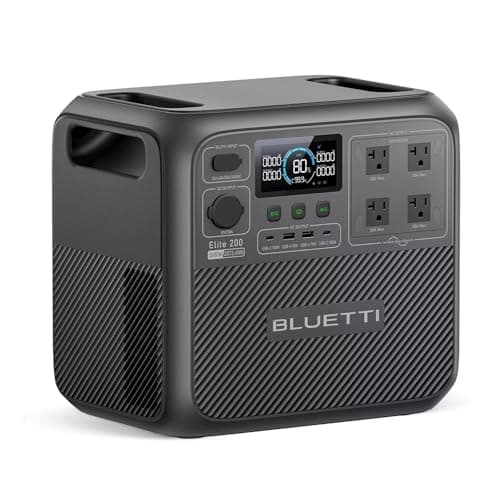
BLUETTI Elite 200 V2

Best capacity for a winter outage

BLUETTI Elite 200 V2

2,073.6Wh and 2,600W continuous with a 6,000+ cycle rating.

A furnace fan, a fridge and lights overnight
$1,399.00 · Check price on Amazon

#ad how this is funded · price as of October 21, 2026

3
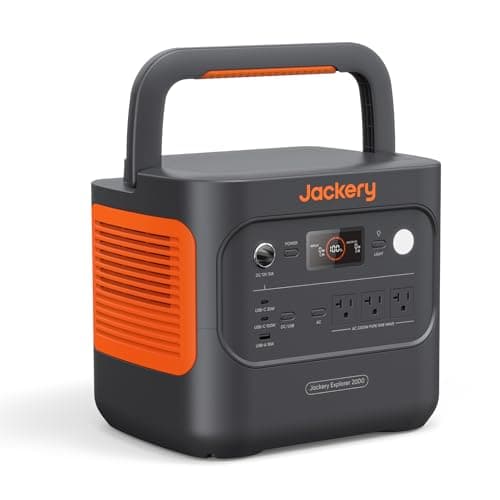
Jackery Explorer 2000 v2

Best for charging where people sleep

Jackery Explorer 2000 v2

2,042Wh, 2,200W, a 20ms UPS switchover and charging under 30dB.

A cold night with the unit in a bedroom
$899.00 · Check price on Amazon

#ad how this is funded · price as of October 21, 2026 · $999.00 10% off

4
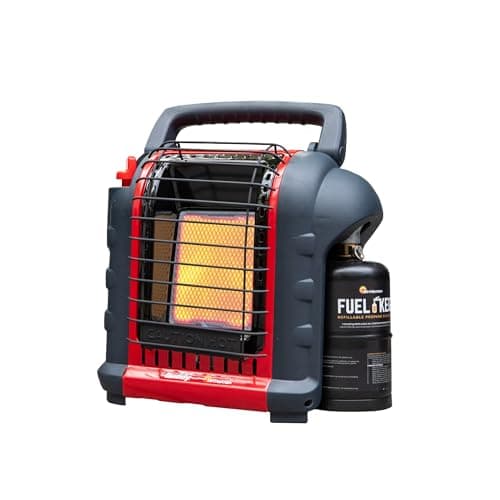
Mr. Heater MH9BX Portable Buddy

The load a battery cannot carry

Mr. Heater MH9BX Portable Buddy

A portable propane radiant heater — heat that does not come from the battery.

Actual heat, without electricity
$89.97 · Check price on Amazon

#ad how this is funded · price as of October 21, 2026

Prices come from the retailer at page-build time and change constantly. Where no live price is available the button reads “Check price” rather than showing a number we cannot stand behind.

The picks in full

01 — The one that publishes its limits

Goal Zero Yeti 700

677Wh, IPX4, with published operating ranges of -4F to 140F discharging and 32F to 125.6F charging.

Goal Zero states both ranges separately, which is what you want in a winter unit: it can be discharged well below freezing and must be above freezing to charge.

The IPX4 rating also matters in winter, when condensation and sleet are part of the environment.

The honest catch: 600W continuous. This runs a refrigerator, lighting and a network, not a heater.

Skip it ifyou need to run a heating element. 600W continuous is the ceiling.
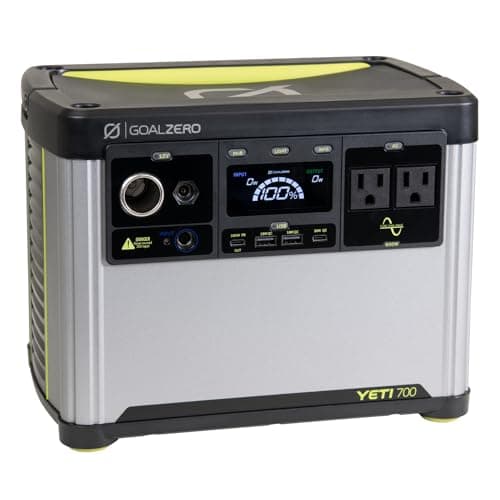
Goal Zero Yeti 700
$699.95 · Check price on Amazon

#ad how this is funded · price as of October 21, 2026

Published specifications for the Goal Zero Yeti 700
SpecificationPublished figure
Capacity677.37 Wh
Cell chemistryLiFePO4 (LFP)
AC output600 W continuous / 1,000 W surge, pure sine, 1 outlet
USB1x 100 W USB-C PD, 2x 30 W USB-C QC, 2x USB-A (18 W combined)
Cycle life4,000+ cycles to 80% at 75F
AC recharge1.7 h at 500 W input; 3 h at 340 W
Max solar input200 W (about 3.8 h to full)
Weight20.3 lb (9.2 kg)
Ingress ratingIPX4 water resistant
Warranty5 years

Source: Goal Zero — Yeti 700 product specifications. These are the manufacturer's published figures, not ours — we have not tested this unit.

02 — Best capacity for a winter outage

BLUETTI Elite 200 V2

2,073.6Wh and 2,600W continuous with a 6,000+ cycle rating.

Winter outages are the long ones, and the furnace fan is the load that matters — around 200W average, which this runs for most of a night alongside the refrigerator.

2,600W of output also starts a sump pump, which winter thaw makes relevant.

The honest catch: heavy, and like any lithium unit it wants to be stored and charged indoors.

Skip it ifthe unit must live in an unheated garage. Keep it inside.

BLUETTI Elite 200 V2
$1,399.00 · Check price on Amazon

#ad how this is funded · price as of October 21, 2026

Published specifications for the BLUETTI Elite 200 V2
SpecificationPublished figure
Usable capacity2,073.6 Wh
Cell chemistryAutomotive-grade LiFePO4 (LFP)
AC output2,600 W continuous / 3,900 W power lifting
Cycle life6,000+ cycles
Fast charge0–80% in 50 min via dual AC/DC input

Source: BLUETTI — Elite 200 V2 product specifications. These are the manufacturer's published figures, not ours — we have not tested this unit.

03 — Best for charging where people sleep

Jackery Explorer 2000 v2

2,042Wh, 2,200W, a 20ms UPS switchover and charging under 30dB.

Keeping the battery in a heated room is the single most effective cold-weather measure, and a unit that charges quietly makes that practical rather than annoying.

The 20ms switchover also covers a furnace control board through a brief cut.

The honest catch: 66 minutes to 80% is the slowest refill in its class.

Skip it ifyou need the fastest refill between grid returns.

Jackery Explorer 2000 v2
$899.00 · Check price on Amazon

#ad how this is funded · price as of October 21, 2026 · $999.00 10% off

Published specifications for the Jackery Explorer 2000 v2
SpecificationPublished figure
Usable capacity2,042 Wh
Cell chemistryLiFePO4 (LFP)
AC output2,200 W continuous
UPS switchover20 ms
Weight39.5 lb
Charge time0–80% in 66 min; full in 102 min (emergency mode)
Charging noiseunder 30 dB in silent charging mode

Source: Jackery — Explorer 2000 v2 product specifications. These are the manufacturer's published figures, not ours — we have not tested this unit.

04 — The load a battery cannot carry

Mr. Heater MH9BX Portable Buddy

A portable propane radiant heater — heat that does not come from the battery.

No portable battery heats a house. A 1,500W electric heater drains 2kWh in well under two hours, which is the whole argument for propane in a winter outage.

Keep the battery for the furnace fan, the fridge and the lights — the staying warm page covers the rest.

The honest catch: any combustion appliance indoors demands ventilation and a working carbon monoxide alarm.

Skip it ifyou have no way to ventilate. Combustion indoors needs air and a CO alarm.

Mr. Heater MH9BX Portable Buddy
$89.97 · Check price on Amazon

#ad how this is funded · price as of October 21, 2026

Published specifications for the Mr. Heater MH9BX Portable Buddy
SpecificationPublished figure
Output4,000 or 9,000 BTU, selectable
CoverageSpaces up to 225 sq ft
Fuel1 lb propane cylinder, or a remote supply with a hose and filter
Run timeAbout 3 h at 9,000 BTU, longer on low
Fuel use0.044 gal/h at 4,000 BTU, 0.099 gal/h at 9,000 BTU
SafetyOxygen depletion sensor, tip-over shut-off, pilot-out shut-off
IgnitionPiezo igniter, no battery or mains needed

Source: Mr. Heater — MH9BX Portable Buddy product page. These are the manufacturer's published figures, not ours — we have not tested this unit.

How these were chosen

We did not test these. Nobody at Watt & Warden has plugged one in. What we did instead: read the manufacturer's published specifications, compile them into a table where the figures line up, and compute the numbers manufacturers leave out — runtime against a real appliance load, and what an hour of running actually costs.

Anything that could not be sourced was left out rather than estimated, and every pick names the buyer who should skip it. The full method is here, including where it is weaker than a publisher with a test bench.

Questions people actually ask

Can you use a power station in freezing weather?

Yes for discharging -- Goal Zero publishes a discharge range down to -4F for the Yeti 700, and figures like that are typical. Charging is the restriction: below roughly 32F, charging a lithium cell can permanently damage it, which is why makers publish a narrower charging range.

Does cold weather reduce a power station's capacity?

Yes, temporarily. Chemical reactions slow as temperature falls, so a cold battery delivers less than its rated energy. Warm it back up and the capacity returns -- nothing has been lost, provided you did not charge it while it was too cold.

Can I keep a power station in the garage in winter?

It will survive, but it is the wrong place. An unheated garage sits near or below freezing for months, which reduces available capacity and can block charging entirely. Store and charge it in a heated room and carry it to where it is needed.

Can a power station run a space heater during a winter outage?

Briefly, and it is the wrong use. A 1,500W heater drains a 2,000Wh battery in well under two hours at 85% inverter efficiency. Use the battery for the furnace fan, refrigerator, internet and lights -- around 350W combined -- and get actual heat from propane or from blankets.

What should I look for in a cold-weather power station?

Published operating ranges for both discharging and charging, LiFePO4 cells, a stated ingress rating if the unit will be outdoors, and enough output to start a furnace blower. A quiet charging mode helps too, since the unit should live indoors where people are.

Sources

Every figure on this page comes from a published source. We have not tested this equipment, so the specifications are the manufacturer's and the statistics are the dataset's — the arithmetic on top of them is ours, and it is shown in full so you can check it. How we work this out.