Skip to content
Watt Warden

Home Standby

The Most Reliable Home Battery Backup Systems, Compared

No manufacturer publishes a failure rate, so any ranking claiming to measure reliability is guessing. These four published specifications are the ones that can be checked.

By Sawyer V.Updated Published How we work this out
A technician inspecting equipment with a flashlight in a dim industrial space.

Watt & Warden earns a commission on qualifying purchases made through links on this page, at no extra cost to you. It never changes a ranking, and our picks include products we tell you to skip. Full disclosure.

Quick picks

#ProductBest forPrice
1
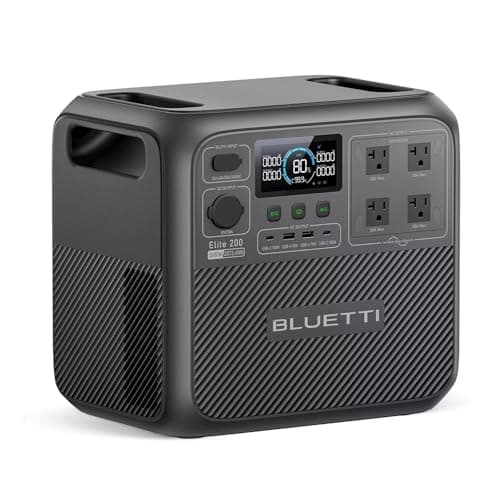
BLUETTI Elite 200 V2

Longest published service life

BLUETTI Elite 200 V2

6,000+ cycles on automotive-grade LFP, inside BLUETTI's published 24-72 month power station warranty band.

A system that has to still work in year ten
$1,399.00 · Check price on Amazon

#ad how this is funded · price as of October 20, 2026

2
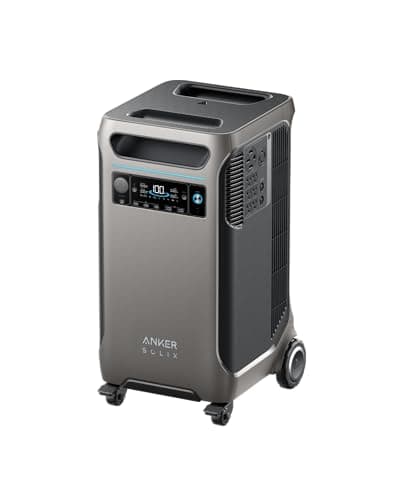
Anker SOLIX F3800

Clearest warranty, fastest switchover

Anker SOLIX F3800

A flat 5-year warranty on registration, under 20ms UPS switchover, and 6,000W at 120V/240V so the reliability reaches real circuits.

Equipment that cannot tolerate a blink
$1,759.99 · Check price on Amazon

#ad how this is funded · price as of October 20, 2026

3
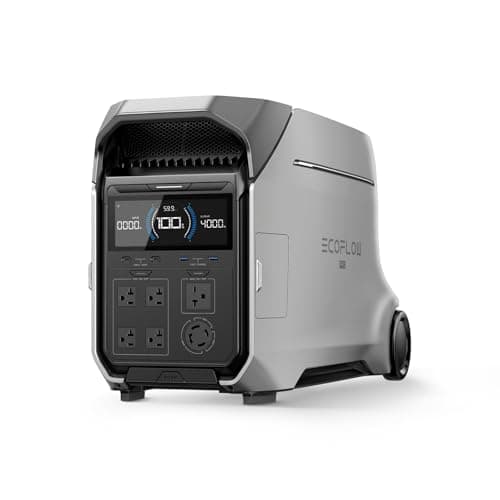
EcoFlow DELTA Pro 3

Best warranty with nothing to remember

EcoFlow DELTA Pro 3

A flat 5 years on EcoFlow's published table — no registration step — with 4,000 cycles to 80% and UL 9540 certification.

Anyone who does not want cover contingent on an app
$2,799.00 · Check price on Amazon

#ad how this is funded · price as of October 20, 2026 · $3,699.00 24% off

4
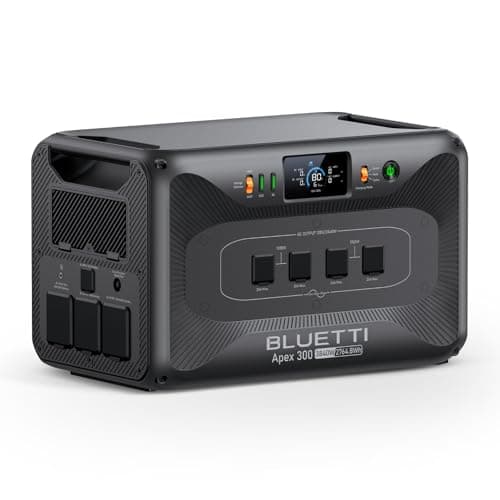
BLUETTI Apex 300

Best cycle rating on a system that does 240V

BLUETTI Apex 300

6,000 cycles to 80% with simultaneous 120V and 240V output and a published 5-year warranty.

Rural reliability where 240V loads cannot be dropped
$1,498.98 · Check price on Amazon

#ad how this is funded · price as of October 20, 2026 · $1,699.00 12% off

5
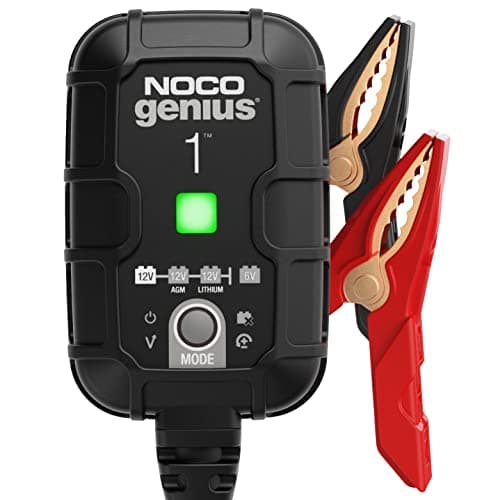
NOCO GENIUS1 battery charger and maintainer

The reliability fix for everything with an engine

NOCO GENIUS1 battery charger and maintainer

A 1A maintainer with desulfation that keeps a start battery alive - the single most common no-start cause on standby systems.

Anyone whose backup plan includes a generator
$29.95 · Check price on Amazon

#ad how this is funded · price as of October 20, 2026 · $39.95 25% off

Prices come from the retailer at page-build time and change constantly. Where no live price is available the button reads “Check price” rather than showing a number we cannot stand behind.

The verdict, in one paragraph

No manufacturer in this category publishes a failure rate, a mean time between failures, or any field-reliability data, so any ranking that claims to measure reliability is inventing it. What can be compared is four published specifications: cycle rating, warranty term, safety listing and switchover time. On those, BLUETTI leads on cycle life (6,000+ on the Elite 200 V2 and Apex 300), EcoFlow and Anker lead on warranty (a flat five years on the DELTA Pro 3 with no registration; five years on Anker SOLIX with registration), Tesla publishes by far the longest certification list (UL 9540, UL 9540A, UL 1741, UL 1973 and more), and Anker leads on switchover at under 20ms. This site runs no test bench and owns none of these units, so nothing below is a measurement of ours.

What can honestly be compared

Reliability in consumer electronics usually means "how often does it break," and that number does not exist publicly for home batteries. These four do, and each is a different kind of evidence:

  • Cycle rating — how many full charge-discharge cycles before capacity falls to a stated percentage. A wear figure, not a failure figure.
  • Warranty term — how long the manufacturer is willing to carry the cost of a failure. The closest thing to a company putting money behind its own confidence.
  • Safety listings — UL 9540, UL 1973, UL 9540A and similar. Evidence the product was tested to a standard by someone other than its maker.
  • Switchover time — how fast it takes over. Irrelevant to durability, decisive to whether the thing you were protecting actually stayed up.

The four figures, side by side

SystemCycle ratingWarrantySwitchoverListings published
BLUETTI Elite 200 V26,000+24-72 months, bandNot publishedNot published
BLUETTI Apex 3006,000 to 80%5 yearsNot publishedNot published
EcoFlow DELTA Pro 34,000 to 80%5 years, flatNot publishedUL 9540
EcoFlow DELTA Pro Ultra3,500 to 80%5 yearsUnder 20 ms; 0 ms onlineIP54 rated
Anker SOLIX F38003,000+5 years on registrationUnder 20 msNot published
EcoFlow DELTA 3 Max Plus4,000 to 80%+3 + 2 on app registration10 msNot published
BLUETTI Elite 100 V24,000+24-72 months, band10 msNot published
Tesla Powerwall 3Not published10 yearsIslanding via GatewayUL 9540, UL 9540A, UL 1741, UL 1973, IEEE 1547:2018 and more

Every entry is the manufacturer's published figure, from the pages cited under Sources. "Not published" means we could not find it on the maker's own pages — it is not an omission on our part, and it is itself a finding. Current prices sit inside the buy buttons with their refresh date.

The certification gap is the biggest difference in the table

Tesla publishes a safety and grid-interoperability list for Powerwall 3 running to more than a dozen standards — UL 1741, UL 1973, UL 9540A and UL 9540 for safety, plus UL 1741SB, IEEE 1547:2018 and IEEE 1547.1:2020 for grid interoperability, and regional rules including California Electric Rule 21 and Hawaii Rule 14H.

That is what a hardwired, permanently installed, utility-interconnected product has to carry. Portable stations are a different product class with different obligations — most publish little or nothing on this front, and EcoFlow publishing UL 9540 on the DELTA Pro 3 is the exception rather than the rule. If being able to verify third-party testing is part of what you mean by reliable, that gap matters more than any cycle number. Which systems are safe to install indoors goes into what those listings actually permit.

Warranty is where the fine print lives

A ten-year warranty with conditions can be worth less than a five-year one without them. Four published clauses that decide the real value:

  1. Registration. Anker frames its five years as something registration activates. Every EcoFlow "+2" needs app registration. Jackery's extension must be activated within thirty days.
  2. Who sold it. BLUETTI excludes products bought from unauthorized resellers by name and asks for proof showing the sales channel.
  3. Where it lives. Anker and BLUETTI both restrict cover to the country of purchase.
  4. Whether you charged it. Jackery's policy states the warranty does not apply to the battery cell unless it is fully charged within seven days of purchase and at least once every six months — a clause aimed squarely at a battery kept for emergencies.

Power station warranties compared sets out every brand's published table and the clauses in full.

What actually fails, in practice

Cells are rarely the problem for a storm battery. Twenty cycles a year against a 4,000-cycle rating is two centuries of nominal wear. The realistic failure modes are different:

  • Electronics, not cells. Inverters, BMS boards and cooling fans are what fail at year four, which is why warranty term beats cycle rating for an emergency-use battery.
  • A flat battery on the night. Self-discharge plus standby draw over a quiet year. Free to fix: top it up every six months.
  • Refusing to charge in the cold. Most LFP units will not accept a charge below freezing. A garage-stored battery in January is a known failure mode, not a fault. Storing a power station covers the windows.
  • A dead start battery on anything with an engine. The most common no-start cause on a standby system that has been exercising faithfully for years.

Who should buy on which figure

  • Daily cycling as storage: buy cycle rating. BLUETTI Elite 200 V2 or Apex 300 at 6,000+.
  • Emergency use only: buy warranty, and buy one without a registration condition. EcoFlow DELTA Pro 3 at a flat five years.
  • Hardwired, permanent, interconnected: buy certifications. Only the stationary ESS class publishes a full list.
  • Electronics that cannot blink: buy switchover. Anker at under 20ms, or EcoFlow DELTA 3 Max Plus at 10ms.
  • Anything with an engine in the plan: buy a battery maintainer first. It is the cheapest reliability upgrade on this page.

The short version

Reliability cannot be ranked honestly, because the data that would rank it is not published by anyone. What can be checked is cycle rating, warranty, listings and switchover — and on those, BLUETTI wins longevity, EcoFlow and Anker win warranty, Tesla wins certification depth, and Anker wins the moment of transfer. Weight whichever of the four matches how you will actually use the thing, read the warranty conditions before the warranty length, and top the battery up twice a year regardless of brand.

The picks in full

01 — Longest published service life

BLUETTI Elite 200 V2

6,000+ cycles on automotive-grade LFP, inside BLUETTI's published 24-72 month power station warranty band.

Cycle rating is the closest thing to a published durability figure in this category, and 6,000+ cycles is the longest on this site. At twenty cycles a year it is irrelevant; at daily cycling it is the specification that decides whether you are buying one battery or two.

LFP chemistry is doing the work. It runs cooler, tolerates full charge better and degrades more slowly than the NMC cells this category used to ship.

The honest catch: BLUETTI publishes 24 to 72 months for portable power stations as a band rather than a per-model figure, and its warranty excludes units bought from unauthorized resellers. Confirm the term for your exact model, and check who is actually selling it.

Skip it ifyou want a single published warranty number. BLUETTI publishes a range, not a figure per model.

BLUETTI Elite 200 V2
$1,399.00 · Check price on Amazon

#ad how this is funded · price as of October 20, 2026

Published specifications for the BLUETTI Elite 200 V2
SpecificationPublished figure
Usable capacity2,073.6 Wh
Cell chemistryAutomotive-grade LiFePO4 (LFP)
AC output2,600 W continuous / 3,900 W power lifting
Cycle life6,000+ cycles
Fast charge0–80% in 50 min via dual AC/DC input

Source: BLUETTI — Elite 200 V2 product specifications. These are the manufacturer's published figures, not ours — we have not tested this unit.

02 — Clearest warranty, fastest switchover

Anker SOLIX F3800

A flat 5-year warranty on registration, under 20ms UPS switchover, and 6,000W at 120V/240V so the reliability reaches real circuits.

Three published figures line up here: 5 years warranty, under 20ms switchover, and 3,000+ cycles of LFP. The switchover number is the one that matters during the event itself — a sump pump control board, a modem or a desktop never sees the grid leave.

Native split-phase output means the reliability is available to the circuits that actually flood a basement or freeze a house, rather than only to whatever is plugged into the front panel.

The honest catch: 3,000+ cycles is the shortest rating of the major systems here, and Anker restricts the warranty to the country of purchase. Both are normal; neither is in the headline.

Skip it ifyou will not register it. Anker frames the five years as something registration activates.

Anker SOLIX F3800
$1,759.99 · Check price on Amazon

#ad how this is funded · price as of October 20, 2026

Published specifications for the Anker SOLIX F3800
SpecificationPublished figure
Capacity3,840 Wh
Cell chemistryLiFePO4
AC output6,000 W continuous, 9,000 W surge
Voltage120V / 240V split-phase
Cycle life3,000+ cycles to 80% capacity
Recharge1,800 W AC, up to 2,400 W solar
ExpansionUp to six expansion batteries, 26.9 kWh total
Warranty5 years
Current Amazon listingRenewed. Anker's new first-party F3800 listing is currently unavailable and the model has been succeeded by the F3800 Plus; the unit itself is unchanged

Source: Anker SOLIX — F3800 product specifications. These are the manufacturer's published figures, not ours — we have not tested this unit.

03 — Best warranty with nothing to remember

EcoFlow DELTA Pro 3

A flat 5 years on EcoFlow's published table — no registration step — with 4,000 cycles to 80% and UL 9540 certification.

EcoFlow's warranty page puts the DELTA Pro 3 in the short list at a flat five years with no registration requirement, alongside the DELTA 2, DELTA 2 Max, DELTA 3 Plus and DELTA 3 1500. Most of the current DELTA 3 range is three plus two on app registration instead.

EcoFlow also publishes UL 9540 certification for this unit and 4,000 cycles to 80%, plus an IP65-rated battery pack — three separate published durability claims rather than one.

The honest catch: warranty terms here are per model, not per brand. Buying a different EcoFlow in the same showroom can mean a different term entirely.

Skip it ifyou need 120V and 240V simultaneously. This unit treats split-phase as a selectable mode.

EcoFlow DELTA Pro 3
$2,799.00 · Check price on Amazon

#ad how this is funded · price as of October 20, 2026 · $3,699.00 24% off

Published specifications for the EcoFlow DELTA Pro 3
SpecificationPublished figure
Capacity4,096 Wh
Cell chemistryLiFePO4 (LFP)
AC output4,000 W, 120V / 240V
Cycle life4,000+ cycles to 80% capacity
Wall recharge0-80% in about 1 hour
Max solar input2,600 W
Expansion4 kWh to 48 kWh

Source: EcoFlow — DELTA Pro 3 product listing. These are the manufacturer's published figures, not ours — we have not tested this unit.

04 — Best cycle rating on a system that does 240V

BLUETTI Apex 300

6,000 cycles to 80% with simultaneous 120V and 240V output and a published 5-year warranty.

Most systems make you choose between a long cycle rating and split-phase output. This one publishes 6,000 cycles to 80% and simultaneous 120V/240V at 3,840W, which is an unusual combination at its price.

For a rural property where the reliability question is really "will the well pump run," a long-lived battery that can actually feed a 240V circuit is the relevant kind of reliable.

The honest catch: BLUETTI's published specification detail is thinner than its rivals'. Several figures a buyer would want — AC input wattage, UPS switchover — are not published in a place we could find.

Skip it ifyou need more than 3,840W. The split-phase ceiling is modest for a heavy 240V motor.

BLUETTI Apex 300
$1,498.98 · Check price on Amazon

#ad how this is funded · price as of October 20, 2026 · $1,699.00 12% off

Published specifications for the BLUETTI Apex 300
SpecificationPublished figure
Capacity2,764.8 Wh
Cell chemistryLiFePO4 (LFP)
AC output3,840 W continuous pure sine / 7,680 W lifting
Voltage120V and 240V simultaneous output
Max solar input2,400 W (2 x 1,200 W, 12-60 V, 20 A each)
ExpansionB300K at 2,764.8 Wh each, or B500K at 5,120 Wh each
Cycle life6,000 cycles to 80% capacity
Weight83.78 lb (38 kg)
Warranty5 years

Source: BLUETTI — Apex 300 RV power system guide (published specifications). These are the manufacturer's published figures, not ours — we have not tested this unit.

05 — The reliability fix for everything with an engine

NOCO GENIUS1 battery charger and maintainer

A 1A maintainer with desulfation that keeps a start battery alive - the single most common no-start cause on standby systems.

Reliability is not only a battery-chemistry question. On any system with an engine, the component that most often fails on the night is a 12V lead-acid start battery that has quietly died between outages — and Generac's own yearly service is just two items, one of which is "inspect the battery."

A maintainer holds it at full charge indefinitely rather than cooking it, and NOCO publishes a desulfation mode aimed at exactly the way a rarely-cycled battery dies.

The honest catch: 1A is a maintainer rate, not a recovery rate, and a battery that no longer holds charge needs replacing rather than reviving.

Skip it ifyour backup is purely lithium. There is no start battery in the path to maintain.

NOCO GENIUS1 battery charger and maintainer
$29.95 · Check price on Amazon

#ad how this is funded · price as of October 20, 2026 · $39.95 25% off

Published specifications for the NOCO GENIUS1 battery charger and maintainer
SpecificationPublished figure
Output1 A DC at 6 V or 12 V
Capacity rangeUp to 30 Ah, maintains larger batteries
ChemistriesFlooded, gel, AGM, SLA, maintenance-free and LiFePO4
RepairDetects sulfation and acid stratification, desulfation mode
RecoveryCharges from 1 V, or from 0 V in Force Mode
CompensationThermal sensor adjusts charging for ambient temperature
Operating range-4°F to 104°F
Size3.5 x 2.3 x 1.3 in

Source: NOCO — GENIUS1 product page. These are the manufacturer's published figures, not ours — we have not tested this unit.

How these were chosen

We did not test these. Nobody at Watt & Warden has plugged one in. What we did instead: read the manufacturer's published specifications, compile them into a table where the figures line up, and compute the numbers manufacturers leave out — runtime against a real appliance load, and what an hour of running actually costs.

Anything that could not be sourced was left out rather than estimated, and every pick names the buyer who should skip it. The full method is here, including where it is weaker than a publisher with a test bench.

Questions people actually ask

Which home battery backup system is the most reliable?

No manufacturer publishes failure rates, so there is no honest single answer. On the four specifications that are published: BLUETTI leads on cycle rating at 6,000+ for the Elite 200 V2 and Apex 300; EcoFlow's DELTA Pro 3 has the best warranty terms at a flat five years with no registration; Tesla publishes by far the longest certification list for Powerwall 3; and Anker leads on switchover at under 20ms.

Do battery manufacturers publish failure rates?

No. Across EcoFlow, BLUETTI, Anker, Jackery, Goal Zero and Tesla, none publishes a failure rate, mean time between failures or field-reliability data for home battery systems. Any comparison claiming to rank reliability by failure rate is not working from published figures.

Is a longer cycle rating the same as more reliable?

No. A cycle rating describes wear - how much capacity remains after a number of full charge-discharge cycles - not how likely the unit is to break. For a battery cycled twenty times a year against a 4,000-cycle rating, cycle life is effectively irrelevant and warranty term is the more useful signal.

Which home battery has the best warranty?

On published terms, EcoFlow's DELTA Pro 3 at a flat five years with no registration requirement, and Tesla's Powerwall 3 at ten years. Anker SOLIX publishes five years but frames it as activated by registration, and BLUETTI publishes a 24 to 72 month band for power stations rather than a per-model figure.

What certifications should a home battery have?

For a hardwired stationary system, UL 9540 is the listing standard, usually alongside UL 1973 for the battery and UL 1741 for the inverter, with UL 9540A fire testing. Tesla publishes all of those for Powerwall 3. Portable power stations are a different product class and most publish nothing on this front; EcoFlow publishing UL 9540 on the DELTA Pro 3 is an exception.

What actually fails on a home battery system?

Rarely the cells. The realistic failure modes are electronics - inverter, battery management board, cooling fan - at around year four, a battery left flat between outages, refusal to charge below freezing, and on any system with an engine, a dead 12V start battery. The first is why warranty term matters more than cycle rating for emergency-use batteries.

Does registering my battery matter for reliability?

It matters for cover, which is the part you can act on. Anker frames its five-year protection as activated by registration, every EcoFlow extension requires app registration, and Jackery requires activation within thirty days of purchase. An unregistered unit can carry a materially shorter term than the one advertised.

Sources