
Skip to content
Watt Warden

Power Stations

Portable Power Station vs Installed Home Battery

The installed battery wins on automation and the portable wins on everything else — including the part where you take it with you when you move.

By Sawyer V.Updated Published How we work this out
A suburban street with lit townhouses at dusk.

Watt & Warden earns a commission on qualifying purchases made through links on this page, at no extra cost to you. It never changes a ranking, and our picks include products we tell you to skip. Full disclosure.

Quick picks

#ProductBest forPrice
1
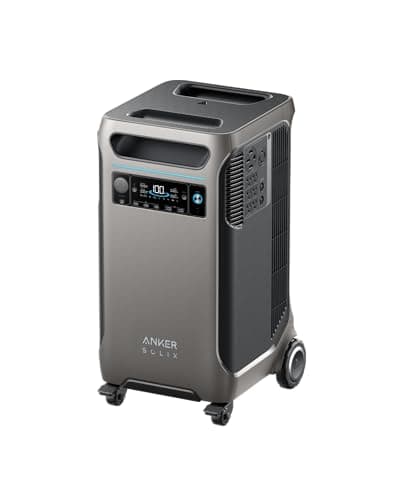
Anker SOLIX F3800

The portable that competes with an installation

Anker SOLIX F3800

3,840Wh with 6,000W of 120/240V split-phase output, expandable to 26.9kWh.

240V backup without an installer
$1,759.99 · Check price on Amazon

#ad how this is funded · price as of October 20, 2026

2
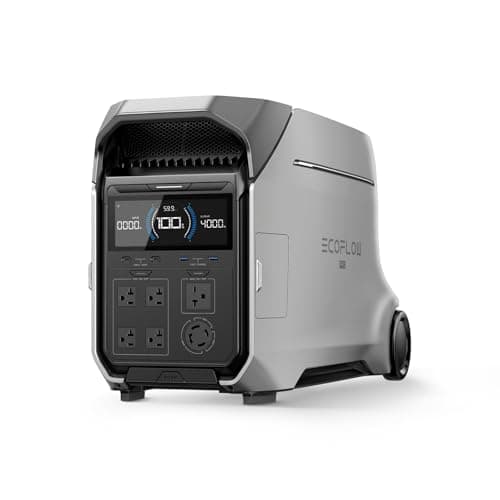
EcoFlow DELTA Pro 3

The one that grows into a system

EcoFlow DELTA Pro 3

4,096Wh, 4,000W at 120V/240V, expandable from 4kWh to 48kWh with 2,600W of solar.

Starting portable and ending up near home-battery scale
$2,799.00 · Check price on Amazon

#ad how this is funded · price as of October 20, 2026 · $3,699.00 24% off

3
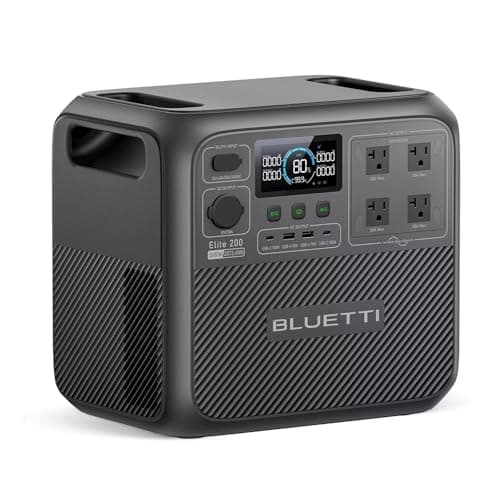
BLUETTI Elite 200 V2

The honest first purchase

BLUETTI Elite 200 V2

2,073.6Wh and 2,600W continuous with a 6,000+ cycle rating.

Covering what actually matters, cheaply
$1,399.00 · Check price on Amazon

#ad how this is funded · price as of October 20, 2026

4
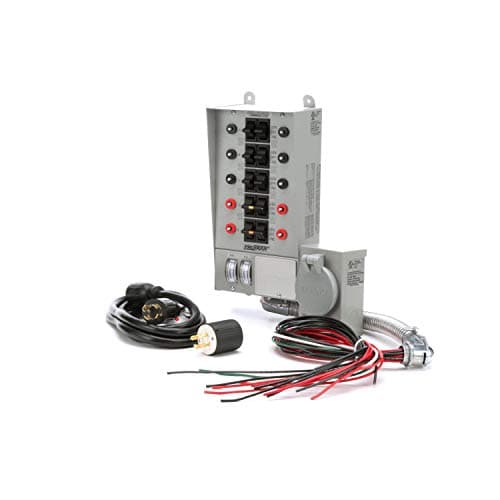
Reliance Controls 31410CRK Pro/Tran

What turns a portable into house backup

Reliance Controls 31410CRK Pro/Tran

A 10-circuit manual transfer switch kit — the legal interface for a portable source.

Feeding circuits instead of running cords
$470.22 · Check price on Amazon

#ad how this is funded · price as of October 20, 2026

Prices come from the retailer at page-build time and change constantly. Where no live price is available the button reads “Check price” rather than showing a number we cannot stand behind.

The honest comparison

Large portable stationInstalled home battery
CostA fraction of an installationAbout $1,159 per kWh installed on 2026 marketplace data
When the power failsYou plug in or throw a switchTakes over automatically, usually in milliseconds
InstallNone, unless you add a transfer switchElectrician, permit, inspection
Capacity2-4kWh typical, expandable on some units13.5kWh is a common single-unit size
240V circuitsOnly on split-phase modelsYes
Goes campingYesNo
Moves house with youYesNo — it is part of the building
Daily tariff shiftingPossible but manualAutomatic, and the main economic case

The installed cost figure is EnergySage 2026 marketplace data, also used on our home battery cost page. Portable capacities are manufacturer figures from the units above.

What you are really buying with an installation

Automation. An installed battery notices the outage, islands the house from the grid and carries the load before anyone wakes up. Nothing about a portable does that unless you are home and awake.

For a household with medical equipment, a home office with meetings, or a pattern of short outages at 2am, that automation is the product. For a household that loses power twice a winter for four hours in the evening, it is a very expensive convenience.

What you are really buying with a portable

  • Cost. A large portable plus a transfer switch is a fraction of an installed system for the loads most people name.
  • Portability. It goes camping, to a job site, to a relative's house, and into the next house you live in.
  • No permits. The battery itself needs no permission, though feeding house circuits still needs a switch and an electrician.
  • Replaceability. When something better appears in four years, you sell it. An installed battery is part of the building.

The capacity gap, honestly

A single installed battery is commonly 13.5kWh. A large portable is 3 to 4kWh, expandable on some models. That gap is real, and it is the reason portables cover critical loads rather than whole-house living.

But the gap closes faster than the price does. Backing up a refrigerator, a freezer, the internet, some lights and a furnace fan is roughly 350 to 550W average — the house wattage page works through it — and 4kWh covers most of a night at that rate. What 13.5kWh buys is air conditioning and not thinking about it.

Who should buy which

  • Installed battery: you already have solar, you are on a time-of-use tariff with a wide spread, outages are frequent, or nobody will be home to throw a switch.
  • Large portable plus transfer switch: outages are a few times a year, you want the money to go further, or you want the hardware to be yours rather than the building's.
  • Either, plus a generator: for multi-day outages, a battery of any kind eventually needs refilling — the generator versus battery page covers that pairing.

The short version

  • Automation is the installed battery's product. Not capacity, not efficiency — automation.
  • A portable does most of the same job manually for a fraction of the cost.
  • Only split-phase portables make 240V. Check before planning around a well pump.
  • Try a portable first. It is the cheapest way to learn what you actually need backed up.

The picks in full

01 — The portable that competes with an installation

Anker SOLIX F3800

3,840Wh with 6,000W of 120/240V split-phase output, expandable to 26.9kWh.

This is the unit that makes the comparison real. Split-phase 240V, expansion past 26kWh, and it arrives in a box rather than as a project.

Connected through a transfer switch it backs up real circuits — the difference from an installed system is that you flip the switch.

The honest catch: 132.3 lb, and it will not take over silently at 3am the way an installed battery does.

Skip it ifyou want backup that happens without you being there.
Anker SOLIX F3800
$1,759.99 · Check price on Amazon

#ad how this is funded · price as of October 20, 2026

Published specifications for the Anker SOLIX F3800
SpecificationPublished figure
Capacity3,840 Wh
Cell chemistryLiFePO4
AC output6,000 W continuous, 9,000 W surge
Voltage120V / 240V split-phase
Cycle life3,000+ cycles to 80% capacity
Recharge1,800 W AC, up to 2,400 W solar
ExpansionUp to six expansion batteries, 26.9 kWh total
Warranty5 years
Current Amazon listingRenewed. Anker's new first-party F3800 listing is currently unavailable and the model has been succeeded by the F3800 Plus; the unit itself is unchanged

Source: Anker SOLIX — F3800 product specifications. These are the manufacturer's published figures, not ours — we have not tested this unit.

02 — The one that grows into a system

EcoFlow DELTA Pro 3

4,096Wh, 4,000W at 120V/240V, expandable from 4kWh to 48kWh with 2,600W of solar.

Forty-eight kilowatt-hours is more than three times the capacity of a typical single installed battery, reached one purchase at a time.

2,600W of solar input makes it an energy system rather than a battery you refill from the wall.

The honest catch: add up the full expansion and you are in installed-system money without the automation.

Skip it ifyou need the whole capacity now. Expansion is a series of purchases.

EcoFlow DELTA Pro 3
$2,799.00 · Check price on Amazon

#ad how this is funded · price as of October 20, 2026 · $3,699.00 24% off

Published specifications for the EcoFlow DELTA Pro 3
SpecificationPublished figure
Capacity4,096 Wh
Cell chemistryLiFePO4 (LFP)
AC output4,000 W, 120V / 240V
Cycle life4,000+ cycles to 80% capacity
Wall recharge0-80% in about 1 hour
Max solar input2,600 W
Expansion4 kWh to 48 kWh

Source: EcoFlow — DELTA Pro 3 product listing. These are the manufacturer's published figures, not ours — we have not tested this unit.

03 — The honest first purchase

BLUETTI Elite 200 V2

2,073.6Wh and 2,600W continuous with a 6,000+ cycle rating.

Most households asking about home batteries want the refrigerator, the internet, the furnace fan and some lights — a 2kWh problem, not a 13.5kWh one.

Buying this first is a cheaper way to learn what you actually run than commissioning a quote.

The honest catch: 120V only, and you plug things in yourself.

Skip it ifa well pump or a 240V appliance is on the list.

BLUETTI Elite 200 V2
$1,399.00 · Check price on Amazon

#ad how this is funded · price as of October 20, 2026

Published specifications for the BLUETTI Elite 200 V2
SpecificationPublished figure
Usable capacity2,073.6 Wh
Cell chemistryAutomotive-grade LiFePO4 (LFP)
AC output2,600 W continuous / 3,900 W power lifting
Cycle life6,000+ cycles
Fast charge0–80% in 50 min via dual AC/DC input

Source: BLUETTI — Elite 200 V2 product specifications. These are the manufacturer's published figures, not ours — we have not tested this unit.

04 — What turns a portable into house backup

Reliance Controls 31410CRK Pro/Tran

A 10-circuit manual transfer switch kit — the legal interface for a portable source.

The gap between a portable and an installed battery narrows a lot once a transfer switch is fitted: the furnace, the well pump and the chosen circuits all run from the portable.

It also works with a generator later, so it is not a single-purpose purchase.

The honest catch: electrician labor, and you still have to be home to throw the switch.

Skip it ifyou are buying an installed system, which includes its own switching.

Reliance Controls 31410CRK Pro/Tran
$470.22 · Check price on Amazon

#ad how this is funded · price as of October 20, 2026

Published specifications for the Reliance Controls 31410CRK Pro/Tran
SpecificationPublished figure
Circuits10 — six 15 A and four 20 A single-pole breakers
Rating30 A, up to 7,500 W
MeteringTwo watt meters for balancing the load
SwitchingBreak-before-make double-throw, Line / Off / Gen
BackfeedMechanically prevented — the grid cannot be energized
InstallationLicensed electrician; a permit is usually required

Source: Reliance Controls — Pro/Tran 31410CRK product page. These are the manufacturer's published figures, not ours — we have not tested this unit.

How these were chosen

We did not test these. Nobody at Watt & Warden has plugged one in. What we did instead: read the manufacturer's published specifications, compile them into a table where the figures line up, and compute the numbers manufacturers leave out — runtime against a real appliance load, and what an hour of running actually costs.

Anything that could not be sourced was left out rather than estimated, and every pick names the buyer who should skip it. The full method is here, including where it is weaker than a publisher with a test bench.

Questions people actually ask

Can a portable power station replace an installed home battery?

For critical loads, often yes. A large split-phase portable connected through a transfer switch backs up the same circuits most installed systems are configured for, at a fraction of the cost. What it cannot do is take over automatically while you are asleep or away.

How much cheaper is a portable?

Substantially. EnergySage's 2026 marketplace data puts installed batteries at about $1,159 per kWh, so a 13.5kWh system runs to roughly $15,600 before incentives. A large portable holding 3 to 4kWh plus a manual transfer switch is a small fraction of that, though it also holds a fraction of the energy.

Does a portable power station need an electrician?

Not to use it with extension cords. To feed house circuits -- a furnace, a well pump, hardwired lighting -- it needs a transfer switch or an interlock, and that installation is electrician work in essentially every jurisdiction.

Which is better if I already have solar?

An installed battery, usually. Grid-tied solar shuts down during an outage without storage, and an installed battery integrates with the array so the panels keep working when the grid is down. A portable can be charged from separate panels but does not make a rooftop array outage-proof.

What about running air conditioning?

That is where the capacity gap shows. Central air at roughly 3,500W running drains a 4kWh portable in about an hour, while a 13.5kWh installed battery manages a few hours. For air conditioning through a long outage, a generator is the realistic answer regardless of which battery you own.

Sources

Every figure on this page comes from a published source. We have not tested this equipment, so the specifications are the manufacturer's and the statistics are the dataset's — the arithmetic on top of them is ours, and it is shown in full so you can check it. How we work this out.