What each brand publishes
Comparing Generac's 24kW Guardian (model 7209) against Kohler's 26RCAL, using only what each manufacturer publishes.
| Specification | Generac 24kW Guardian | Kohler 26RCAL |
|---|
| Rated output, LP | 24,000 W | 26 kW |
|---|
| Rated output, natural gas | 21,000 W | Not published in a retrievable form |
|---|
| Engine | G-Force 1000 | Commercial-grade, tested to 2,000 h continuous |
|---|
| Power quality | Under 5% total harmonic distortion (True Power) | Not published in a retrievable form |
|---|
| Natural gas, 50% / 100% load | 203 / 306 ft³/hr | Not published in a retrievable form |
|---|
| LP, 50% / 100% load | 2.53 / 3.9 gal/hr | Not published in a retrievable form |
|---|
| Dimensions | 48 × 25 × 29 in | Not published in a retrievable form |
|---|
| Weight | 455 lb | Not published in a retrievable form |
|---|
| Enclosure | All-aluminum, powder-coated (RhinoCoat) | Aluminum |
|---|
| Remote monitoring | Mobile Link, included | Available |
|---|
| Self-test mode | Quiet-Test, 5 or 12 minutes at reduced rpm | Not published in a retrievable form |
|---|
| Warranty | 5-year limited | 5-year / 2,000-hour limited, including parts, labor and travel |
|---|
| Sound level | Not published on the product page | Not published in a retrievable form |
|---|
Generac figures from its published 7209 product specifications. Kohler figures from its published 26RCAL product information and press material. Kohler's technical documentation moved during a corporate reorganization and a number of specification pages were not retrievable at the time of writing — those cells say so rather than carrying a guess, and an installer can supply the current sheet.
What the table actually shows
The most striking difference is not a specification. It is disclosure. Generac publishes fuel consumption at two load points on both fuels, dimensions, weight and a harmonic-distortion figure on its ordinary product page. Kohler's equivalent data was not retrievable at the time of writing.
That is not evidence Kohler's units are worse — it is evidence about documentation availability during a corporate reorganization, and nothing more. But it does mean a like-for-like comparison from published sources is currently one-sided, and we would rather say that than fill the gaps with numbers we cannot source.
If you are being quoted a Kohler unit, ask the installer for the current specification sheet with fuel consumption at 50% and 100% load. They have it, and it is the number that tells you what running the machine costs.
The differences worth asking about
Warranty scope, not just length
Both publish five years. Kohler's published terms specify a 5-year / 2,000-hour warranty that includes parts, labor and travel. Travel is not a trivial inclusion for a machine bolted to a pad outside your house that a technician must come to.
Ask both installers to show you exactly what the warranty covers and what it excludes, and whether it is contingent on a maintenance contract.
Power quality
Generac publishes a total harmonic distortion figure of under 5% for its True Power technology. THD matters for sensitive electronics — a cleaner waveform is easier on computers, variable-speed HVAC equipment and modern appliance controls. Under 5% is a good figure.
Kohler markets commercial-grade engineering rather than a published THD number in what we could retrieve. Ask for it.
Engine philosophy
Kohler emphasizes a commercial-grade engine tested to 2,000 hours of continuous operation, with oil level and pressure sensors, hydraulic valve lifters that eliminate valve-wear maintenance, and a heavy-duty crankcase. Those are real engineering claims and they point at longevity under extended running.
Generac emphasizes its purpose-built G-Force engine and a Quiet-Test self-test mode that runs at reduced rpm for five or twelve minutes, which is quieter and uses less fuel than a full-speed weekly exercise cycle. If your unit will sit exercising weekly for years and rarely run in anger, that is worth more than it first appears.
The variable that actually decides your outcome
The installer. This is the least satisfying answer and it is the correct one.
A standby generator is a permanently installed appliance connected to your gas supply and your electrical service, which will sit unused for months and then be required to work perfectly at 3am in a storm. Whether it does depends on:
- Correct sizing for your actual load and your largest starting motor
- A correctly sized gas line — an undersized run starves the engine under load, and it is a common and expensive mistake to discover later
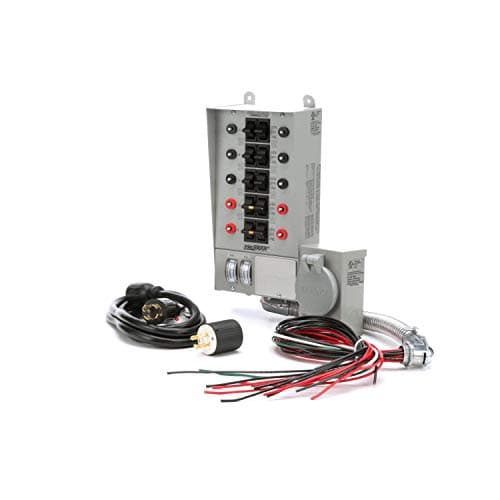
- Correct transfer switch selection and wiring
- Local service availability — annual maintenance and, eventually, a repair, by someone who can actually come
A well-installed unit of either brand will outperform a badly installed unit of the other, and it is not close. Choose the installer first — the one who does a proper site survey, itemizes the quote, and has a service presence — and let the brand follow from who they represent.
Questions to ask both installers
- What size are you proposing, and what load calculation produced it?
- Whole-service or selected circuits, and what does the other option cost?
- Does my existing gas line and meter support this unit at full load, or does either need upgrading?
- What is the published fuel consumption at 50% load on my fuel?
- What exactly does the warranty cover — parts, labor, travel? Is it contingent on a maintenance contract?
- Who services it, how quickly, and what does annual maintenance cost?
- What is the permit and inspection cost, and is it in this quote?
- Can I see an itemized breakdown rather than a single figure?
The last question is the most useful. Two quotes with the same total can differ enormously in what they include, and the gas line is usually where the difference hides. What the installation involves.