Skip to content
Watt Warden

Home Standby

Open vs Closed Transition Transfer Switches

Generac publishes that every one of its residential transfer switches is open transition. That means a blink is unavoidable with an ATS, and the fix is not a different switch.

By Sawyer V.Updated Published How we work this out
A technician in safety gear inspecting electrical panels in an industrial setting.

Watt & Warden earns a commission on qualifying purchases made through links on this page, at no extra cost to you. It never changes a ranking, and our picks include products we tell you to skip. Full disclosure.

Quick picks

#ProductBest forPrice
1
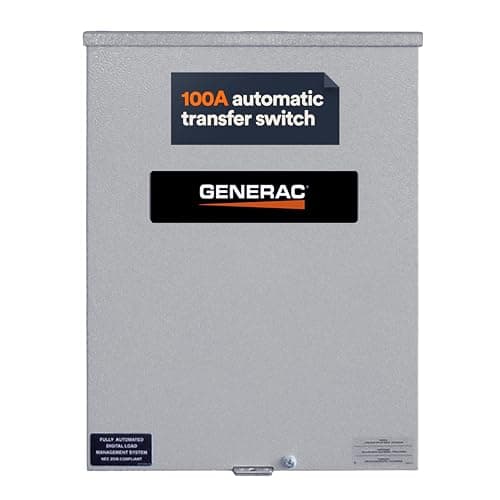
Generac 100A Legacy automatic transfer switch

The residential standard, and it is open transition

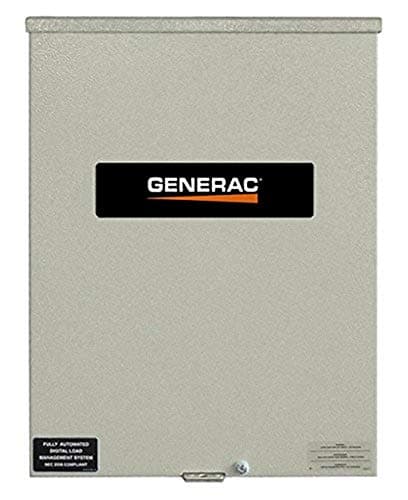
Generac 100A Legacy automatic transfer switch

A 100A automatic transfer switch - open transition, like every residential ATS Generac publishes.

A standby generator feeding a whole service automatically
$699.00 · Check price on Amazon

#ad how this is funded · price as of October 20, 2026

2
Generac 200A automatic transfer switch

Whole-service switching

Generac 200A automatic transfer switch

The 200A version of the same open-transition design, sized to a full residential service rather than a subpanel.

A 200A service backed up in its entirety
$645.00 · Check price on Amazon

#ad how this is funded · price as of October 20, 2026

3
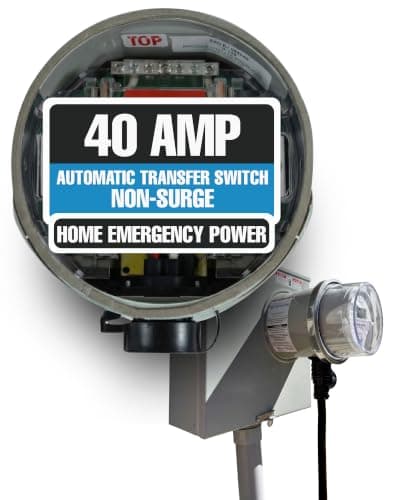
GenerLink 40A meter-mounted transfer switch

Automatic switching without a panel install

GenerLink 40A meter-mounted transfer switch

A meter-socket transfer device - the only automatic option here that works with a portable generator.

A portable generator and a meter socket
$1,280.00 · Check price on Amazon

#ad how this is funded · price as of October 20, 2026

4
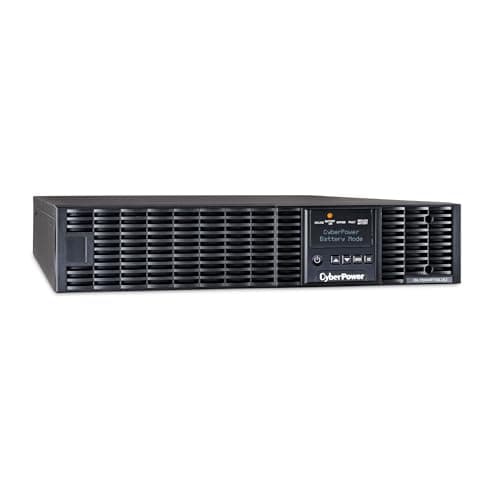
CyberPower OL1500RTXL2U

The only genuine zero-transfer option

CyberPower OL1500RTXL2U

Double-conversion online topology with a published zero-millisecond transfer, because the load never touches utility power.

Equipment that cannot tolerate any interruption at all
$1,395.95 · Check price on Amazon

#ad how this is funded · price as of October 20, 2026

5
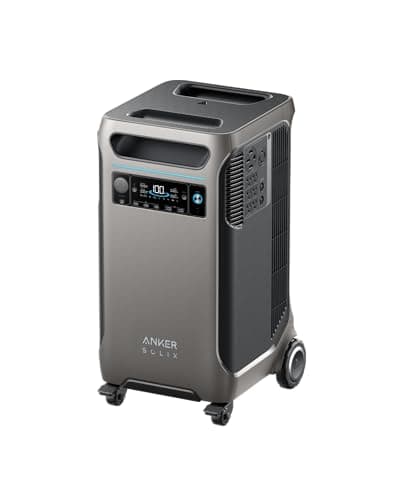
Anker SOLIX F3800

Zero-gap switching at house scale

Anker SOLIX F3800

Under 20ms switchover with 6,000W at 120V/240V - fast enough that no appliance in the house notices.

A whole critical-load panel with no reboot when the grid drops
$1,759.99 · Check price on Amazon

#ad how this is funded · price as of October 20, 2026

Prices come from the retailer at page-build time and change constantly. Where no live price is available the button reads “Check price” rather than showing a number we cannot stand behind.

The verdict, in one paragraph

Open transition is break-before-make: the switch disconnects from one source before connecting to the other, so the load is briefly dead. Closed transition is make-before-break: it closes on the incoming source before opening the outgoing one, momentarily paralleling the two — ASCO publishes the entire sequence at less than 100 milliseconds. For homeowners the question is already settled: Generac states that all of its residential and commercial automatic transfer switches are open transition, with closed transition appearing only on some industrial models. So if your requirement is genuinely no interruption, the answer is not a different transfer switch — it is a battery with a sub-20ms switchover, or an online double-conversion UPS with a published zero-millisecond transfer.

The two sequences, and what each one does to your house

Open transitionClosed transition
SequenceBreak-before-makeMake-before-break
Load interrupted?YesNo
Sources paralleled?NeverMomentarily, under monitored conditions
Published timingIn-phase transfers published at 150 ms or less by Eaton; about 30-50 ms by CumminsEntire sequence under 100 ms, per ASCO
MechanismOne operator moves between two positionsSeparate solenoid operators switching asynchronously, per ASCO
Utility involvementNoneUtilities may impose conditions; Cummins notes many require a shunt-trip means
Available residentially?Yes - this is all of themNo - Generac publishes closed transition on some industrial models only

Definitions and timings are published by ASCO/Schneider, Generac, Eaton and Cummins, cited under Sources. Note the in-phase figures describe a transfer back to a live utility, not the initial outage transfer, which is governed by generator start time.

Why residential is open transition, and will stay that way

Closed transition means your generator is, for a fraction of a second, electrically connected to the utility grid at the same time as the utility is. Everything difficult about it follows from that:

  • The two sources must be synchronized. Closing onto the grid out of phase is a fault, not a transfer. Cummins notes a closed-transition generator must be equipped with an isochronous governor.
  • Protection has to exist for the failure case. Cummins notes that many utilities require closed-transition switches to provide a means to shunt-trip the breaker, and Eaton notes some utilities require protective relays for compliance.
  • The utility has to agree. Paralleling with the grid is an interconnection question, which is a different conversation from installing a generator.
  • Nobody needs it at home. The reason to avoid a blink is usually a process that cannot restart — a production line, a data center. A house reboots some clocks.

So the residential market standardized on open transition, and Generac's support documentation simply states the result.

The gap you actually experience is not the switch

This is the part most explanations skip. On a residential standby system, the interruption at the start of an outage has three parts, and the switch is the smallest of them:

  1. Detection and start delay. The controller confirms the utility is genuinely gone rather than flickering, then cranks the engine.
  2. Warm-up to stable output. The engine has to reach speed and produce clean voltage and frequency before the switch will transfer to it.
  3. The transfer itself. Milliseconds.

Steps one and two are measured in seconds. That is why a standby generator reboots your computers even though the switch is fast, and it is why "closed transition" would not help on the way into an outage at all — there is nothing to parallel with, because the utility is dead. Closed transition only avoids a blink on the way back, when the grid returns.

In-phase and delayed transition, which are the other two words

The ATS vocabulary has four terms, not two, and the middle two get confused with closed transition constantly:

  • In-phase transition. Still open transition — still break-before-make — but the controller waits until the two sources are nearly in phase before moving, so motors are not slammed with out-of-phase voltage. Eaton publishes in-phase transfers at 150 milliseconds or less; Cummins puts them at roughly 30 to 50 milliseconds. No paralleling, no utility approval.
  • Delayed transition. Also open transition, with a deliberate pause in a neutral position. ASCO describes it as a timed load-disconnect position for a user-specified duration, so inertial loads such as large motors can slow or stop before the transfer. The gap is longer on purpose.

If someone tells you their switch is "in-phase," they do not have a closed-transition switch. They have an open-transition switch that is polite about timing.

What to buy if you genuinely cannot have a gap

There are exactly two products that deliver no interruption in a house, and neither is a transfer switch:

  • A battery in the path. Anker publishes under 20ms for the F3800, EcoFlow publishes 20ms on the Smart Home Panel 2 and 10ms on the DELTA 3 Max Plus. At those speeds nothing in a house notices — and unlike closed transition, nothing is ever paralleled with the grid.
  • An online double-conversion UPS. CyberPower publishes a zero-millisecond transfer because the load runs permanently on inverted power and is isolated from the input 100% of the time. This is the right answer for a server or lab equipment and the wrong one for a refrigerator.

The combination most households actually want is a battery for the switchover and an engine behind it for duration, which is how a modern system reaches both goals — running a home battery and a generator together covers the wiring and which systems accept generator charging.

Which to choose

  • A standby generator and a whole service: an open transition ATS, because that is what exists. Generac 100A or 200A depending on the service.
  • A portable generator and no panel work: a meter-socket transfer device, subject to utility approval.
  • Nothing in the house may reboot: a battery with a sub-20ms switchover. This is the only residential route to a seamless transfer.
  • A server, a NAS or lab equipment: an online double-conversion UPS at zero milliseconds, on those circuits only.
  • Large motors that dislike out-of-phase transfers: ask your installer about in-phase or delayed transition, both of which are open-transition behaviors and need no utility agreement.

The short version

Open transition breaks before it makes and briefly drops the load; closed transition makes before it breaks and momentarily parallels the sources, which ASCO publishes at under 100 milliseconds. The residential question is closed already — Generac publishes that all of its residential switches are open transition, and closed transition brings synchronization, protection and utility-approval problems no house needs. If you want no blink at all, put a battery in the path rather than shopping for a different switch.

The picks in full

01 — The residential standard, and it is open transition

Generac 100A Legacy automatic transfer switch

A 100A automatic transfer switch - open transition, like every residential ATS Generac publishes.

Generac states it plainly: all of Generac's residential and commercial automatic transfer switches are open transition switches, with a closed-transition option appearing only on some industrial models.

Open transition means the switch breaks the connection to one source before it makes the connection to the other. The load is disconnected for the duration of that movement, plus however long the generator took to start and stabilize.

The honest catch: the gap you actually experience is not the switch's mechanical time — it is the generator start sequence, which is seconds, not milliseconds. Everything in the house reboots.

Skip it ifyou expected it to eliminate the blink. No residential ATS does; that is what the topology means.

Generac 100A Legacy automatic transfer switch
$699.00 · Check price on Amazon

#ad how this is funded · price as of October 20, 2026

Published specifications for the Generac 100A Legacy automatic transfer switch
SpecificationPublished figure
Rating100 A
Service entranceSE rated — includes the service disconnect
EnclosureNEMA 3R aluminum, rated for indoor or outdoor mounting
NeedsA standby generator that starts on a signal
Warranty2-year limited, per Generac's transfer switch documentation

Source: Generac — automatic transfer switch specifications. These are the manufacturer's published figures, not ours — we have not tested this unit.

02 — Whole-service switching

Generac 200A automatic transfer switch

The 200A version of the same open-transition design, sized to a full residential service rather than a subpanel.

Amperage changes what the switch can carry; it does not change the transition type. This is the same open-transition arrangement at whole-service scale.

Sizing the switch to the service rather than to a critical-load subpanel is a decision about the generator as much as the switch — a 200A switch in front of an undersized generator still overloads it.

The honest catch: whole-service switching means every load in the house is live when the generator runs, including the ones you would have shed. Sizing a standby generator covers the arithmetic.

Skip it ifyou only need a handful of circuits. A critical-load subpanel costs less and the generator can be smaller.

Generac 200A automatic transfer switch
$645.00 · Check price on Amazon

#ad how this is funded · price as of October 20, 2026

Published specifications for the Generac 200A automatic transfer switch
SpecificationPublished figure
Rating200 A
CoversThe whole panel rather than a selected set of circuits
EnclosureNEMA 3R aluminum, rated for indoor or outdoor mounting
NeedsA standby generator that starts on a signal
Warranty2-year limited, per Generac's transfer switch documentation

Source: Generac — automatic transfer switch specifications. These are the manufacturer's published figures, not ours — we have not tested this unit.

04 — The only genuine zero-transfer option

CyberPower OL1500RTXL2U

Double-conversion online topology with a published zero-millisecond transfer, because the load never touches utility power.

If the real requirement is "no interruption," a transfer switch is the wrong product category. CyberPower publishes that double-conversion topology isolates output power from input power 100% of the time and therefore has a zero millisecond transfer time — there is nothing to transfer.

CyberPower also calls out generator compatibility on this unit, which is the pairing that matters: an online UPS downstream of a generator absorbs the frequency and voltage wander an ATS passes straight through.

The honest catch: 1,500VA / 1,350W and a runtime in minutes. This bridges the gap; it does not run the house. UPS topologies compared covers the tiers.

Skip it ifthe load is a refrigerator. This protects servers and lab gear, not a house.

CyberPower OL1500RTXL2U
$1,395.95 · Check price on Amazon

#ad how this is funded · price as of October 20, 2026

Published specifications for the CyberPower OL1500RTXL2U
SpecificationPublished figure
Capacity1,500 VA / 1,350 W
Power factor0.9
TopologyDouble-conversion (online)
Transfer timeZero milliseconds
WaveformPure sine wave
Output100 / 110 / 115 / 120 / 125 V, plus or minus 2%, configurable
Outlets8 x NEMA 5-15R
Form factor2U rack or tower
ManagementUSB, serial, network, relay, EPO
Warranty3 years

Source: CyberPower — OL1500RTXL2U product details and specifications. These are the manufacturer's published figures, not ours — we have not tested this unit.

05 — Zero-gap switching at house scale

Anker SOLIX F3800

Under 20ms switchover with 6,000W at 120V/240V - fast enough that no appliance in the house notices.

This is the modern answer to the transition question. A battery sits in the path and takes over in under 20 milliseconds, which is faster than any mechanical transfer switch and fast enough that a computer, a modem or a furnace control board never sees the interruption.

It achieves what closed transition was invented for — no load interruption — without paralleling anything with the utility, and without needing utility approval.

The honest catch: a battery is finite. For a multi-day event, the right arrangement is a battery for the switchover and an engine to refill it — running both together is the page on that.

Skip it ifyou need days of runtime. A battery closes the gap; fuel fills the days.

Anker SOLIX F3800
$1,759.99 · Check price on Amazon

#ad how this is funded · price as of October 20, 2026

Published specifications for the Anker SOLIX F3800
SpecificationPublished figure
Capacity3,840 Wh
Cell chemistryLiFePO4
AC output6,000 W continuous, 9,000 W surge
Voltage120V / 240V split-phase
Cycle life3,000+ cycles to 80% capacity
Recharge1,800 W AC, up to 2,400 W solar
ExpansionUp to six expansion batteries, 26.9 kWh total
Warranty5 years
Current Amazon listingRenewed. Anker's new first-party F3800 listing is currently unavailable and the model has been succeeded by the F3800 Plus; the unit itself is unchanged

Source: Anker SOLIX — F3800 product specifications. These are the manufacturer's published figures, not ours — we have not tested this unit.

How these were chosen

We did not test these. Nobody at Watt & Warden has plugged one in. What we did instead: read the manufacturer's published specifications, compile them into a table where the figures line up, and compute the numbers manufacturers leave out — runtime against a real appliance load, and what an hour of running actually costs.

Anything that could not be sourced was left out rather than estimated, and every pick names the buyer who should skip it. The full method is here, including where it is weaker than a publisher with a test bench.

Questions people actually ask

What is the difference between an open and closed transition transfer switch?

Open transition is break-before-make: the switch disconnects from one source before connecting to the other, so the load is briefly dead. Closed transition is make-before-break: ASCO describes separate solenoid operators closing on the alternate source before opening on the online source, momentarily paralleling the two, with the entire sequence taking less than 100 milliseconds.

Are residential transfer switches open or closed transition?

Open. Generac states that all of its residential and commercial automatic transfer switches are open transition switches, and that a closed-transition option appears on some industrial models only. Closed transition requires synchronization, utility-mandated protection and interconnection approval, which is why it is not a residential product.

What is break-before-make?

It is the open-transition sequence. The switching contacts break the connection to the first source before making the connection to the second, so the two sources are never connected at the same time. That is what keeps a generator from backfeeding the utility, and it is why the load experiences a brief interruption.

Will a closed transition switch stop my computers rebooting during an outage?

No, and this is the most common misunderstanding. When the utility fails there is nothing to parallel with, so the transfer is open regardless of switch type, and the gap you experience is dominated by the generator's detection, start and warm-up sequence - seconds, not milliseconds. Closed transition only avoids a blink on the return to utility power.

What is an in-phase transition and is it the same as closed transition?

No. In-phase transition is still open transition - still break-before-make - but the controller waits until the two sources are nearly in phase before moving, so motors are not hit with out-of-phase voltage. Eaton publishes in-phase transfers at 150 milliseconds or less and Cummins at roughly 30 to 50 milliseconds. No paralleling occurs and no utility approval is needed.

What is a delayed transition transfer switch for?

Large inertial loads. ASCO describes it as holding a timed load-disconnect position for a user-specified duration, which lets motors slow or stop before the transfer completes. The interruption is longer on purpose, to protect the equipment rather than to minimize downtime.

How do I get a transfer with no interruption at all in a house?

Use a battery rather than a switch. Anker publishes under 20ms for the F3800, EcoFlow publishes 20ms on the Smart Home Panel 2 and 10ms on the DELTA 3 Max Plus - all fast enough that nothing in a house notices. For a server or lab equipment, an online double-conversion UPS publishes a true zero-millisecond transfer because the load never touches utility power.

Sources