Three things that make manufactured homes different
1. A smaller electrical service
Many manufactured homes are served at 100A rather than the 200A common in site-built houses. That caps what any backup arrangement can deliver and means a 13kW generator would be feeding a panel that cannot use it.
Read the main breaker before shopping. If it says 100, a mid-size machine is the ceiling that makes sense — the sizing page turns your load list into the number.
2. Less space outdoors, and closer neighbors
Generators must run outdoors, well away from windows, doors and vents. On a park lot that can be genuinely difficult, and skirting makes it worse by trapping exhaust underneath the home.
This is not a rule to bend. Carbon monoxide safety is the page to read before deciding where a machine will sit — and if there is nowhere safe, the answer is a battery.
3. Park rules and tenancy
If you rent the lot, generator use may be restricted by quiet hours or prohibited outright, and you may not be permitted to alter the electrical system. Ask before buying; a battery sidesteps every one of those constraints.
What to back up, and what it costs
| Load | Running watts | Starting surge |
|---|
| Gas furnace blower | 300-600 W | 1,200-2,400 W |
|---|
| Refrigerator | 150 W | 600-1,200 W |
|---|
| Chest freezer | 100 W | 500-1,000 W |
|---|
| Lights, internet, chargers | 200 W | Negligible |
|---|
| Window air conditioner, 10,000 BTU | 900-1,200 W | 1,800-2,400 W |
|---|
| Well pump, 1/2 hp | 1,000 W | 2,000-3,000 W |
|---|
Figures from the appliance wattage chart. Add the first four rows and the total sits near 1,100 running watts — which is why a 5,000W machine is generous and a 13,000W one is unnecessary.
The two arrangements that work
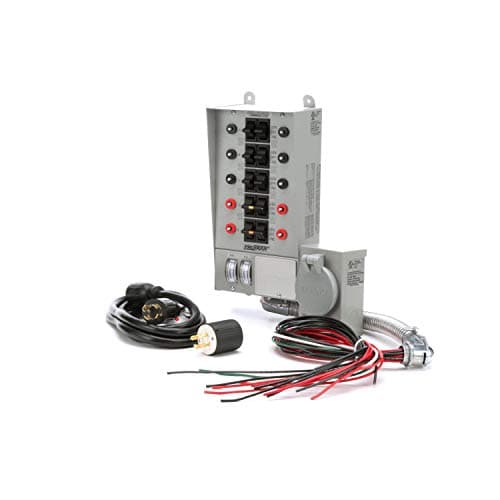
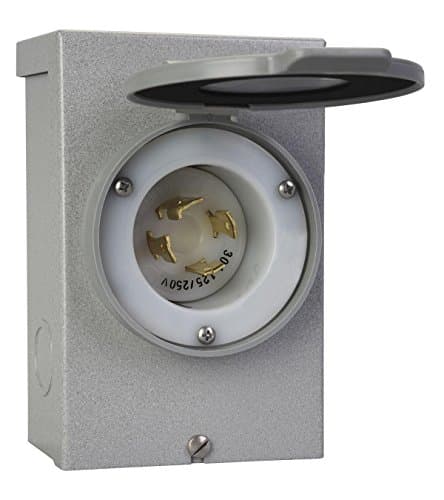
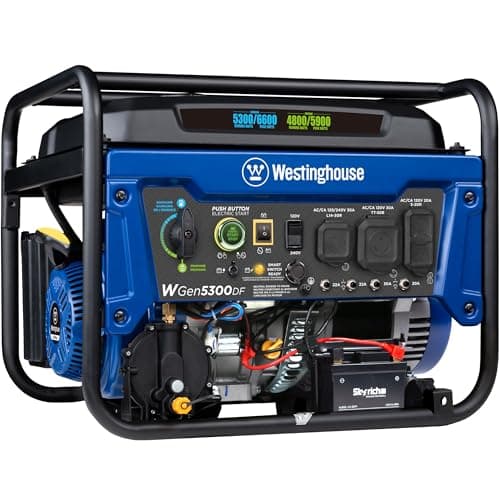
Generator plus transfer switch. A mid-size dual-fuel machine, an inlet box on an exterior wall, and a ten-circuit switch covering the furnace, the refrigerator, a few outlets and the lights. This is the full answer and it needs permission, an electrician and somewhere safe to put the machine.
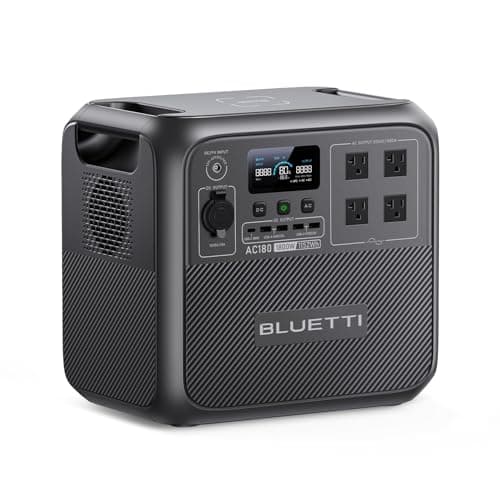
A battery for the critical list. A 1kWh to 2kWh station covers the refrigerator, internet, phones and lights overnight with no installation, no fuel and no rules to check. It will not run the furnace unless that furnace is on a cord, which it will not be.
Many households in manufactured homes end up with the battery first, because it is the option nobody has to approve.
If the home has electric heat
A significant number do, and that changes the plan completely — electric heat is too large for any portable battery and often too large for a portable generator as well. The electric heat page covers what to do instead, and the short answer is propane heat for one room plus a battery for everything else.
The short version
- Check the main breaker. A 100A service caps what makes sense.
- 5,000W or so is the right machine size for a typical critical list.
- Exhaust and skirting are a real hazard. The generator goes well away from the home, always.
- Renting or in a park? A battery needs no permission and breaks no rules.