Skip to content
Watt Warden

Solar

Wiring Solar Panels in Series vs Parallel

Two panels, two ways to connect them, and the same total watts either way. What changes is voltage, current, how much cable you need - and what happens when a cloud arrives.

By Sawyer V.Updated Published How we work this out
An open electrical switchboard with wiring.

Watt & Warden earns a commission on qualifying purchases made through links on this page, at no extra cost to you. It never changes a ranking, and our picks include products we tell you to skip. Full disclosure.

What each arrangement does

A solar panel produces a voltage and a current. Connecting panels changes which of those adds up.

Series — positive of one panel to negative of the next, like batteries in a flashlight. Voltages add; current stays the same as one panel.

Parallel — all positives together, all negatives together. Currents add; voltage stays the same as one panel.

The total wattage is identical either way. What changes is everything around it.

Three 100W panels, 20V and 5A eachSeriesParallel
Voltage60 V20 V
Current5 A15 A
Total power300 W300 W
Cable gauge for the same lossThinnerThicker
One panel shadedDrags the whole string downOnly that panel is lost

Panel figures are illustrative round numbers. Your own panel prints its open-circuit voltage (Voc) and short-circuit current (Isc) on the back — those are the numbers to use.

The two limits that decide it for you

Before preference comes constraint. Your charge controller publishes two ceilings and you must stay under both.

Maximum PV input voltage. Exceed it and you damage the controller — this is the one that breaks things rather than merely underperforming. It caps how many panels you can put in series.

Maximum charge current. Exceed it and a decent controller simply limits output, wasting the surplus. It caps total array size relative to battery voltage.

Work out array watts divided by battery voltage to get amps — the controller roundup has that table — and check the series voltage against the input ceiling separately.

The cold-weather margin nobody leaves

This is the mistake that destroys controllers, and it catches people who did the arithmetic correctly at room temperature.

Solar panel voltage rises as temperature falls. The open-circuit voltage printed on the panel is measured at 25 degC, and on a cold, bright winter morning a panel can produce meaningfully more than its rated Voc.

The practical consequence: a string that measures 95V on a warm afternoon against a 100V controller limit can exceed that limit at dawn in January. The panel datasheet gives a temperature coefficient for voltage; use it, or leave a generous margin — something like 20 to 25% below the controller ceiling is a common working rule.

Get this wrong and the controller is destroyed at the moment the system is producing best.

The shading rule

The other reason to care, and it decides most real-world installations.

In series, the same current flows through every panel. A shaded panel restricts that current, and the whole string drops toward the shaded panel's output. One branch across one corner can cost a disproportionate share of the array.

In parallel, each panel feeds the controller independently. A shaded panel contributes less; the others are unaffected.

Bypass diodes inside modern panels limit the damage in series, but they mitigate rather than eliminate it. The rule that follows is simple and practical:

  • Clean, unshaded roof or ground array: series is fine, and cheaper in cable.
  • Anything cluttered — an RV roof with vents and an air conditioner, a yard with trees, a campsite: parallel, because partial shade is guaranteed.

The RV solar page covers why vehicle roofs are the worst case for series wiring.

Series-parallel, for larger arrays

Above three or four panels the answer is usually both: strings of two or three panels in series, with those strings wired in parallel.

Four 100W panels, for example, as two series pairs connected in parallel: 40V and 10A rather than 80V and 5A or 20V and 20A. That keeps the voltage comfortably under a controller ceiling and the current low enough for sensible cable.

Two rules for this arrangement. Every string must have the same number of panels, and ideally identical panels — mismatched strings perform to the weakest. And parallel strings generally want fusing, because a fault in one string can be back-fed by the others.

Practical notes

  • Match panels within a string. Different wattages or ages in series means the string performs to the weakest member.
  • Parallel needs branch connectors, not just cable — MC4 Y-branches are the standard part, and the connector guide covers what fits what.
  • Cover panels while wiring. A panel in sunlight is live and cannot be switched off. A blanket over it makes the job safe.
  • Check polarity before connecting the controller. Reverse polarity protection exists on good controllers and is not universal.
  • A portable power station decides this for you. Its solar input has a published voltage range, and staying inside it is the entire requirement — there is no separate controller to size.

The short version

  • Series adds volts, parallel adds amps. Same total watts either way.
  • Check the controller's voltage ceiling first. Exceeding it destroys things.
  • Leave 20-25% cold-weather margin. Panel voltage rises as temperature falls.
  • Shade means parallel. Clear sky and long runs mean series.

Quick picks

#ProductBest forPrice
1
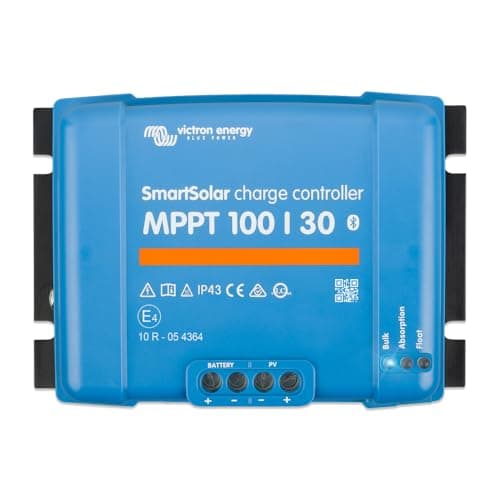
Victron SmartSolar MPPT 100/30

Best controller for series wiring

Victron SmartSolar MPPT 100/30

30A MPPT accepting up to 100V open circuit, with Bluetooth and 30 days of history.

Higher-voltage strings and long cable runs
2
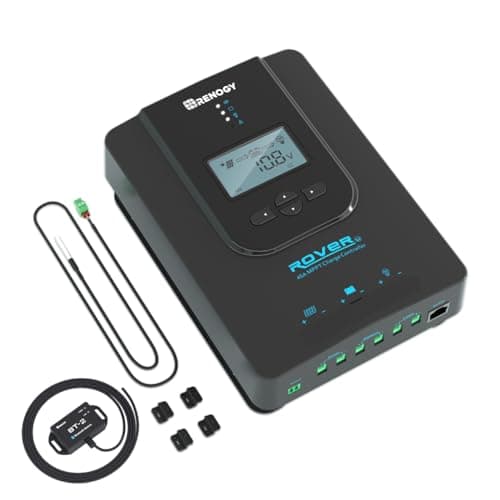
Renogy Rover 40A MPPT charge controller

Best headroom

Renogy Rover 40A MPPT charge controller

40A of MPPT with configurable chemistry profiles.

An array you intend to grow
$152.18 · Check price on Amazon

#ad how this is funded · price as of October 21, 2026 · $179.38 15% off

3
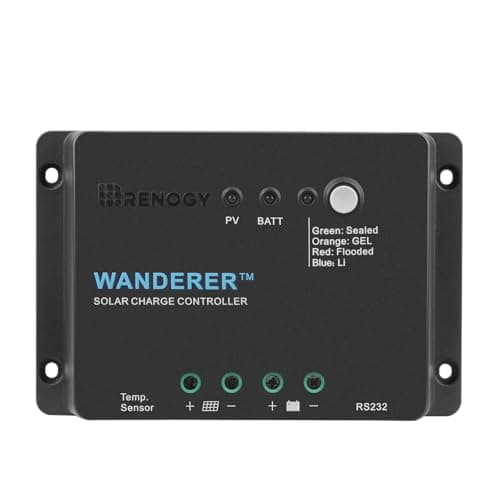
Renogy Wanderer Li 30A

Best for simple parallel

Renogy Wanderer Li 30A

30A PWM with four-stage charging and LiFePO4, AGM, gel and flooded profiles.

One or two 12V panels on a 12V battery
$32.99 · Check price on Amazon

#ad how this is funded · price as of October 21, 2026

4
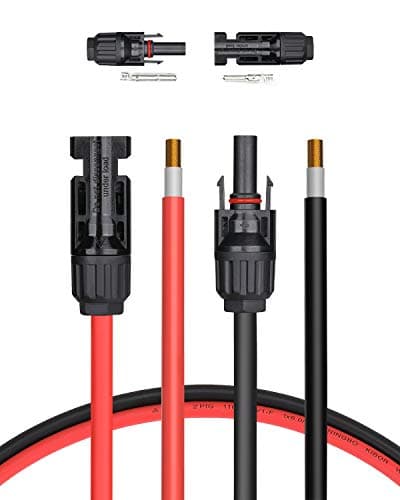
BougeRV 30 ft 10AWG solar extension cable

The cable that makes parallel work

BougeRV 30 ft 10AWG solar extension cable

30 ft of 10AWG MC4 extension cable.

Getting current from the array to the controller
$39.99 · Check price on Amazon

#ad how this is funded · price as of October 21, 2026 · $44.99 11% off

Prices come from the retailer at page-build time and change constantly. Where no live price is available the button reads “Check price” rather than showing a number we cannot stand behind.

The picks in full

01 — Best controller for series wiring

Victron SmartSolar MPPT 100/30

30A MPPT accepting up to 100V open circuit, with Bluetooth and 30 days of history.

The 100V input ceiling is the number that governs series wiring. Three 12V nominal panels in series can approach 60V in cold conditions, which is comfortably inside it; six would not be.

MPPT is what makes series worthwhile — it converts the surplus voltage into extra charging current rather than discarding it, which PWM cannot do.

The honest catch: 30A at 12V caps the array at 440W. Check both limits, not one.

Skip it ifyour panels are wired in parallel at 12V. Then PWM may be enough.

Published specifications for the Victron SmartSolar MPPT 100/30
SpecificationPublished figure
Rating30 A charge current, 12V or 24V automatic
PV inputUp to 100 V open circuit
Array ceiling440 W at 12V, 880 W at 24V
EfficiencyUp to 98%
MonitoringBluetooth with the VictronConnect app, 30-day history
CoolingPassive heatsink, no fan, with over-temperature protection
ProtectionPV short circuit, reverse polarity and reverse current

Source: Victron Energy — SmartSolar MPPT 100/30 product page. These are the manufacturer's published figures, not ours — we have not tested this unit.

02 — Best headroom

Renogy Rover 40A MPPT charge controller

40A of MPPT with configurable chemistry profiles.

40A is the size that stops the controller being the component you replace when you add a panel, and arrays almost always grow.

The honest catch: the interface is basic next to a Bluetooth controller, which matters when you are trying to work out why the array underperforms.

Skip it ifyou have one panel and no plans. That is a lot of controller.

Renogy Rover 40A MPPT charge controller
$152.18 · Check price on Amazon

#ad how this is funded · price as of October 21, 2026 · $179.38 15% off

Published specifications for the Renogy Rover 40A MPPT charge controller
SpecificationPublished figure
Rating40 A, 12 V / 24 V auto-detect
Max PV input100 V
Array capacity520 W at 12 V, 1,040 W at 24 V
EfficiencyUp to 99% tracking, 98% peak conversion
BatteriesAGM / Gel / Flooded auto, Lithium manual
MonitoringBluetooth module supported
ProtectionOvercharge and short circuit, negative ground

Source: Renogy — Rover 40A MPPT charge controller listing. These are the manufacturer's published figures, not ours — we have not tested this unit.

03 — Best for simple parallel

Renogy Wanderer Li 30A

30A PWM with four-stage charging and LiFePO4, AGM, gel and flooded profiles.

PWM is not obsolete, it is narrow. Where panel voltage is close to battery voltage — nominal 12V panels in parallel on a 12V battery — the efficiency gap to MPPT is modest and the price gap is not.

The honest catch: it cannot convert surplus voltage into current, so a series string wastes real output on this.

Skip it ifyou are wiring in series. PWM discards the extra voltage.

Renogy Wanderer Li 30A
$32.99 · Check price on Amazon

#ad how this is funded · price as of October 21, 2026

Published specifications for the Renogy Wanderer Li 30A
SpecificationPublished figure
Rating30 A, 12 V
TypePWM, four-stage charging
ChemistriesLiFePO4, AGM, gel and flooded
StagesBulk, boost, float, plus auto equalization every 25 days
EnclosureIP32, 5.5 x 3.9 x 1.8 in, 0.27 lb
Temperature range-20 to 113 degF
ProtectionOvercharge, over-discharge, short circuit, overload, reverse polarity

Source: Renogy — Wanderer Li 30A PWM charge controller. These are the manufacturer's published figures, not ours — we have not tested this unit.

04 — The cable that makes parallel work

BougeRV 30 ft 10AWG solar extension cable

30 ft of 10AWG MC4 extension cable.

Parallel wiring means higher current at lower voltage, and current is what causes voltage drop over distance. 10AWG is the gauge that keeps that loss small on a real run.

This is the practical reason series is preferred for long runs — higher voltage means lower current means thinner cable for the same loss.

The honest catch: you also need a roof entry gland if the cable passes through a structure.

Skip it ifyour run is short and your array is small.

BougeRV 30 ft 10AWG solar extension cable
$39.99 · Check price on Amazon

#ad how this is funded · price as of October 21, 2026 · $44.99 11% off

Published specifications for the BougeRV 30 ft 10AWG solar extension cable
SpecificationPublished figure
Length30 ft pair (one red, one black)
Conductor10 AWG pure copper, tinned
ConnectorMC4, IP67 waterproof ring with built-in lock
JacketPPO and PVC, UV and weather resistant
IncludedExtra pair of connectors
Warranty18 months

Source: BougeRV — 10AWG solar extension cable product page. These are the manufacturer's published figures, not ours — we have not tested this unit.

How these were chosen

We did not test these. Nobody at Watt & Warden has plugged one in. What we did instead: read the manufacturer's published specifications, compile them into a table where the figures line up, and compute the numbers manufacturers leave out — runtime against a real appliance load, and what an hour of running actually costs.

Anything that could not be sourced was left out rather than estimated, and every pick names the buyer who should skip it. The full method is here, including where it is weaker than a publisher with a test bench.

Questions people actually ask

Should I wire solar panels in series or parallel?

Series where the array is unshaded and the cable run is long, because higher voltage means lower current and thinner cable. Parallel where partial shading is likely -- an RV roof, a yard with trees, a campsite -- because in series a single shaded panel drags the whole string down while in parallel only that panel is lost.

What is the difference between series and parallel solar wiring?

Series connects positive to negative down the line, so voltages add and current stays the same as one panel. Parallel connects all positives and all negatives together, so currents add and voltage stays the same. Total wattage is identical either way -- what changes is cable gauge, controller compatibility and shading behavior.

How many panels can I wire in series?

As many as stay under your charge controller's maximum PV input voltage, with a margin. Panel voltage rises as temperature falls, so a string measuring 95V on a warm afternoon against a 100V ceiling can exceed it at dawn in January -- leave roughly 20 to 25% below the limit, or use the panel's temperature coefficient.

Does shading really affect series-wired panels that much?

Yes. The same current flows through every panel in a string, so a shaded panel restricts that current and the whole string drops toward its output. Bypass diodes in modern panels limit the damage but do not eliminate it, which is why anything with guaranteed partial shade -- especially a cluttered RV roof -- should be wired in parallel.

Do I need to think about this with a portable power station?

Much less. A power station has an MPPT controller built into its solar input, and the entire requirement is staying inside its published voltage and wattage limits. There is no separate controller to size, and exceeding the wattage limit simply clips rather than damaging anything -- though exceeding the voltage limit can.

Sources

Every figure on this page comes from a published source. We have not tested this equipment, so the specifications are the manufacturer's and the statistics are the dataset's — the arithmetic on top of them is ours, and it is shown in full so you can check it. How we work this out.