The verdict, in one paragraph
Harman publishes its Pathfinder series at 120 VAC, 60 Hz, Start 4.2 Amps, Run 2.8 Amps. At 120 volts that is roughly 504 watts starting and 336 watts running — far more than most people expect from something they think of as a wood stove, and well inside the reach of a mid-size battery. ComfortBilt publishes its HP22 at 120V, 60Hz, 4.3A (Startup), which is about 516 watts and lands in the same place. The important part is not the number, it is what the manufacturers say about backing it up: a UPS is approved for a safe shutdown, an inverter/charger on a deep-cycle battery is published at up to eight hours of operation, and both makers warn that not every backup system is compatible with the stove's electronics.
The published figures
| Stove | Published electrical rating | Starting watts | Running watts |
|---|
| Harman P43-C / P61-C / P68-C | 120 VAC, 60 Hz, Start 4.2 A, Run 2.8 A | About 504 W | About 336 W |
|---|
| ComfortBilt HP22 | 120V, 60Hz, 4.3A (Startup) | About 516 W | Not published |
|---|
The amp and voltage figures are the manufacturers' published ratings, cited under Sources. The watt columns are amps multiplied by volts — our arithmetic, not a manufacturer claim. Harman's rating label states the same figures at 115 VAC, which would put the running figure nearer 322 W; we have used the 120 V version from the manual's Electrical Rating section.
Why the starting figure is higher, and for how long
A pellet stove starts by running an igniter element and the combustion blower together, and Harman's manual describes the appliance starting on High and burning for approximately 7 to 10 minutes before settling to its set rate. So the 4.2-amp figure is not a motor surge measured in milliseconds — it is a sustained several hundred extra watts for the length of an ignition cycle.
That matters for sizing in an unusual way. Most appliances on this site have a brief surge that an inverter rides out; a pellet stove has a genuine high-draw period. Anything backing one up has to supply roughly 500 watts continuously for ten minutes, not just peak to it. Starting watts versus running watts explains the distinction the rest of the catalog works on.
What happens when the power fails mid-burn
This is the part that makes a pellet stove different from a wood stove and more urgent than a furnace. Forge & Flame's manual states that pellet appliances rely on a combustion blower to remove exhaust from the firebox, and that a power failure stops that blower, which may lead to exhaust seepage into the room. The fire does not stop when the electricity does.
The manufacturer's own mitigations are worth quoting in order:
- Keep everything closed. The manual's caution is to always keep appliance doors and the hopper lid closed and latched during operation and during power failures, to minimize the risk of smoke or burn-back.
- Fit a UPS or a battery backup. Forge & Flame recommends installing one of the two for areas prone to power outages.
- Expect vertical vent to help. The manual notes that vertical rise in the venting system can help create natural draft, which may reduce the likelihood of exhaust leakage.
- Have a CO alarm. The manual recommends smoke and carbon monoxide detectors on every level of the home for any hearth appliance — the CO detector roundup covers the hardware.
Shutdown versus continued operation
Both manufacturers draw the same line, and it is the single most useful thing on this page. A UPS is for shutting the stove down safely. An inverter/charger on a deep-cycle battery is for keeping it running.
| Approach | What the maker publishes | Duration | What you get |
|---|
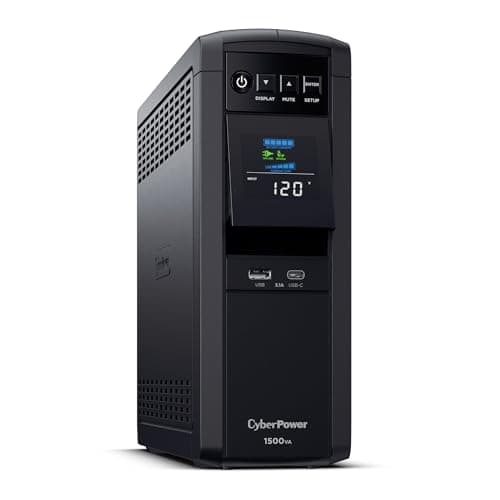
| Approved UPS | TrippLite INTERNET750U tested and approved by Forge & Flame | Minutes | A clean shutdown with the blower pulsing to clear exhaust |
|---|
| Approved inverter/charger | Tripp Lite APS700HF (700W) or APS750 (750W) on a 12V deep-cycle battery | Up to eight hours, per Quadra-Fire | Continued operation, with auto-transfer and pure sine output |
|---|
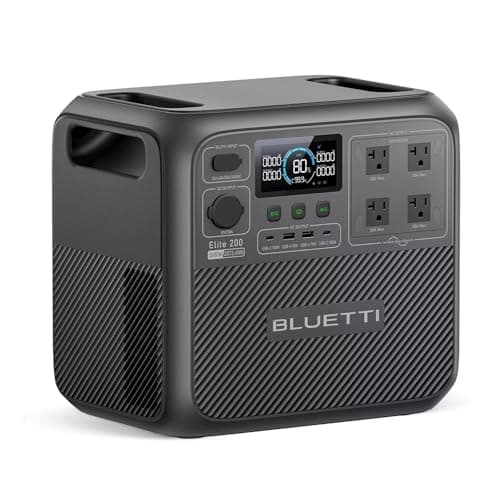
| Modern LFP power station | Not on any approved list we found | About 6 h from 2,073.6 Wh at 336 W | The same job, with a compatibility question attached |
|---|
Approved-product names and the eight-hour figure are published by Hearth & Home Technologies for Forge & Flame and Quadra-Fire appliances, cited under Sources. The six-hour figure in the last row is our arithmetic from BLUETTI's published 2,073.6Wh capacity against the published 336W running load, before conversion losses.
The compatibility warning nobody reads
Harman's Electrical Rating section carries a note in italics that is easy to skip and should not be: “Some generator or battery back-up systems may not be compatible with the micro-processor electronics on this appliance. Please consult the power supply manufacturer for compatible systems.”
The Loss of Power section is firmer still — use only approved battery back-up devices, because other products may not operate properly, can create unsafe conditions or can damage the appliance.
We do not read that as “no power station will work”. We read it as a warning about waveform and transfer behavior, which is exactly what the pure-sine requirement is about — pure sine versus modified sine explains why microprocessor-controlled appliances are the category that actually fails on the wrong waveform. The honest position is that a pure-sine LFP station is the right shape and is not an approved product, and that a five-minute call to your dealer costs less than a control board.
What a pellet stove costs to run
At a published 336 running watts, a stove burning for twelve hours a day uses about 4 kWh — our arithmetic from the published figure. That is roughly what a modern refrigerator uses in three days, and it is why the electricity side of a pellet stove is generally ignored until the grid goes down.
The ignition cycle adds a little, but not much: roughly 170 extra watts for ten minutes is under 0.03 kWh per start. The number that matters is the running figure, and it is the one to size a battery against.
Sizing a battery for a pellet stove
- Find your own rating plate. It is in the control area of the stove, and it states volts, start amps and run amps for your model. Multiply amps by volts for watts. Do not use this page's numbers if your plate says something different.
- Check the inverter can hold the start. Roughly 500 watts for ten minutes, not a momentary surge. Any station over 1,000W continuous clears this comfortably.
- Divide capacity by running watts. 1,056Wh at 336W is about three hours; 2,073.6Wh is about six. Subtract perhaps ten percent for conversion losses.
- Decide whether you also want the furnace. If you do, you are in a different size class entirely — furnace power draw is the comparison.
- Fit a surge protector either way. The manual recommends one specifically to protect the circuit board, and that is cheap advice to take.
The short version
A pellet stove is published at about 336 watts running and 504 watts starting, which makes it one of the few heating appliances a portable battery can genuinely carry. The manufacturers are clear about the two tiers: a UPS for a safe shutdown, an inverter/charger on a deep-cycle battery for up to eight hours of real operation. Read your own rating plate, insist on pure sine, keep the doors and hopper closed when the power fails, and fit a carbon monoxide alarm regardless of what you back it up with.