What a public safety power shutoff is
Utilities in high fire-risk areas de-energize distribution lines preemptively when weather makes ignition likely — typically hot, dry conditions with strong winds and very low humidity.
It is not a fault. Nothing is broken. The power is off deliberately, and it stays off until the utility has patrolled the lines and judged conditions safe, which is why restoration can lag the end of the weather event by a day or more.
That makes it a different planning problem from a storm outage in three specific ways.
1. You get warning, and you should use it
Utilities issue advance notice, usually 24 to 48 hours ahead. Nobody gets that with a storm, and it changes what preparation is worth doing.
- Charge everything. Battery, power banks, phones, laptops, tool batteries. Arriving at a shutoff at 40% is a wasted purchase.
- Pre-cool the house and the fridge. Drop the thermostat several degrees and turn the fridge to its coldest setting for the day beforehand. Thermal mass is free storage and nobody uses it.
- Fill water containers. If you are on a well, this is not optional.
- Fuel the car. Stations in the shutoff footprint will not be pumping.
- Register for notifications with your utility, and register any medical equipment while you are there.
The preparation window is the single biggest advantage this scenario has over every other one on this site, and it is mostly wasted.
2. It lasts days, not hours
Multi-day is the planning assumption, which puts this firmly in recharge-path territory rather than capacity territory.
Match the purchase to the outage
Capacity is not a preference. It falls out of two numbers: how long your power is usually off, and what you refuse to lose while it is.
| Your outage lasts | What has to keep running | Realistic product class |
|---|
| Under 24 hours | Fridge, phones, router, lights | 1kWh battery, charged before the shutoff
Best under $1,000 |
|---|
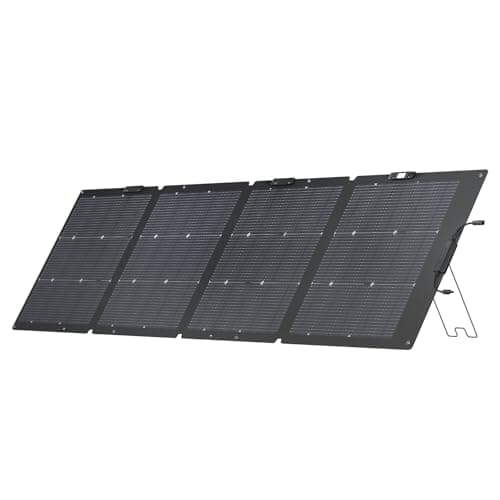
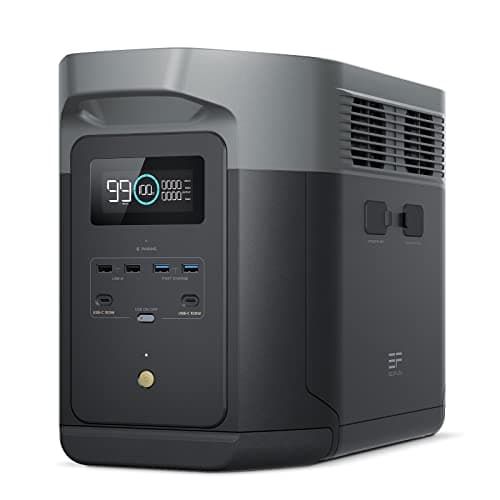
| 1 to 3 days | Above, plus a freezer | 2kWh battery plus 400W of solar
Best 2000Wh power stations |
|---|
| 3 days or more, repeatedly | Above, sustained across a season | Expandable battery plus a real solar array
How much solar do I need? |
|---|
| Any length, with a well pump | Water as well as power | A generator, sited carefully, plus a battery indoors
Backup power for a well pump |
|---|
Shutoff seasons produce several events, not one. Equipment that works for a single three-day outage but takes a week to recover is the wrong shape for a season with four of them — which is why recharge speed and solar input matter more here than raw capacity.
3. The air is part of the hazard
This is the point that makes the scenario genuinely different, and most backup power advice ignores it.
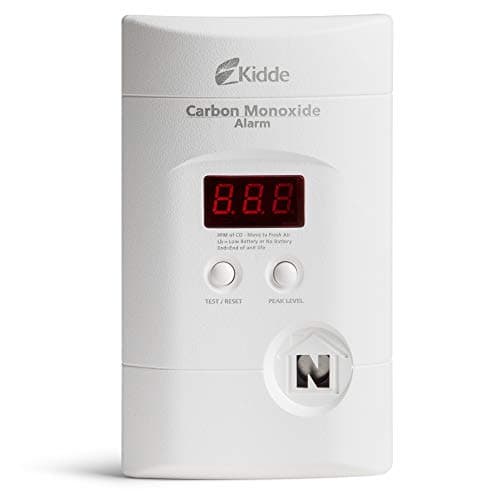
Shutoffs are frequently accompanied by smoke. The correct response to smoke is to close the house up and run filtration, which is precisely the configuration in which a combustion engine anywhere near the building becomes dangerous. Sealed house, closed windows, no cross ventilation, and exhaust looking for a way in.
Which is why the recommendation here differs from the storm scenario:
- A battery is the primary, not the backup. It runs indoors, produces nothing, and lets you keep the house sealed.
- If you run a generator, run it in daylight blocks and check where the wind is taking the exhaust before each start.
- Never run one overnight in a sealed house. The combination of no ventilation and nobody awake is the one that kills people.
- Air filtration is a real load worth budgeting. A portable air cleaner is typically tens of watts — small, and worth more than most things you would run instead.
The full safety guidance applies unchanged, and matters more in this scenario than any other.
Solar is unusually well suited here
In most backup scenarios solar is a supplement with an awkward seasonality problem: outages happen in storms, and storms are cloudy.
Shutoffs invert that. They are called for hot, dry, clear, windy weather — which is close to ideal generating weather. The demand and the supply line up, and they line up for days at a time.
The one caveat is smoke. Heavy smoke does reduce irradiance meaningfully, and a badly smoky day will underperform a clear one. Plan panel capacity with margin rather than sizing exactly to a clear-sky figure. The sizing arithmetic already applies a conservative derating for exactly this class of uncertainty.
What to run, and what to let go
| Load | Priority | Why |
|---|
| Refrigerator | High | Days of food, and it runs in blocks |
|---|
| Air filtration | High | Tens of watts, and the air is the hazard |
|---|
| Router, phones, radio | High | Evacuation notices arrive this way |
|---|
| Medical equipment | Highest | Register with the utility as well |
|---|
| Well pump | High if you have one | No power means no water at all |
|---|
| Air conditioning | Low | Not viable on a battery; cool one room instead |
|---|
| Electric cooking | Low | Use a propane stove outdoors |
|---|
Ordering reflects the specific hazards of this scenario rather than a general priority list. In a winter storm the heating row would sit at the top and air filtration would not appear at all.
The evacuation overlap
A shutoff and an evacuation order can arrive in the same week, and equipment that only works at home is only half a plan.
- Keep a power bank and a headlamp in the go-bag, not in the garage.
- Keep the car above half a tank through the season.
- A battery you can carry beats one you cannot. Weight matters differently here than in a storm scenario, because it may need to go in the car.
- Know what you would take. If leaving is possible, equipment is a convenience rather than the plan.
That last point is worth stating plainly. In a storm outage, staying is usually the right call and backup power makes it comfortable. In a fire event, leaving is sometimes the right call and no amount of equipment changes that.
Buying for a season, not an outage
The practical shape of this purchase differs from the storm one because shutoff regions get several events a year, on notice, in good solar weather.
That argues for: an expandable battery rather than a fixed one, real solar capacity rather than a token panel, fast recharge so back-to-back events are survivable, and a deliberate decision to keep the house sealed rather than to run an engine beside it.
The storm scenario and the whole-home scenario take different positions for good reasons — the hazards are not the same.