Skip to content
Watt Warden

Outage Prep

How to Cook Without Power

A hot plate would empty a large power station in under an hour. The alternative is fuel - and fuel is exactly where outage cooking kills people every single year.

By Sawyer V.Updated Published How we work this out
A camping stove cooking outdoors.

Watt & Warden earns a commission on qualifying purchases made through links on this page, at no extra cost to you. It never changes a ranking, and our picks include products we tell you to skip. Full disclosure.

Why electric cooking does not work on a battery

Cooking makes heat, and making heat with electricity is the least efficient use of stored energy there is.

ApplianceDrawFrom a 2,000Wh battery
Electric hot plate or griddle1,200-1,800 WAbout an hour, then nothing else works either
Kettle1,200-1,500 WFine — three minutes is about 70Wh
Microwave1,000-1,500 WFine in bursts — four minutes is about 100Wh
Electric oven2,000-5,000 WNot viable at any portable size
Slow cooker200-300 WGenuinely viable — six hours is under 2,000Wh
Coffee maker, drip~1,000 WFine for one brew cycle

Draw figures are working estimates from typical appliance ratings rather than manufacturer measurements; runtimes are calculated with this site's stated 85% inverter efficiency. The pattern is what matters: short high-power bursts are affordable, sustained heat is not.

The exception worth noticing is the slow cooker. At 200-300W it is the one genuinely electric way to cook a real meal on a battery — six hours of it costs less than an hour of a griddle.

The safety rule, which is the whole page

Every year, outage-related carbon monoxide deaths include people cooking with fuel indoors. The mechanisms are boringly consistent:

  • A charcoal grill brought into a garage or onto a covered porch because it is raining.
  • A camp stove used on a kitchen counter because it is cold outside.
  • A gas oven left open to warm a room, which is a heating mistake rather than a cooking one but kills the same way.

Ready.gov states it plainly: "Only use generators and grills outdoors and away from windows and never heat your home with a gas stovetop or oven."

Charcoal deserves a separate line because it is the worst of them. Burning charcoal produces very high concentrations of carbon monoxide and it continues after the flames are out — a grill smouldering in a garage overnight has killed whole households. Charcoal is never used indoors, in a garage, on a covered porch, or in a tent, under any circumstances.

What works, in order

1. A gas range you can light by hand. If your cooktop is gas, the burners will usually light with a match even when the electronic igniter has no power. The oven generally will not, because its safety valve is electric. This is the easiest answer and a lot of people do not realize they have it.

2. A propane camp stove, outdoors. Two burners, real pans, wind protection, and about an hour on high per small cylinder. This is the purpose-built answer.

3. A grill, outdoors. Gas or charcoal. Slower and less controllable, but most households already own one.

4. A slow cooker on a battery. The one efficient electric route, and it runs unattended.

5. A kettle or microwave on a battery, in bursts. Hot drinks and reheating, which after two cold days matters more than it should.

6. Food that needs no cooking. The plan that never fails.

Cook the fridge first

A sequencing point that saves real food and is rarely mentioned.

USDA guidance is that a refrigerator keeps food safe for about four hours and a full freezer for about 48. So the order to eat in is:

  1. Fridge food first, on day one, while it is still clearly safe.
  2. Freezer food next, as it thaws, over days one and two.
  3. Shelf-stable food last, because it will keep indefinitely.

Most people do the opposite — open a tin because it is easy — and then throw away a fridge full of food. Cooking the perishables on day one is the single most valuable cooking decision in an outage.

The freezer page covers the temperature rule for what is still safe afterwards.

Practical points people learn the hard way

  • Cooking needs water. Boiling, washing pans, washing hands. Factor it into water storage rather than counting only drinking water.
  • Cook once, eat twice. Fuel and water are both finite; one pot that does two meals halves both.
  • Disposable plates are not wasteful in an outage, they are water conservation.
  • A pot with a lid uses far less fuel than one without.
  • Keep a manual can opener. Every list includes it and every household discovers they only own an electric one.
  • Store more cylinders than you think. They are cheap, they never go stale, and running out mid-week is avoidable.
  • Set the stove up somewhere sheltered but genuinely open — a patio, not a garage with the door up, and not under a low awning.

The winter version is harder

Cooking outdoors in a snowstorm is genuinely unpleasant, which is precisely why winter is when people bring stoves inside.

The realistic answers:

  • Cook less, and cook simply. Hot water for drinks and instant food beats a proper meal you have to stand outside for.
  • Use the battery for the small electric jobs — kettle, microwave, slow cooker — because those are indoor-safe and the arithmetic works.
  • Set up in a sheltered spot and cook in one session rather than three.
  • A vacuum flask is genuinely useful. Boil once outdoors, have hot water for hours indoors.

What is not an answer is bringing the stove in. The winter kit covers the rest of the season, and the alarm is the backstop for the moment somebody does it anyway.

Quick picks

#ProductBest forPrice
1
No photo

The right tool for the job

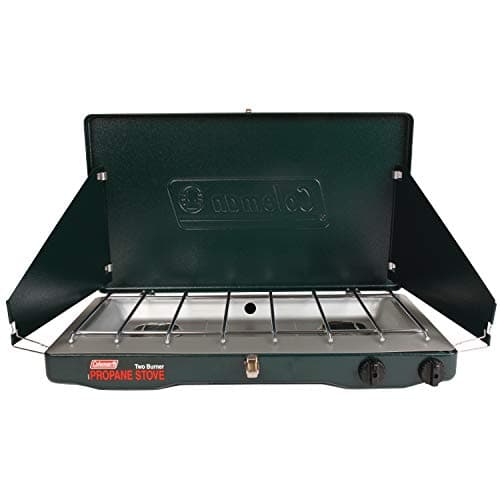
Coleman Classic propane camping stove

Up to 20,000 BTU across two burners, with WindBlock panels and a PerfectFlow regulator.

Real cooking, outdoors
2
No photo

Because people do bring them inside

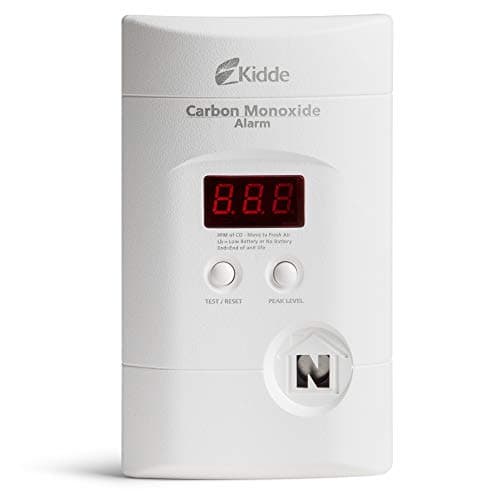
Kidde Nighthawk KN-COPP-3 CO alarm

A plug-in CO alarm with battery backup and a digital ppm display.

Every level of the house
3
No photo

For the small electric jobs

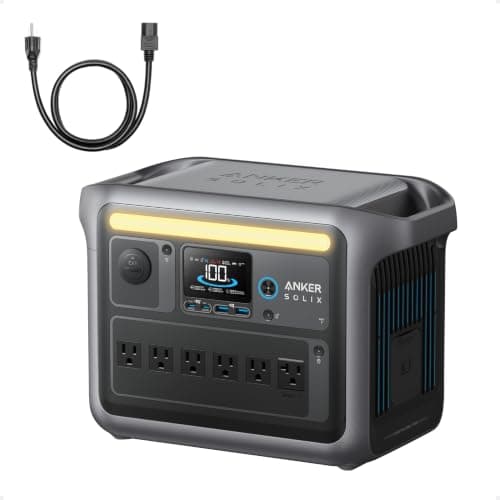
Anker SOLIX C1000

1,056Wh of LiFePO4 with 1,800W output and a fast recharge.

A kettle in bursts, not a hot plate for an hour

Prices come from the retailer at page-build time and change constantly. Where no live price is available the button reads “Check price” rather than showing a number we cannot stand behind.

The picks in full

01The right tool for the job

Coleman Classic propane camping stove

Up to 20,000 BTU across two burners, with WindBlock panels and a PerfectFlow regulator.

Two burners fitting a 12 in and a 10 in pan at once is the difference between heating a tin and cooking a meal, which after day two of an outage matters more than it sounds.

Up to an hour on high on one 16.4 oz cylinder, so a handful of cylinders covers a week of realistic use. The pressure regulator keeps output consistent as a cylinder empties and as it gets cold.

Outdoors only. This is a combustion appliance and it produces carbon monoxide. The WindBlock panels exist so you can use it outdoors in weather rather than bringing it in.

Skip it ifyou have a gas range you can light by hand — then you already have a cooktop.

Published specifications for the Coleman Classic propane camping stove
SpecificationPublished figure
OutputUp to 20,000 total BTU across 2 adjustable burners
Wind protectionAdjustable WindBlock panels
Pan capacityA 12 in and a 10 in pan at the same time
RegulatorPerfectFlow pressure regulator
Run timeUp to 1 hour on high on one 16.4 oz cylinder
CooktopAluminized steel with a removable chrome-plated grate
Size4.1 x 21.9 x 13.7 in

Source: Coleman — Classic Propane Gas Camping Stove, 2-Burner. These are the manufacturer's published figures, not ours — we have not tested this unit.

02Because people do bring them inside

Kidde Nighthawk KN-COPP-3 CO alarm

A plug-in CO alarm with battery backup and a digital ppm display.

Outage cooking is one of the most reliable sources of carbon monoxide fatalities there is, and the mechanism is always the same: a charcoal grill or a camp stove brought into a garage or a kitchen because it is raining.

The digital readout matters here because the build-up from a stove is gradual — a number you can watch is actionable long before the horn sounds.

Skip it ifyours are current and tested.

Published specifications for the Kidde Nighthawk KN-COPP-3 CO alarm
SpecificationPublished figure
SensorElectrochemical
Power120 V AC plug-in with 9 V battery backup
DisplayDigital, 30–999 ppm, refreshed every 15 s
Alarm85 dB
MemoryPeak-level memory of the last detection or test
Warranty10-year limited; UL certified

Source: Kidde — Nighthawk KN-COPP-3 product page. These are the manufacturer's published figures, not ours — we have not tested this unit.

03For the small electric jobs

Anker SOLIX C1000

1,056Wh of LiFePO4 with 1,800W output and a fast recharge.

1,800W runs a kettle or a microwave in short bursts, which is genuinely useful — boiling water for coffee or reheating something for four minutes costs perhaps 100Wh.

Sustained cooking is a different matter. Treat a battery as the appliance that makes hot drinks and reheats, and the propane stove as the one that cooks.

Skip it ifyou expect to cook a meal on it. The arithmetic below explains why not.

Published specifications for the Anker SOLIX C1000
SpecificationPublished figure
Usable capacity1,056 Wh
Cell chemistryLiFePO4 (LFP)
AC output1,800 W continuous / 2,400 W SurgePad
Cycle life3,000 cycles
Wall recharge80% in 43 min, full in 58 min
Max solar input600 W (full solar recharge ~1.8 h)
Ports11 total, including 6 AC on panel-equipped bundles

Source: Anker — SOLIX C1000 product specifications. These are the manufacturer's published figures, not ours — we have not tested this unit.

How these were chosen

We did not test these. Nobody at Watt & Warden has plugged one in. What we did instead: read the manufacturer's published specifications, compile them into a table where the figures line up, and compute the numbers manufacturers leave out — runtime against a real appliance load, and what an hour of running actually costs.

Anything that could not be sourced was left out rather than estimated, and every pick names the buyer who should skip it. The full method is here, including where it is weaker than a publisher with a test bench.

Questions people actually ask

Can I cook on a portable power station?

In bursts. A kettle for three minutes is about 70Wh and a microwave for four is about 100Wh, both easily affordable. Sustained cooking is not -- a 1,500W hot plate empties a 2,000Wh battery in about an hour. The exception is a slow cooker at 200-300W, which is genuinely viable.

Is it safe to use a camp stove indoors during an outage?

No. Camp stoves are combustion appliances that produce carbon monoxide, and outage cooking is one of the most reliable sources of CO fatalities there is. Ready.gov is explicit that grills are outdoor-only and that you should never heat a home with a gas stovetop or oven.

Can I use a charcoal grill in the garage?

Never, under any circumstances. Burning charcoal produces very high concentrations of carbon monoxide and continues to after the flames are out -- a grill smouldering in a garage overnight has killed whole households. Not indoors, not in a garage, not on a covered porch, not in a tent.

Will my gas stove work in a power outage?

The burners usually will -- most gas cooktops light with a match when the electronic igniter has no power. The oven generally will not, because its safety valve is electric. A lot of households have this option and do not realize it, and it is the easiest answer of all.

What should I eat first in a power outage?

Fridge food on day one while it is clearly safe, freezer food as it thaws over days one and two, and shelf-stable food last because it keeps indefinitely. Most people do the opposite and then throw away a fridge full of food. USDA puts a fridge at about four hours and a full freezer at about 48.

Sources

Every figure on this page comes from a published source. We have not tested this equipment, so the specifications are the manufacturer's and the statistics are the dataset's — the arithmetic on top of them is ours, and it is shown in full so you can check it. How we work this out.