Skip to content
Watt Warden

Power Stations

Jackery Explorer 2000 v2 Review: The Quiet One

Two kilowatt-hours is the size most households should own. This one is the quietest way to own it, and the slowest to refill.

By Sawyer V.Updated Published How we work this out
Jackery Explorer 2000 v2

Watt & Warden earns a commission on qualifying purchases made through links on this page, at no extra cost to you. It never changes a ranking, and our picks include products we tell you to skip. Full disclosure.

Quick picks

#ProductBest forPrice
1
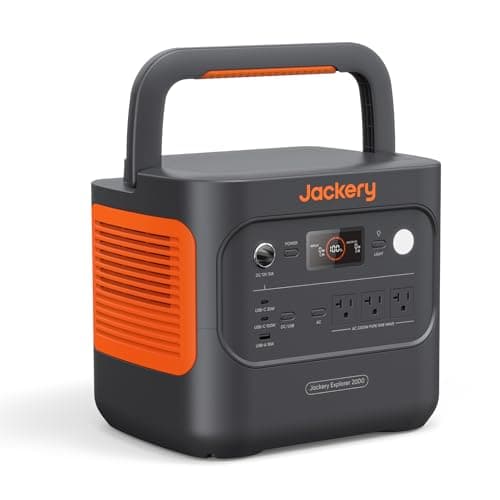
Jackery Explorer 2000 v2

The unit under review

Jackery Explorer 2000 v2

2,042Wh, 2,200W continuous, a 20ms UPS switchover and charging under 30dB.

A whole night, quietly
$899.00 · Check price on Amazon

#ad how this is funded · price as of October 20, 2026 · $999.00 10% off

2
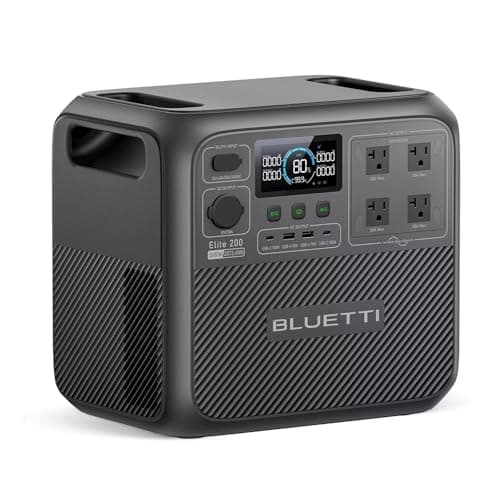
BLUETTI Elite 200 V2

The one that outlives it

BLUETTI Elite 200 V2

2,073.6Wh, 2,600W continuous with 3,900W power lifting, and a 6,000-cycle rating.

Buying once
$1,399.00 · Check price on Amazon

#ad how this is funded · price as of October 20, 2026

3
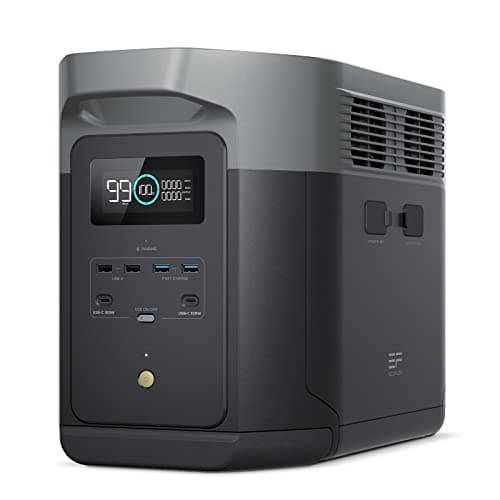
EcoFlow DELTA 2 Max

The fastest to refill

EcoFlow DELTA 2 Max

2,048Wh, 2,400W continuous, 0-80% in 43 minutes and up to 1,000W of solar input.

Flickering outages
$1,049.00 · Check price on Amazon

#ad how this is funded · price as of October 20, 2026 · $1,399.00 25% off

4
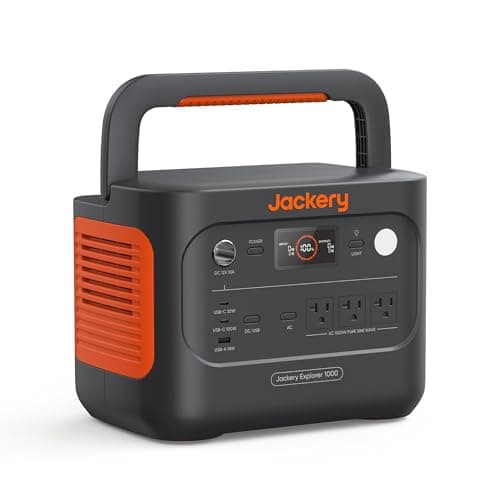
Jackery Explorer 1000 v2

Half the battery, a third of the weight

Jackery Explorer 1000 v2

1,070Wh at 24 lb with a 1,500W inverter — the portable half of this decision.

People who overbought
$499.00 · Check price on Amazon

#ad how this is funded · price as of October 20, 2026 · $559.00 11% off

5
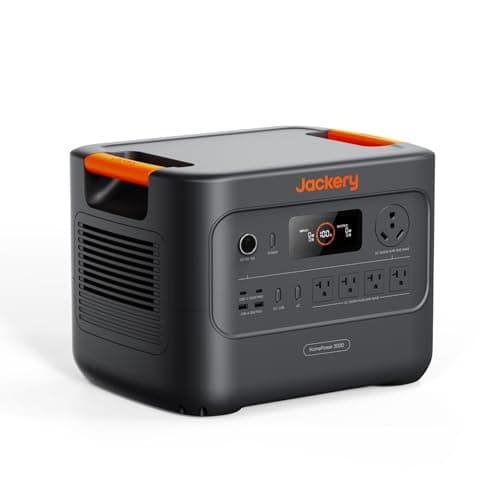
Jackery HomePower 3000

The next step up

Jackery HomePower 3000

3,072Wh and 3,600W of output.

A refrigerator, a freezer and a furnace together
$1,349.00 · Check price on Amazon

#ad how this is funded · price as of October 20, 2026 · $1,499.00 10% off

Prices come from the retailer at page-build time and change constantly. Where no live price is available the button reads “Check price” rather than showing a number we cannot stand behind.

How this review was done

No bench, no load bank, no instrumented runtime chart. We have tested none of this equipment, and the methodology page says so in more detail.

Everything below comes from Jackery's published specifications, the published specifications of its direct rivals, and arithmetic we show.

The two numbers nobody puts on the box

Capacity and output are the figures every listing shouts. The two that actually distinguish the Explorer 2000 v2 are quieter than that.

A 20ms UPS switchover. Plugged into the wall with your load plugged into it, the unit carries the load across a grid failure fast enough that a desktop PC, a router or a refrigerator control board never sees the gap. That turns a power station into a whole-desk UPS — the shape covered in the UPS-function roundup.

Charging under 30dB. Every battery in this class runs fans when it charges quickly. Jackery publishes a silent charging mode below 30dB, which is roughly a quiet library. If the battery lives in a bedroom or a small apartment, that is the specification you will notice every single night, long after you have stopped thinking about watt-hours.

The class, side by side

UnitCapacityContinuous outputCharge to 80%Cycle rating
Jackery Explorer 2000 v22,042 Wh2,200 W66 minNot published here
BLUETTI Elite 200 V22,073.6 Wh2,600 W (3,900 W lifting)50 min6,000+ cycles
EcoFlow DELTA 2 Max2,048 Wh2,400 W43 min3,000+ cycles to 80%
Jackery HomePower 30003,024 Wh3,000 W (6,000 W surge)Full in ~2.4 hNot published here

Manufacturer figures from the product pages linked below. Where a maker does not publish a number on the page we cite, the cell says so rather than carrying an invented one.

The three 2kWh units are within 1.5% of each other on capacity. Nobody is choosing between them on energy, and any review that ranks them on watt-hours is padding.

What 2,042Wh runs, and for how long

Planning at 85% inverter efficiency, the usable figure is about 1,736Wh.

LoadAverage drawRuntime
Refrigerator alone150 WAbout 11.5 hours
Refrigerator and chest freezer250 WAbout 7 hours
Gas furnace blower, cycling200 WAbout 8.5 hours
Router, modem, laptop and lights100 WAbout 17 hours
CPAP overnight40 WTwo full nights

Runtime is 2,042Wh x 0.85 divided by average draw. Furnace draw varies enormously with the blower motor — the furnace page explains how to find yours.

Eleven hours of refrigeration is the answer to the overnight outage, which is exactly the gap the 1kWh class cannot close. That is why this size, not the smaller one, is the honest default for a house.

Where it loses

Two places, and both are published rather than suspected.

Recharge speed. 66 minutes to 80% against 50 for the BLUETTI and 43 for the EcoFlow. In a storm where the grid returns for half an hour at a time, that difference compounds across a night.

Inverter size. 2,200W is the smallest of the three. It still clears a microwave with room, but it is the unit most likely to complain when a second large load joins the first.

Who should buy it

  • Anyone whose battery lives indoors near people. The sub-30dB charging mode is a genuine quality-of-life specification and nobody else in this table publishes one.
  • Anyone who wants a UPS and a power station in one box. 20ms covers a desktop, a modem rack or a refrigerator control board.
  • Anyone who carries it occasionally. 39.5 lb is heavy, but it is the light end of a class that runs past 60 lb.

Who should skip it

  • Storm-outage households with flickering grids. Buy the faster refill.
  • Anyone planning to run two big loads at once. 2,600W or more is the shopping target.
  • Anyone who needs 240V. Nothing in this class does it; that is a different tier of machine.

The short version

  • 2,042Wh, 2,200W, 39.5 lb. The light, quiet member of the 2kWh class.
  • 20ms switchover makes it a UPS for anything you keep plugged through it.
  • About 11.5 hours of refrigeration from full, at 85% efficiency.
  • Slowest refill of the three — 66 minutes to 80%, and that is the reason to look at the EcoFlow.
The picks in full

01 — The unit under review

Jackery Explorer 2000 v2

2,042Wh, 2,200W continuous, a 20ms UPS switchover and charging under 30dB.

Two features separate this from the pack, and neither is capacity. The 20ms switchover means it can sit between the wall and a desk or a refrigerator and cover a blink without anything noticing. The sub-30dB silent charging mode means it can do that in a bedroom.

At 39.5 lb it is also the lightest thing in its capacity class that we list, which continues the pattern the 1000 v2 set.

The honest catch: 66 minutes to 80% is slower than the BLUETTI and the EcoFlow, and the 2,200W inverter is the smallest of the three.

Skip it ifyou want the fastest refill in the class. Two rivals publish better numbers.

Jackery Explorer 2000 v2
$899.00 · Check price on Amazon

#ad how this is funded · price as of October 20, 2026 · $999.00 10% off

Published specifications for the Jackery Explorer 2000 v2
SpecificationPublished figure
Usable capacity2,042 Wh
Cell chemistryLiFePO4 (LFP)
AC output2,200 W continuous
UPS switchover20 ms
Weight39.5 lb
Charge time0–80% in 66 min; full in 102 min (emergency mode)
Charging noiseunder 30 dB in silent charging mode

Source: Jackery — Explorer 2000 v2 product specifications. These are the manufacturer's published figures, not ours — we have not tested this unit.

02 — The one that outlives it

BLUETTI Elite 200 V2

2,073.6Wh, 2,600W continuous with 3,900W power lifting, and a 6,000-cycle rating.

6,000 cycles is the longest published cell rating on this site, and it is roughly 50% more life than the 4,000-cycle ratings that are normal in this class.

2,600W of continuous output also clears loads the Jackery cannot: a 1,200W microwave and the refrigerator at the same time, for instance.

The honest catch: BLUETTI's power lifting mode reaches 3,900W only on resistive loads. It does nothing for a motor, which is what surge headroom is usually bought for.

Skip it ifquiet matters more to you than output. This charges fast, and fast means fans.

BLUETTI Elite 200 V2
$1,399.00 · Check price on Amazon

#ad how this is funded · price as of October 20, 2026

Published specifications for the BLUETTI Elite 200 V2
SpecificationPublished figure
Usable capacity2,073.6 Wh
Cell chemistryAutomotive-grade LiFePO4 (LFP)
AC output2,600 W continuous / 3,900 W power lifting
Cycle life6,000+ cycles
Fast charge0–80% in 50 min via dual AC/DC input

Source: BLUETTI — Elite 200 V2 product specifications. These are the manufacturer's published figures, not ours — we have not tested this unit.

03 — The fastest to refill

EcoFlow DELTA 2 Max

2,048Wh, 2,400W continuous, 0-80% in 43 minutes and up to 1,000W of solar input.

Forty-three minutes to 80% is the number that wins storm outages, where the grid returns in short bursts and the machine that grabs the most energy per burst is the one still running at midnight.

1,000W of solar input is also 2.5x the Jackery's 400W ceiling, which is what makes it credible off-grid.

The honest catch: EcoFlow's expansion path costs real money, and the base unit's 2,048Wh is no larger than its rivals.

Skip it ifyour outages are long and total. Then recharge speed is irrelevant.

EcoFlow DELTA 2 Max
$1,049.00 · Check price on Amazon

#ad how this is funded · price as of October 20, 2026 · $1,399.00 25% off

Published specifications for the EcoFlow DELTA 2 Max
SpecificationPublished figure
Capacity2,048 Wh, expandable to 6,144 Wh
Output2,400 W continuous
ChemistryLiFePO4, 3,000+ cycles to 80%
AC recharge0–80% in 43 minutes
Solar inputup to 1,000 W
Outlets15 total
Noiseas low as 30 dB

Source: EcoFlow — DELTA 2 Max published specifications. These are the manufacturer's published figures, not ours — we have not tested this unit.

04 — Half the battery, a third of the weight

Jackery Explorer 1000 v2

1,070Wh at 24 lb with a 1,500W inverter — the portable half of this decision.

If the honest outage list is a router, phones, lights and a CPAP, the 2000 v2 is twice the battery you need and 15 lb of unnecessary weight.

Buying this instead and spending the difference on panels is a defensible plan — see the 1000 v2 review.

The honest catch: 1,500W of continuous output rules out the microwave, and about six hours of refrigeration rules out the overnight outage.

Skip it ifthe refrigerator has to last overnight. It will not.

Jackery Explorer 1000 v2
$499.00 · Check price on Amazon

#ad how this is funded · price as of October 20, 2026 · $559.00 11% off

Published specifications for the Jackery Explorer 1000 v2
SpecificationPublished figure
Usable capacity1,070 Wh
Cell chemistryLiFePO4 (LFP)
AC output1,500 W continuous / 3,000 W surge
Weight24 lb
Cycle life4,000 cycles to 70% capacity
Max solar input400 W
Wall recharge~1.7 h, or ~1 h in emergency mode
Warranty3 years, extendable to 5 on registration

Source: Jackery — Explorer 1000 v2 product specifications. These are the manufacturer's published figures, not ours — we have not tested this unit.

05 — The next step up

Jackery HomePower 3000

3,072Wh and 3,600W of output.

Half again as much energy and 1,400W more inverter, which is the difference between running the critical list and running the house in a quiet way.

Its size and weight are the honest admission that this is no longer a portable battery.

The honest catch: it is a 3,072Wh unit bought by people who needed 2,000Wh often enough to regret it twice.

Skip it ifyou are going to carry it. It is a large, heavy unit.

Jackery HomePower 3000
$1,349.00 · Check price on Amazon

#ad how this is funded · price as of October 20, 2026 · $1,499.00 10% off

Published specifications for the Jackery HomePower 3000
SpecificationPublished figure
Usable capacity3,072 Wh
AC output3,600 W
ClassWheeled station for whole-critical-load backup

Source: Jackery — HomePower 3000 listing. These are the manufacturer's published figures, not ours — we have not tested this unit.

How these were chosen

We did not test these. Nobody at Watt & Warden has plugged one in. What we did instead: read the manufacturer's published specifications, compile them into a table where the figures line up, and compute the numbers manufacturers leave out — runtime against a real appliance load, and what an hour of running actually costs.

Anything that could not be sourced was left out rather than estimated, and every pick names the buyer who should skip it. The full method is here, including where it is weaker than a publisher with a test bench.

Questions people actually ask

Did you test the Jackery Explorer 2000 v2?

No. We run no test bench and never claim otherwise. This review is assembled from Jackery's published specifications, the published specifications of competing units, and arithmetic shown in full on the page.

Can the Explorer 2000 v2 run a refrigerator overnight?

Yes. At a 150W average a household refrigerator draws roughly 1,275Wh over twelve hours, and 2,042Wh at 85% inverter efficiency gives about 1,736Wh usable. That is roughly 11.5 hours of refrigeration, which covers a normal overnight outage with the door kept shut.

What does the 20ms UPS switchover actually do?

It lets the unit sit between your wall outlet and your equipment and carry the load across a grid failure in 20 milliseconds -- fast enough that a desktop PC, a router or a refrigerator control board does not reset. It turns the battery into an uninterruptible supply for whatever stays plugged into it.

Explorer 2000 v2 or BLUETTI Elite 200 V2?

Capacity is a wash at 2,042Wh against 2,073.6Wh. BLUETTI publishes more output (2,600W against 2,200W), a faster refill (50 minutes to 80% against 66) and a 6,000-cycle rating. Jackery answers with a 20ms switchover and charging under 30dB. Quiet and UPS behavior against output and longevity.

Can it be charged by solar?

Yes, but the Explorer's solar input ceiling is the constraint rather than the panel count. If off-grid charging is the main plan, compare published solar input figures carefully -- the EcoFlow DELTA 2 Max accepts up to 1,000W, which refills it far faster on a sunny day.

Sources

Every figure on this page comes from a published source. We have not tested this equipment, so the specifications are the manufacturer's and the statistics are the dataset's — the arithmetic on top of them is ours, and it is shown in full so you can check it. How we work this out.