Skip to content
Watt Warden

Outage Prep

Backup Power for a Space Heater

People arrive at this question expecting a battery recommendation. The honest answer is that electricity is the wrong way to make heat when the power is out, and the arithmetic is not close.

By Sawyer V.Updated Published How we work this out
A person in a sweater holding a steaming mug.

Watt & Warden earns a commission on qualifying purchases made through links on this page, at no extra cost to you. It never changes a ranking, and our picks include products we tell you to skip. Full disclosure.

The arithmetic, in one table

Electric resistance heating converts watts to heat at essentially 100% efficiency, which sounds good and is exactly the problem: there is no cleverness available. A 1,500W heater draws 1,500W, continuously, for as long as it is on.

BatteryHeater on high, 1,500 WHeater on low, 750 W
512 WhAbout 17 minutesAbout 35 minutes
1,056 WhAbout 36 minutesAbout 72 minutes
2,042 WhAbout 69 minutesAbout 2.3 hours
3,840 WhAbout 2.2 hoursAbout 4.4 hours

Calculated as capacity x 0.85 / heater watts, using the 85% inverter efficiency figure documented on the methodology page.

The bottom row is the one that settles it. The largest portable battery on this site, costing several thousand dollars, runs one small space heater for a bit over two hours. A winter night is twelve.

Why battery-powered space heaters do not exist

People search for these, and the reason the search comes up empty is physics rather than a gap in the market.

Meaningful room heating starts around 750W. A battery that ran 750W for eight hours would need roughly 7 kilowatt-hours of usable capacity — larger and heavier than any portable power station sold, in a product that would cost more than a standby generator and last one night.

What does exist, and is worth knowing about, is battery-powered heated clothing — heated vests, jackets, socks and gloves. Those draw single-digit watts because they heat a person rather than a room, which is the only version of the idea where the arithmetic works.

What to do instead, in order

1. Shrink the space. Pick one room, preferably small with few exterior walls, close the doors and put a towel at the gap. Heating 150 square feet instead of 2,000 changes the problem by an order of magnitude before you spend anything.

2. Burn something, safely. A propane radiant heater with an oxygen depletion sensor is the practical answer for one room, and a wood stove or a fireplace is better still if you have one.

3. Power the furnace instead of a heater. If you have gas or oil heat, the furnace itself burns fuel and only needs electricity for its blower and controls — often under 1,600W. The furnace backup page covers that, and it is by far the most efficient use of a generator in winter.

4. Insulate the people, not the house. Sleeping bags rated below the temperature you expect, layers, hats indoors. The staying warm page works through the whole approach.

The safety part, which is not optional

Winter carbon monoxide deaths spike during outages, and the cause is almost always a heating improvisation rather than the generator itself.

  • Never a grill, a camp stove or a generator indoors. Not in the garage with the door open, not in a breezeway, not in a fireplace.
  • Never an oven as a heater. A gas oven is not vented for continuous operation and an electric one is not running anyway.
  • An indoor-rated propane heater needs ventilation. An oxygen depletion sensor protects against oxygen depletion; it is not a substitute for a cracked window.
  • A battery CO alarm in the room, every time. It is the cheapest item on this site and the only thing that will tell you.
  • Do not run a combustion heater while asleep. The whole class of accidents happens overnight.

If you already own a big battery

Use it on the loads where electricity has no substitute: the refrigerator, the freezer, the network, lighting, and any medical equipment. Those are modest, continuous and genuinely electrical.

Then heat one room with propane and wear more clothes. That combination costs a fraction of what a heat-capable battery would and works for days rather than hours.

The short version

  • A 2,000Wh battery gives about 69 minutes of a 1,500W heater.
  • Battery-powered room heaters do not exist because the physics does not allow it.
  • Propane radiant heat with an ODS is the practical one-room answer.
  • Powering the furnace blower beats powering a heater if you have gas or oil heat.

Quick picks

#ProductBest forPrice
1
Mr. Heater MH9BX Portable Buddy

The answer that actually works

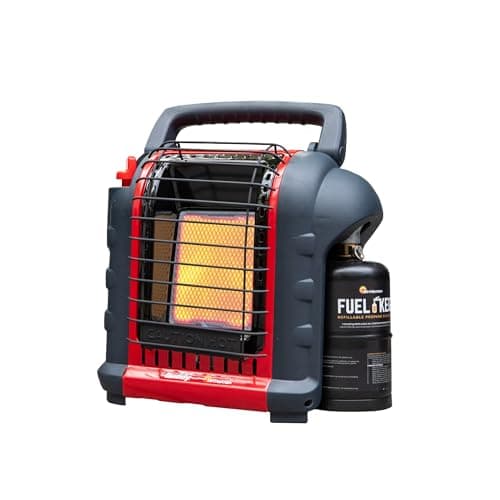
Mr. Heater MH9BX Portable Buddy

4,000 or 9,000 BTU of propane radiant heat with an oxygen depletion sensor and a Piezo igniter.

Heating one room without any electricity at all
$89.97 · Check price on Amazon

#ad how this is funded · price as of October 21, 2026

2
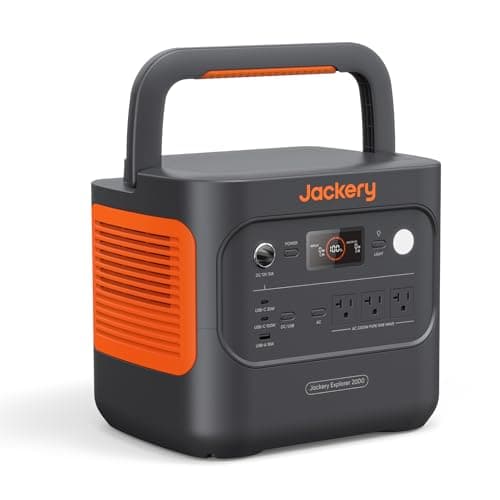
Jackery Explorer 2000 v2

If you insist on electric heat

Jackery Explorer 2000 v2

2,042Wh of LiFePO4 with a 2,200W inverter — enough to run a heater, briefly.

Roughly an hour and a half of a 1,500W heater
$899.00 · Check price on Amazon

#ad how this is funded · price as of October 21, 2026 · $999.00 10% off

3
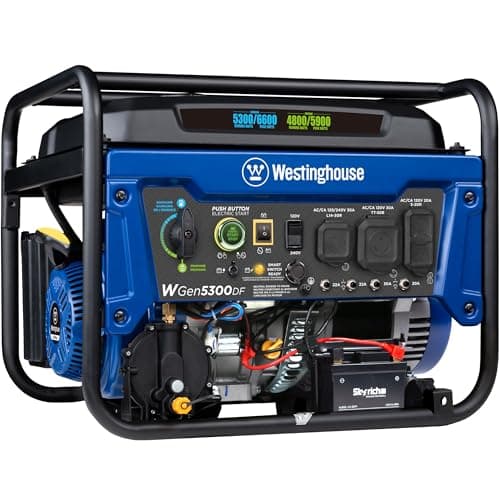
Westinghouse WGen5300DF

Best electric option

Westinghouse WGen5300DF

5,300 running watts of dual fuel — three 1,500W heaters' worth, with fuel behind it.

Running a heater, and the rest of the house, for days
$649.00 · Check price on Amazon

#ad how this is funded · price as of October 21, 2026

4
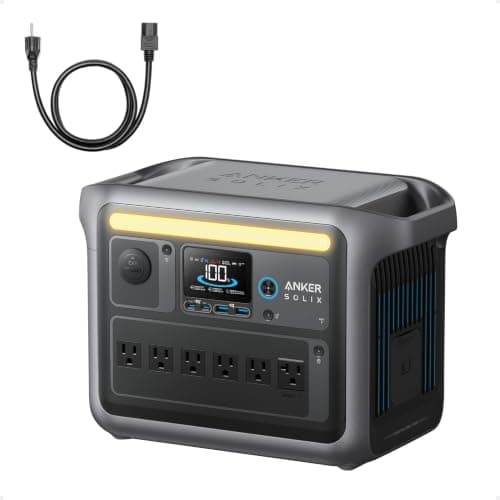
Anker SOLIX C1000

Better use of the same battery

Anker SOLIX C1000

1,056Wh and 1,800W — a refrigerator overnight, or 40 minutes of a heater.

Everything except heat
$499.99 · Check price on Amazon

#ad how this is funded · price as of October 21, 2026 · $599.99 17% off

Prices come from the retailer at page-build time and change constantly. Where no live price is available the button reads “Check price” rather than showing a number we cannot stand behind.

The picks in full

01 — The answer that actually works

Mr. Heater MH9BX Portable Buddy

4,000 or 9,000 BTU of propane radiant heat with an oxygen depletion sensor and a Piezo igniter.

A 1 lb propane cylinder holds roughly as much usable energy as a very large battery and costs a tiny fraction of one. That is the entire argument, and it is why every practical answer to heat-without-power burns something.

The oxygen depletion sensor is what makes an indoor-rated propane heater different from a camping heater. It shuts the unit off before the room's oxygen drops far enough to matter, and the tip-over switch covers the other obvious failure.

The Piezo igniter needs no battery and no mains, which matters for a device whose whole purpose is working when neither exists.

The honest catch: it still consumes oxygen and produces moisture and combustion products. It needs a cracked window, a working carbon monoxide alarm in the room, and it must never run while you sleep.

Skip it ifyou live in California or Massachusetts, where this model is not sold, or cannot ventilate the room.

Mr. Heater MH9BX Portable Buddy
$89.97 · Check price on Amazon

#ad how this is funded · price as of October 21, 2026

Published specifications for the Mr. Heater MH9BX Portable Buddy
SpecificationPublished figure
Output4,000 or 9,000 BTU, selectable
CoverageSpaces up to 225 sq ft
Fuel1 lb propane cylinder, or a remote supply with a hose and filter
Run timeAbout 3 h at 9,000 BTU, longer on low
Fuel use0.044 gal/h at 4,000 BTU, 0.099 gal/h at 9,000 BTU
SafetyOxygen depletion sensor, tip-over shut-off, pilot-out shut-off
IgnitionPiezo igniter, no battery or mains needed

Source: Mr. Heater — MH9BX Portable Buddy product page. These are the manufacturer's published figures, not ours — we have not tested this unit.

02 — If you insist on electric heat

Jackery Explorer 2000 v2

2,042Wh of LiFePO4 with a 2,200W inverter — enough to run a heater, briefly.

This is the honest version of the electric answer. Two kilowatt-hours against a 1,500W heater is about 69 minutes after inverter losses, and a 1,500W heater is a small one.

Run at the 750W low setting it roughly doubles, which is still a fraction of a winter night.

The honest catch: using a battery this way means spending its entire capacity on ninety minutes of warmth, leaving nothing for the refrigerator, the lights or the network.

Skip it ifyou want heat for a night. This is not that, and nothing portable is.

Jackery Explorer 2000 v2
$899.00 · Check price on Amazon

#ad how this is funded · price as of October 21, 2026 · $999.00 10% off

Published specifications for the Jackery Explorer 2000 v2
SpecificationPublished figure
Usable capacity2,042 Wh
Cell chemistryLiFePO4 (LFP)
AC output2,200 W continuous
UPS switchover20 ms
Weight39.5 lb
Charge time0–80% in 66 min; full in 102 min (emergency mode)
Charging noiseunder 30 dB in silent charging mode

Source: Jackery — Explorer 2000 v2 product specifications. These are the manufacturer's published figures, not ours — we have not tested this unit.

03 — Best electric option

Westinghouse WGen5300DF

5,300 running watts of dual fuel — three 1,500W heaters' worth, with fuel behind it.

A generator is the only electrical source that sustains resistive heat, because you can keep feeding it. The trade is that it must be twenty feet outside in the weather.

Dual fuel matters in a cold snap: propane stores indefinitely, but it vaporizes less readily in deep cold, so having gasoline as the alternative is worth something.

The honest catch: it burns fuel continuously to produce heat you could get from a propane cylinder directly, at far worse efficiency. Electric heat from a generator is the expensive route.

Skip it ifyou only need to heat one room. A propane heater does that for far less.

Westinghouse WGen5300DF
$649.00 · Check price on Amazon

#ad how this is funded · price as of October 21, 2026

Published specifications for the Westinghouse WGen5300DF
SpecificationPublished figure
Output (gasoline)5,300 running W / 6,600 peak W
Output (propane)4,800 running W / 5,900 peak W
Engine274cc 4-stroke OHV
Tank4.7 gal (18 L)
Run timeup to 14.5 h on a full tank
Transfer-switch outlet120/240 V L14-30R, 30 A
RV outlet120 V TT-30R, 30 A
StartingPush-button electric with remote key fob

Source: Westinghouse — WGen5300DF product specifications. These are the manufacturer's published figures, not ours — we have not tested this unit.

04 — Better use of the same battery

Anker SOLIX C1000

1,056Wh and 1,800W — a refrigerator overnight, or 40 minutes of a heater.

Included to make the trade explicit. The same battery that gives you forty minutes of space heater gives you a refrigerator overnight, the network all night, and lighting for days.

Most people who ask this question are better served by putting the battery on the things electricity is good at and heating the room some other way.

The honest catch: it does not solve the heat problem at all. It solves the other four problems well.

Skip it ifheat genuinely is your only concern.

Anker SOLIX C1000
$499.99 · Check price on Amazon

#ad how this is funded · price as of October 21, 2026 · $599.99 17% off

Published specifications for the Anker SOLIX C1000
SpecificationPublished figure
Usable capacity1,056 Wh
Cell chemistryLiFePO4 (LFP)
AC output1,800 W continuous / 2,400 W SurgePad
Cycle life3,000 cycles
Wall recharge80% in 43 min, full in 58 min
Max solar input600 W (full solar recharge ~1.8 h)
Ports11 total, including 6 AC on panel-equipped bundles

Source: Anker — SOLIX C1000 product specifications. These are the manufacturer's published figures, not ours — we have not tested this unit.

How these were chosen

We did not test these. Nobody at Watt & Warden has plugged one in. What we did instead: read the manufacturer's published specifications, compile them into a table where the figures line up, and compute the numbers manufacturers leave out — runtime against a real appliance load, and what an hour of running actually costs.

Anything that could not be sourced was left out rather than estimated, and every pick names the buyer who should skip it. The full method is here, including where it is weaker than a publisher with a test bench.

Questions people actually ask

Can a power station run a space heater?

Yes, briefly. A 2,042Wh battery runs a 1,500W heater for about 69 minutes after inverter losses, or roughly 2.3 hours on a 750W low setting. Even the largest portable battery on this site manages a bit over two hours on high, against a twelve-hour winter night.

Are there battery powered space heaters?

Not in any meaningful sense, and it is physics rather than a market gap. Room heating starts around 750W, so eight hours would need roughly 7 kilowatt-hours of usable capacity -- larger, heavier and more expensive than any portable power station sold. Battery-powered heated clothing does exist, because it heats a person rather than a room.

What is the best way to heat a room during a power outage?

Shrink the space first -- one small room with the doors closed. Then a propane radiant heater with an oxygen depletion sensor and a tip-over shut-off, with a cracked window and a battery carbon monoxide alarm in the room. If you have gas or oil heat, powering the furnace blower is better still.

How many watts does a space heater use?

1,500W on high is the standard for a plug-in electric heater, with 750W as the usual low setting. That is continuous rather than cycling, which is why it defeats batteries -- unlike a refrigerator, which averages about 150W because its compressor runs intermittently.

Is it safe to use a propane heater indoors?

Only a model rated for indoor use, with an oxygen depletion sensor and a tip-over shut-off, and only with ventilation. The sensor protects against oxygen depletion but is not a substitute for a cracked window, a working carbon monoxide alarm in the room, or the rule about never running one while asleep.

Sources

Every figure on this page comes from a published source. We have not tested this equipment, so the specifications are the manufacturer's and the statistics are the dataset's — the arithmetic on top of them is ours, and it is shown in full so you can check it. How we work this out.