Skip to content
Watt Warden

Outage Prep

Backup Power for a Gas Fireplace

This is the cheapest heat to back up in the house, or free - and which of those depends entirely on how your fireplace was built rather than on what you buy.

By Sawyer V.Updated Published How we work this out
A stone fireplace with a fire burning.

Watt & Warden earns a commission on qualifying purchases made through links on this page, at no extra cost to you. It never changes a ranking, and our picks include products we tell you to skip. Full disclosure.

Three types, three completely different answers

Before buying anything, find out which one you have. It is printed on a plate inside the unit or in the manual, and it decides everything.

TypeIn an outageWhat it needs
Standing pilot (millivolt)Works normally — lights and burns with no power at allNothing. The pilot generates its own millivolts
Electronic ignition (IPI / DSI)Will not light, and shuts down if already runningA few watts for the module, or a battery backup kit
Either, with a blowerBurns, but the heat stays at the fireplaceTens of watts for the fan
Direct vent with a powered exhaustWill not operateWhatever the fan draws — check the plate

The first row is the good news and it is common in older units. A millivolt system uses a thermocouple or thermopile in the pilot flame to generate the tiny voltage that holds the gas valve open. It is elegant, it predates household electronics, and it does not care about the grid.

Why newer fireplaces stopped doing that

Electronic ignition replaced standing pilots for a good reason: a standing pilot burns gas continuously, all year, whether or not you use the fireplace. Intermittent pilot ignition lights only on demand and saves that fuel.

The trade is exactly the one this page is about. You gain efficiency every day and lose function on the day the power goes out.

Many electronic ignition units are sold with an optional battery backup that holds a few AA cells and keeps the ignition module alive. If your unit has one, check it — those batteries sit unused for years and are usually flat.

The loads, which are trivial

ComponentDrawOver 12 hours
Ignition module and controlsA few wattsUnder 50 Wh
Convection blower30-80 W360-960 Wh
Remote receiver or wall controlUnder 5 WNegligible
Powered direct-vent exhaustVaries — read the plateVaries

Ranges are typical for residential gas fireplaces. Your own unit prints its electrical requirement on a plate — reading a nameplate explains where to look.

The blower is the whole load, and it is still small. A 286Wh battery runs a 50W blower for nearly five hours; a kilowatt-hour runs it overnight. This is among the cheapest heat you can back up.

The blower matters more than people expect

A gas fireplace without its blower is a radiant heater: pleasant directly in front of it, and doing very little for the rest of the room.

The fan is what pushes warm air out into the space, and in a winter outage that is the difference between one warm chair and one warm room. For tens of watts, it is the best return on backup power in the house.

This is the same principle that makes backing up a gas furnace such good value — the fuel does the heating and the electricity just moves air.

Getting power to it

The practical obstacle is access rather than capacity. A fireplace is usually wired to a receptacle inside the enclosure or hardwired, neither of which you can reach with an extension cord.

Three routes, in ascending cost.

1. The manufacturer's battery backup kit, if your model offers one. Cheapest by far, and it addresses the ignition module specifically. Fresh batteries before every winter.

2. An accessible outlet. An electrician can fit a receptacle you can actually reach, after which a power station plugs straight in. This also makes servicing easier.

3. The fireplace circuit on a transfer switch. Worth doing if you are already having a switch installed for the furnace and the well pump — the marginal cost is one circuit. The transfer switch page covers sizing.

The safety part

A gas fireplace is a combustion appliance, and an outage is when people do unwise things with heat.

  • Never run it with the flue blocked or the glass removed unless the unit is designed for it. Direct-vent units are sealed for a reason.
  • A working CO alarm in the room. Battery or battery-backed, because the mains ones will be dead.
  • Do not leave it burning overnight unattended unless the manufacturer explicitly allows it and a CO alarm is present.
  • Do not improvise. A fireplace that will not light is not an invitation to bring in a grill or a camp stove — the staying warm page covers the safe alternatives.
  • Know where the gas shutoff is, and know it before you need it in the dark.

Check it before the season

Two minutes, once a year, and it is the difference between discovering this in October and discovering it in January.

Find the breaker for the fireplace and switch it off, then try to light the unit. If it lights and burns, you have a standing pilot and no problem. If nothing happens, you have electronic ignition and a decision to make.

While the breaker is off, note whether the blower runs — it will not — and decide whether a warm chair is enough or you want the fan backed up too.

The short version

  • Standing pilot works without power. Electronic ignition does not.
  • Test it with the breaker off before winter, not during.
  • The blower is the load worth backing up. Tens of watts, and it heats the room rather than the hearth.
  • CO alarm in the room, always. Battery-powered, because the mains one is out.

Quick picks

#ProductBest forPrice
1
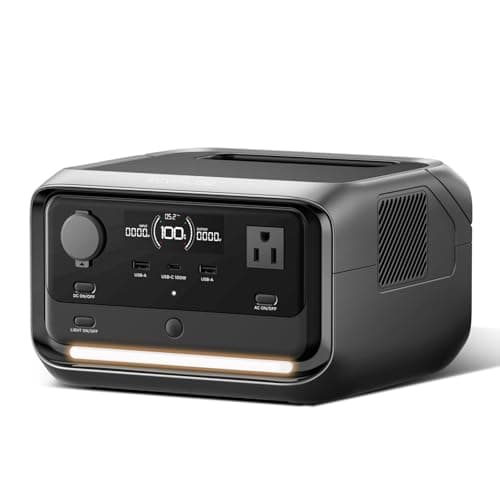
EcoFlow RIVER 3 Plus

Best overall

EcoFlow RIVER 3 Plus

286Wh with 600W continuous and sub-10ms switchover.

An electronic ignition module and a blower
$299.00 · Check price on Amazon

#ad how this is funded · price as of October 21, 2026

2
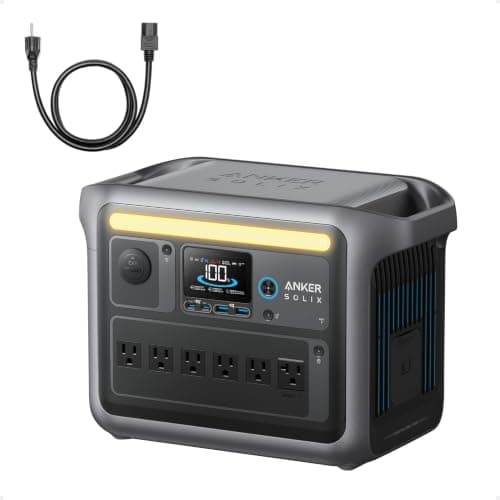
Anker SOLIX C1000

Best if the blower runs all night

Anker SOLIX C1000

1,056Wh with an 1,800W inverter and 2,400W of surge headroom.

Heat distribution across a long winter outage
$499.99 · Check price on Amazon

#ad how this is funded · price as of October 21, 2026 · $599.99 17% off

3
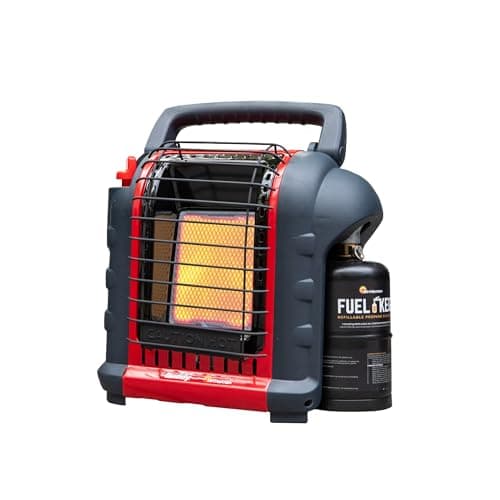
Mr. Heater MH9BX Portable Buddy

If you have no fireplace at all

Mr. Heater MH9BX Portable Buddy

4,000 or 9,000 BTU of propane radiant heat with an oxygen depletion sensor.

One room, with no electricity whatsoever
$89.97 · Check price on Amazon

#ad how this is funded · price as of October 21, 2026

4
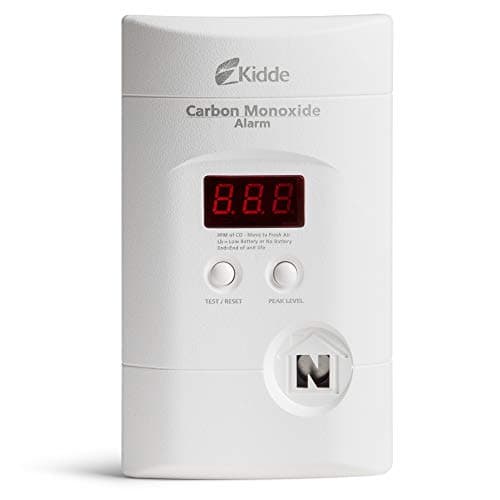
Kidde Nighthawk KN-COPP-3 CO alarm

Not optional with any gas appliance

Kidde Nighthawk KN-COPP-3 CO alarm

A plug-in carbon monoxide alarm with battery backup and a digital display.

Knowing the flue is doing its job
$44.99 · Check price on Amazon

#ad how this is funded · price as of October 21, 2026

Prices come from the retailer at page-build time and change constantly. Where no live price is available the button reads “Check price” rather than showing a number we cannot stand behind.

The picks in full

01 — Best overall

EcoFlow RIVER 3 Plus

286Wh with 600W continuous and sub-10ms switchover.

The loads here are tiny — an ignition module is watts, and a blower is tens of watts — so capacity is rarely the constraint. 286Wh runs a 50W blower for close to five hours.

The sub-10ms switchover is the feature that matters: a fireplace with electronic ignition drops out the instant power fails, and a battery with UPS-grade passthrough means it never notices.

The honest catch: a fireplace is usually hardwired or on a fixed receptacle behind the unit. Getting a battery to it may need an electrician to fit an accessible outlet.

Skip it ifyour fireplace has a standing pilot. Then it needs nothing at all.

EcoFlow RIVER 3 Plus
$299.00 · Check price on Amazon

#ad how this is funded · price as of October 21, 2026

Published specifications for the EcoFlow RIVER 3 Plus
SpecificationPublished figure
Usable capacity286 Wh (expandable to 858 Wh)
Cell chemistryLiFePO4 (LFP)
AC output600 W continuous / 1,200 W with X-Boost
UPS switchoverunder 10 ms
Operating noiseunder 30 dB
AC recharge1 hour

Source: EcoFlow — RIVER 3 Plus product specifications. These are the manufacturer's published figures, not ours — we have not tested this unit.

02 — Best if the blower runs all night

Anker SOLIX C1000

1,056Wh with an 1,800W inverter and 2,400W of surge headroom.

A blower is what turns a fireplace from a warm spot into room heating, and running one continuously overnight is where a kilowatt-hour earns its place.

The same battery also covers the refrigerator and the network, which is what you would want it doing anyway.

The honest catch: this is far more battery than a fireplace alone needs. Buy it for the whole critical list.

Skip it ifthe fireplace is decorative and the blower is optional.

Anker SOLIX C1000
$499.99 · Check price on Amazon

#ad how this is funded · price as of October 21, 2026 · $599.99 17% off

Published specifications for the Anker SOLIX C1000
SpecificationPublished figure
Usable capacity1,056 Wh
Cell chemistryLiFePO4 (LFP)
AC output1,800 W continuous / 2,400 W SurgePad
Cycle life3,000 cycles
Wall recharge80% in 43 min, full in 58 min
Max solar input600 W (full solar recharge ~1.8 h)
Ports11 total, including 6 AC on panel-equipped bundles

Source: Anker — SOLIX C1000 product specifications. These are the manufacturer's published figures, not ours — we have not tested this unit.

03 — If you have no fireplace at all

Mr. Heater MH9BX Portable Buddy

4,000 or 9,000 BTU of propane radiant heat with an oxygen depletion sensor.

Included as the comparison. A vent-free propane heater and a standing-pilot gas fireplace solve the same problem the same way — burning fuel without needing electricity — and a fireplace does it with a flue.

The honest catch: it consumes oxygen and produces moisture indoors. Cracked window, a working carbon monoxide alarm, and never while asleep.

Skip it ifyou have a working fireplace. It is the better heat source.

Mr. Heater MH9BX Portable Buddy
$89.97 · Check price on Amazon

#ad how this is funded · price as of October 21, 2026

Published specifications for the Mr. Heater MH9BX Portable Buddy
SpecificationPublished figure
Output4,000 or 9,000 BTU, selectable
CoverageSpaces up to 225 sq ft
Fuel1 lb propane cylinder, or a remote supply with a hose and filter
Run timeAbout 3 h at 9,000 BTU, longer on low
Fuel use0.044 gal/h at 4,000 BTU, 0.099 gal/h at 9,000 BTU
SafetyOxygen depletion sensor, tip-over shut-off, pilot-out shut-off
IgnitionPiezo igniter, no battery or mains needed

Source: Mr. Heater — MH9BX Portable Buddy product page. These are the manufacturer's published figures, not ours — we have not tested this unit.

04 — Not optional with any gas appliance

Kidde Nighthawk KN-COPP-3 CO alarm

A plug-in carbon monoxide alarm with battery backup and a digital display.

A gas fireplace is a combustion appliance in a living space, and a blocked or downdrafting flue is exactly the failure a CO alarm exists to catch.

The battery backup matters more than usual here, because the scenario is an outage.

The honest catch: alarms expire. There is a date on the back, and replacement is a maintenance task rather than a one-time purchase.

Skip it ifnothing. Every house with a gas appliance needs working CO alarms.

Kidde Nighthawk KN-COPP-3 CO alarm
$44.99 · Check price on Amazon

#ad how this is funded · price as of October 21, 2026

Published specifications for the Kidde Nighthawk KN-COPP-3 CO alarm
SpecificationPublished figure
SensorElectrochemical
Power120 V AC plug-in with 9 V battery backup
DisplayDigital, 30–999 ppm, refreshed every 15 s
Alarm85 dB
MemoryPeak-level memory of the last detection or test
Warranty10-year limited; UL certified

Source: Kidde — Nighthawk KN-COPP-3 product page. These are the manufacturer's published figures, not ours — we have not tested this unit.

How these were chosen

We did not test these. Nobody at Watt & Warden has plugged one in. What we did instead: read the manufacturer's published specifications, compile them into a table where the figures line up, and compute the numbers manufacturers leave out — runtime against a real appliance load, and what an hour of running actually costs.

Anything that could not be sourced was left out rather than estimated, and every pick names the buyer who should skip it. The full method is here, including where it is weaker than a publisher with a test bench.

Questions people actually ask

Will my gas fireplace work during a power outage?

It depends on the ignition type. A standing pilot or millivolt system works normally -- the pilot flame generates its own tiny voltage to hold the gas valve open, so it needs no electricity at all. An electronic ignition unit will not light and will shut down if already running. Test yours by switching off its breaker and trying to light it.

How much power does a gas fireplace need?

Very little. The ignition module and controls are a few watts, and a convection blower is 30 to 80 watts. A 286Wh battery runs a 50W blower for nearly five hours and a kilowatt-hour runs it overnight, which makes this among the cheapest heat in the house to back up.

Is it worth backing up the fireplace blower?

Yes, and it is the best return on backup power in the house for the money. Without the blower a gas fireplace is a radiant heater -- pleasant directly in front of it and doing little for the room. The fan pushes warm air into the space, which is the difference between one warm chair and one warm room.

How do I get a power station to my fireplace?

Access is the obstacle rather than capacity, because a fireplace is usually wired to a receptacle inside the enclosure or hardwired. Three routes: the manufacturer's battery backup kit if your model offers one, an electrician fitting an accessible outlet, or putting the fireplace circuit on a transfer switch if you are having one installed anyway.

Is it safe to run a gas fireplace during an outage?

If it is designed to run without power and the flue is clear, yes -- but keep a working battery or battery-backed carbon monoxide alarm in the room, because your mains-powered alarms are dead. Never run it with the flue blocked or the glass removed unless the unit is designed for it, and do not leave it burning unattended overnight unless the manufacturer allows it.

Sources

Every figure on this page comes from a published source. We have not tested this equipment, so the specifications are the manufacturer's and the statistics are the dataset's — the arithmetic on top of them is ours, and it is shown in full so you can check it. How we work this out.