The verdict, in one paragraph
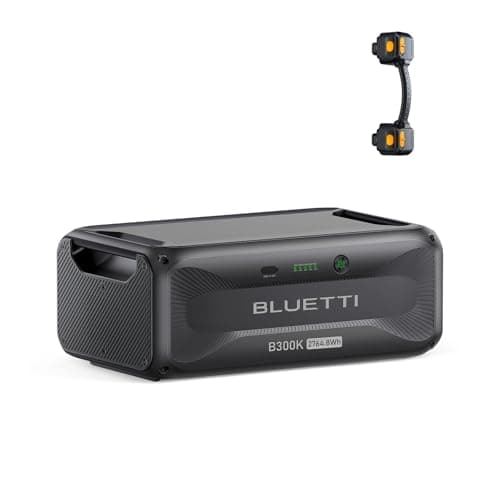
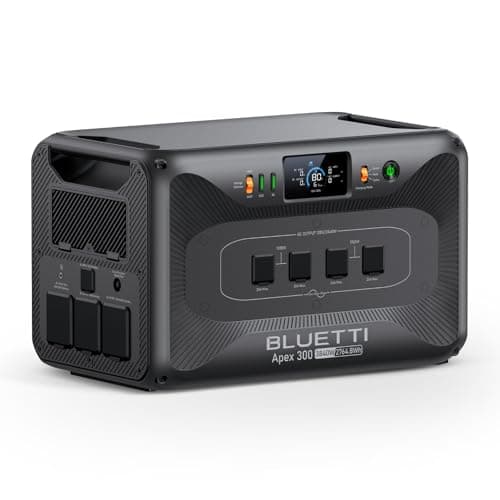
At EnergySage's published 2026 average of $1,159 per kWh installed, ten thousand dollars buys about 8.6 kWh — our arithmetic from their figure. That is a little under two thirds of a Powerwall-sized system, and it is before the inverter, which EnergySage says “could add a couple of thousand dollars”. Three things change that picture. First, the federal credit is gone: the IRS states the Residential Clean Energy Credit is not available for property placed in service after 31 December 2025, so there is no 30% to subtract any more. Second, where you live matters enormously — EnergySage publishes Alabama at $563/kWh, which puts a full 13.5 kWh system at $7,601, and Tennessee at $720/kWh for $9,720. Third, the modular route sidesteps the installed price entirely: a 2,764.8Wh inverter unit plus two expansion batteries is roughly 8.3 kWh of the same chemistry, bought at retail and self-deployed.
What the published cost data says
| Brand | Published $/kWh | Typical size quoted | Published total |
|---|
| MidNite Solar | $342 | 16 kWh | $5,472 |
|---|
| Canadian Solar | $654 | 10 kWh | $6,540 |
|---|
| Fox ESS | $782 | 14.3 kWh | $11,183 |
|---|
| Tesla | $967 | 13.5 kWh | $13,055 |
|---|
| EcoFlow Technology | $1,365 | 9.5 kWh | $12,968 |
|---|
| FranklinWH | $1,232 | 15 kWh | $18,480 |
|---|
EnergySage's published table of the average price per kWh of the ten most quoted batteries on its marketplace in the first half of 2026, cited under Sources. These are marketplace quote averages, not manufacturer list prices, and they include installation. Only two of the ten clear $10,000 at their typical quoted size.
Where you live decides this more than what you buy
EnergySage also publishes total installed cost by state, assuming no incentives, for the first half of 2026. The spread is larger than the spread between brands:
- Alabama — $563/kWh: a 13.5 kWh system at $7,601. Comfortably inside the ceiling, at full Powerwall-equivalent capacity.
- Tennessee — $720/kWh: 13.5 kWh at $9,720. Inside the ceiling with nothing to spare.
- Delaware — $1,153/kWh: the published row is a 5.0 kWh system at $5,765, which is a different and much smaller product for a similar outlay.
- Arkansas: 13.5 kWh at $10,274 — just over, and a useful marker for how narrow the margin is in most of the country.
If the national average applies to you, $10,000 is an 8 to 9 kWh conversation. If you are in one of the low-cost states, it is a 13.5 kWh conversation. Get a local quote before you decide which page you are reading.
The credit that is no longer there
This is the single largest change to the economics of this question, and it is recent. The IRS states that the Residential Clean Energy Credit equals 30% of the cost of qualified property “installed anytime from 2022 through December 31, 2025”, and that “the credit is not available for any property placed in service after December 31, 2025.” Battery storage with a capacity of at least 3 kilowatt-hours was a qualified expense under that credit from 2023.
In practical terms: a $13,000 quote used to be about $9,100 after the credit, which put a great many systems under this page's ceiling. The same quote is now $13,000 and is not. EnergySage notes that while the federal credit is no longer available for residential batteries, “many states and utilities offer their own battery incentives”, so the local programs are now doing all the work that the federal credit used to do.
The modular alternative nobody quotes you
The installed market prices capacity at a dollars-per-kWh rate that includes the inverter, the enclosure, the permitting and the labor. The modular market separates them: you buy the inverter unit once and the kilowatt-hours separately, and nothing about the second purchase requires an electrician.
| Route | Capacity | Output | What it needs from you |
|---|
| Apex 300 + 2 expansion batteries | About 8.3 kWh of LFP | 3,840 W, 120V and 240V simultaneous | Nothing, until you want wired circuits |
|---|
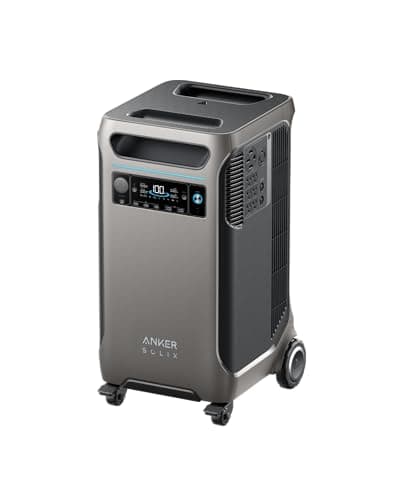
| Anker SOLIX F3800 | 3,840 Wh, expandable to 26.9 kWh | 6,000 W continuous, 9,000 W surge | An inlet or transfer switch for house circuits |
|---|
| Installed system at the EnergySage average | About 8.6 kWh for $10,000 | Varies by product | A quote, a permit and an installer |
|---|
Capacity and output figures are manufacturer specifications, cited under Sources. The 8.3 kWh and 8.6 kWh figures are our arithmetic from those published numbers and from EnergySage's published average. Live retail prices sit inside the buy buttons above with the date each was refreshed — we do not print hardware prices in the text, because they move weekly.
What you give up under the ceiling
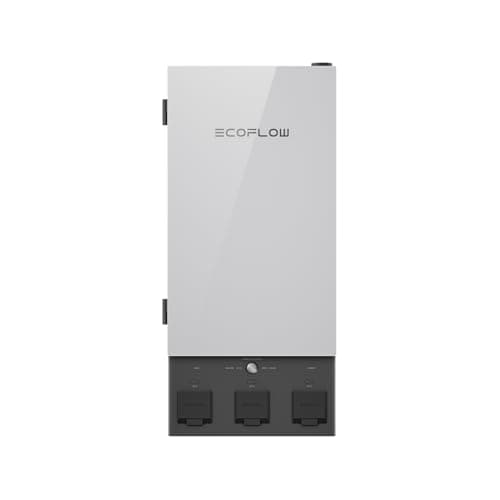
- Automatic switchover, unless you pay for it. A portable battery does not take over by itself. A sub-panel adds that back, with 20ms switchover published, and adds electrician cost with it.
- Whole-house coverage. EnergySage publishes whole-home battery backup at about $34,000. Nothing under $10,000 is whole-house, and any quote claiming otherwise is describing a managed subset of circuits.
- Invisibility. An installed system lives on a wall and is never thought about. A modular one lives where you put it and needs charging discipline.
- Single-vendor accountability. If a self-assembled arrangement fails at 2am, the troubleshooting is yours.
How to decide, in four questions
- Is your problem hours or watts? Hours means capacity and the expansion-battery route wins. Watts means output, and a 6,000W unit beats a larger but slower installed system — the continuous output page ranks them.
- What does your state actually cost? At $563/kWh the installed route is excellent value. At $1,365/kWh it is not.
- Do you have 240V loads? A well pump or a dryer makes split-phase output non-negotiable — split-phase home battery backup covers which units deliver it natively.
- Will anybody be home? If the answer is usually no, automatic switchover is worth the sub-panel. If it is usually yes, it is a convenience.
The short version
$10,000 installed is about 8.6 kWh at EnergySage's published 2026 national average, considerably more in the cheapest states and considerably less in the most expensive. The 30% federal credit that used to bring larger systems under this ceiling expired for property placed in service after 31 December 2025, so state and utility programs are now the only subsidy in play. The modular route — one inverter unit plus expansion batteries — buys comparable capacity without the installed premium, at the cost of automatic switchover and whole-house coverage. Get a local quote first, because your state matters more than your brand.