The verdict, in one paragraph
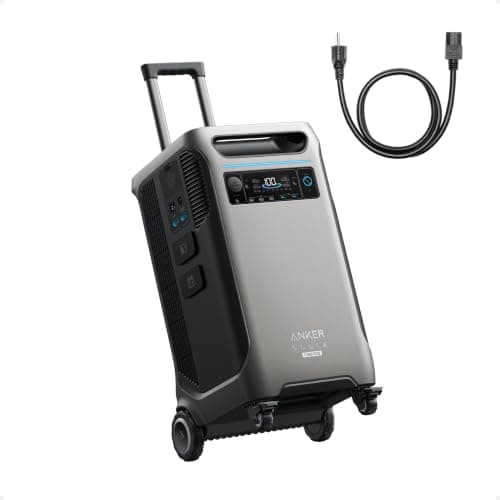
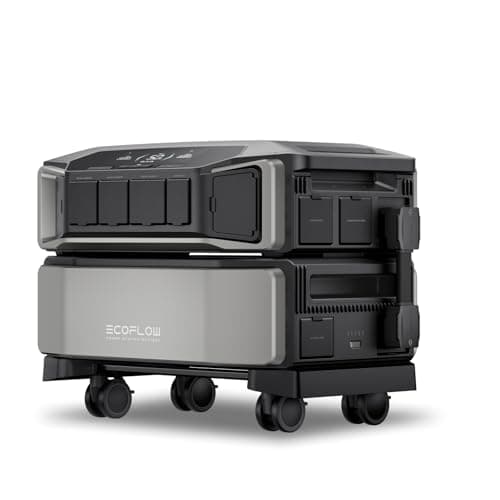
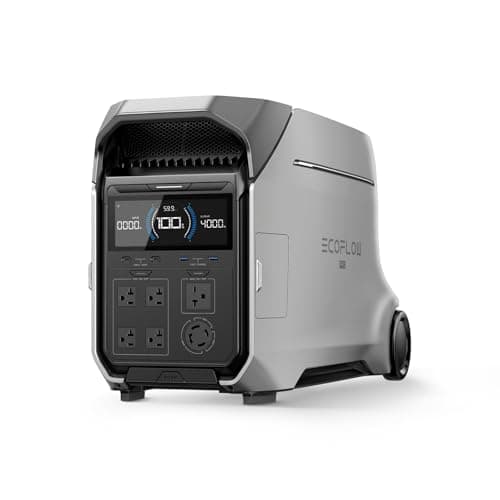
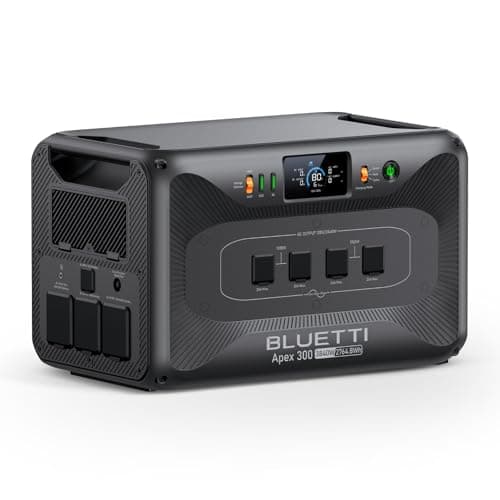
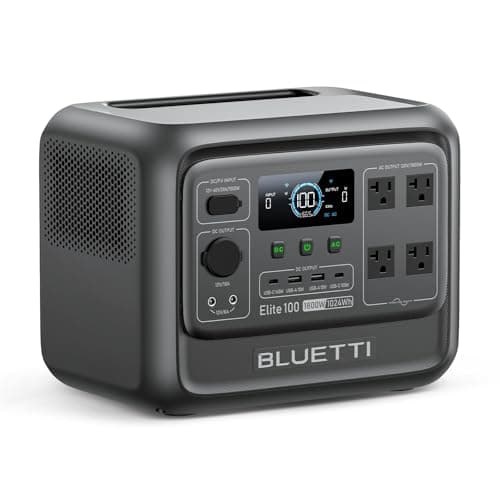
By published solar input ceiling, the ranking is EcoFlow DELTA Pro Ultra at 5.6kW per inverter (up to 16.8kW across three), Anker SOLIX F3800 Plus at 3,200W, EcoFlow DELTA Pro 3 at 2,600W, then Anker SOLIX F3800 and BLUETTI Apex 300 at 2,400W. By the figure that actually matters — how long a full refill takes — the fastest published number on this site is BLUETTI's Elite 100 V2 at a full charge in 70 minutes on 1,000W of input. Dividing capacity by input ceiling gives time to full at the ceiling, and on that measure the Apex 300 (about 1.15 h) and the DELTA Pro Ultra (about 1.1 h) lead their size classes. Every one of those numbers assumes panels producing their rating, which they do not.
Ceiling, ratio, and time to full
| System | Published solar input | Capacity | Hours to full at the ceiling |
|---|
| EcoFlow DELTA Pro Ultra | 5.6 kW per inverter; 16.8 kW across three | 6,144 Wh | About 1.1 h |
|---|
| Anker SOLIX F3800 Plus | 3,200 W, two 165V MPPT inputs | 3,840 Wh | About 1.2 h |
|---|
| EcoFlow DELTA Pro 3 | 2,600 W (1,600 W HV + 1,000 W LV) | 4,096 Wh | About 1.6 h |
|---|
| BLUETTI Apex 300 | 2,400 W (2 x 1,200 W, 12-60V, 20A) | 2,764.8 Wh | About 1.15 h |
|---|
| Anker SOLIX F3800 | 2,400 W (2 x 1,200 W, 25A each) | 3,840 Wh | About 1.6 h |
|---|
| Anker SOLIX F3000 | 2,400 W (1,600 W high-PV + 800 W low-PV) | 3,072 Wh | About 1.3 h |
|---|
| BLUETTI Elite 400 | 1,000 W (12-60V, 20A) | 3,840 Wh | About 3.8 h |
|---|
| BLUETTI Elite 100 V2 | 1,000 W with built-in MPPT | 1,024 Wh | 70 minutes, published |
|---|
| EcoFlow DELTA 3 Plus | 1,000 W, two ports | 1,024 Wh | About 1.0 h |
|---|
| EcoFlow DELTA 3 | 500 W, one port | 1,024 Wh | About 2.0 h |
|---|
Input ceilings and capacities are manufacturer figures, cited under Sources. The Elite 100 V2's 70 minutes is BLUETTI's own published figure. Every other entry in the last column is our arithmetic — capacity divided by input ceiling — not a manufacturer claim, and it assumes the panels deliver the full ceiling, which they will not. Prices sit inside the buy buttons with their refresh date.
Why the ceiling is the wrong number to shop on
"Fastest solar recharging" sounds like it should resolve to the biggest input figure. It does not, for three reasons:
- Capacity scales with it. The DELTA Pro 3 accepts 2,600W — more than double the Elite 100 V2 — and still takes longer to fill, because it holds four times the energy. Divide before you compare.
- You have to own the panels. A 3,200W ceiling with 400W of folding panel connected charges at 400W. The ceiling is a limit, not a rate, and most people never approach theirs.
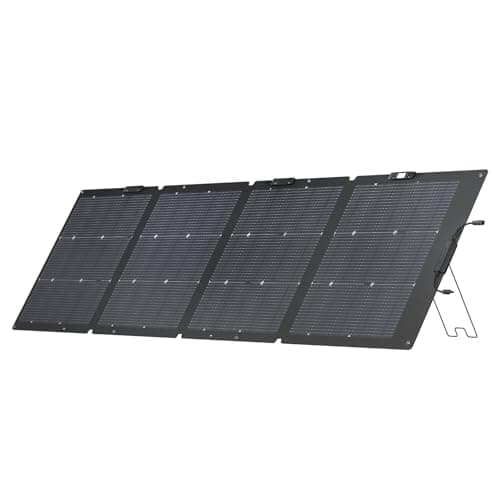
- Panels do not make their rating. A 220W panel produces 220W at standard test conditions — perpendicular sun, clear sky, 25°C cell temperature. Real output is lower, and in the winter storm conditions that make you need the battery, much lower.
The practical question is not "which unit accepts the most" but "which unit can absorb everything I will realistically point at it." For most households with two or three folding panels, any unit with a 1,000W-plus ceiling is already more than they can fill.
Voltage windows decide whether it charges at all
This is the specification that strands more people than wattage does. Each input has a voltage range, and panels outside it will not charge the unit no matter how much sun there is:
- EcoFlow DELTA Pro 3: 30-150V at 15A on the high-voltage port, 11-60V at 20A on the low-voltage port.
- Anker SOLIX F3800 Plus: two 165V MPPT inputs, which is the highest window here and the friendliest to a series string.
- BLUETTI Apex 300: 12-60V at 20A per port.
- BLUETTI Elite 400 and Elite 300: 12-60V, at 20A and 22A respectively.
A 60V ceiling means roughly three 100W panels in series before you exceed it; a 150V or 165V input takes far longer strings and therefore thinner cable over longer runs. Series versus parallel wiring and MPPT versus PWM cover the arithmetic.
What a January refill actually looks like
Everything above is a clear-sky figure. The storm that empties your battery is usually the same weather that stops the panels filling it:
- Winter sun angle cuts output even on a clear day, and the usable solar window is short.
- Overcast can drop a panel to a small fraction of its rating — solar on cloudy days is the page on that.
- Snow on the panel is zero output until someone clears it.
- Cold charging limits. Most LFP units refuse to charge below freezing regardless of available sun. That is the binding constraint in a winter outage, not panel wattage.
Which is why, for a multi-day winter event, generator input is the faster and more reliable path — running a battery and a generator together covers which systems accept it and at what wattage.
Who should buy on solar recharge speed
- Off-grid, or outages measured in days: yes, this is your deciding specification. F3800 Plus at 3,200W, or the DELTA Pro Ultra if there is a roof involved.
- A camper or a van with a fixed array: match the voltage window first and the wattage second. Apex 300 or DELTA Pro 3.
- A small unit that must be full again by evening: Elite 100 V2 — the only published sub-90-minute full solar charge here.
- Suburban grid-tied household, occasional outages: no. Buy capacity and wall-charging speed instead; the grid refills faster than any panel you will own.
The short version
The DELTA Pro Ultra accepts the most solar at 5.6kW per inverter and the F3800 Plus leads the plug-in tier at 3,200W, but the fastest published solar refill belongs to the BLUETTI Elite 100 V2 at 70 minutes, because recharge speed is capacity divided by input and not input alone. Check the voltage window before the wattage, remember no panel makes its rating, and if the scenario is a multi-day winter outage, plan on generator charging rather than sun.