Skip to content
Watt Warden

Accessories

The Best Generator Covers (2026)

Rain causes the outage, and the manual tells you not to run the machine wet. A running cover resolves that contradiction. A tarp makes it lethal.

By Sawyer V.Updated Published How we work this out
A canopy shelter outdoors in the rain.

Watt & Warden earns a commission on qualifying purchases made through links on this page, at no extra cost to you. It never changes a ranking, and our picks include products we tell you to skip. Full disclosure.

Quick picks

#ProductBest forPrice
1
No photo

Best running cover

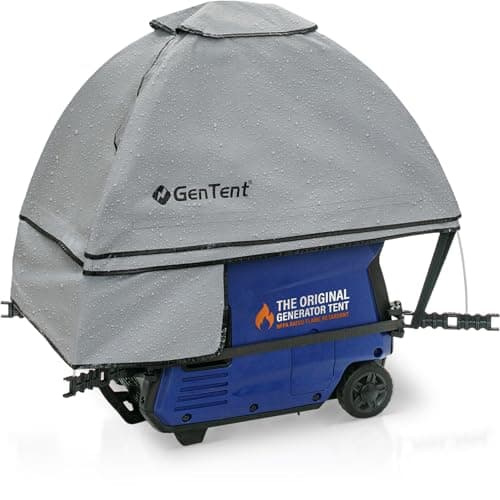
GenTent Safety Canopy, open-frame

NFPA 701 flame-certified fabric rated to 110 mph wind, 12 in of rain per hour and 18 in of snow load.

Open-frame generators, 3,000–10,000W
2
No photo

For enclosed inverter generators

GenTent Safety Canopy, inverter

The same NFPA 701 canopy concept sized for a fully encased inverter body.

Honda, Champion and Westinghouse inverter units
3
No photo

The machine most often covered

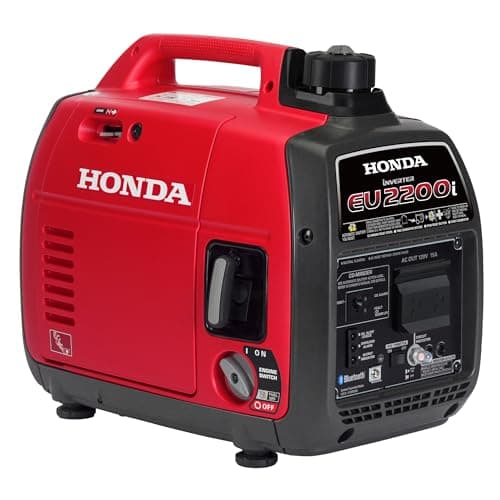
Honda EU2200i

2,200W at a published 48–57 dB(A) and 47.4 lb — an enclosed inverter that needs the inverter canopy.

Campgrounds and close neighbors

Prices come from the retailer at page-build time and change constantly. Where no live price is available the button reads “Check price” rather than showing a number we cannot stand behind.

Two products, one word

The category calls both of these "generator covers" and they do opposite things. Buying the wrong one is not a fit problem; it is a carbon monoxide problem.

Running coverStorage cover
Used while the engine runsYes — that is its purposeNever
Exhaust pathLeft completely clearEnclosed
Cooling airflowUnobstructedBlocked
FabricFlame-certified (NFPA 701)Usually not
ShapeCanopy above and around, open belowZip-up bag

A storage cover is a perfectly good product for a parked machine in a garage — it keeps dust and rodents out. It is dangerous the moment the engine starts.

Why running a generator wet is a real problem

Manufacturers tell you not to operate a generator in rain, and the reason is not fussiness. Water reaching the outlets or the control panel creates a shock hazard, and water entering the air intake or the fuel system stops the engine.

Which leaves an obvious contradiction: storms cause outages, and storms are wet. The three ways people resolve it badly are all worse than the original problem:

  • The garage. Kills people every year, door open or not.
  • A tarp over the top. Traps exhaust and blocks cooling air, and can contact hot surfaces.
  • A shed or under a deck. Same problem in a sturdier shape.

A running cover is the only answer that resolves the contradiction rather than trading it for a worse one. The full rain guidance goes into the electrical side.

What the ratings mean

  • NFPA 701. A flame-propagation test standard for textiles. Directly relevant when fabric hangs near an exhaust outlet.
  • 110 mph wind. The canopy stays attached in hurricane-force conditions rather than becoming a sail that drags the machine.
  • 12 inches of rain per hour. Far beyond ordinary heavy rain — this is tropical-storm territory.
  • 18 inches of snow load. Winter matters here as much as summer, and drifting snow can otherwise bury an intake.

These are the manufacturer's published figures. We have not tested a canopy in any of those conditions, and we would not publish a number we had not.

Fitting one before you need it

  • Fit it once in daylight. The first attempt should not be at 2am in sleet.
  • Check the exhaust clearance with the canopy on. If any fabric is close to the outlet, reposition it.
  • Confirm the intakes are clear. Air-cooled engines shed heat through them; blocking one causes an overheat shutdown at best.
  • Match the version to the machine. Open-frame and enclosed-inverter kits mount differently and do not interchange.
  • Keep it with the generator, not in a different part of the garage.

Still twenty feet away

A cover changes the weather problem. It does not change the carbon monoxide problem at all. The machine still belongs at least twenty feet from windows, doors and attached garages, with the exhaust pointed away, and you still want a working CO alarm on every level.

If anything, a canopy makes the discipline more important, because it removes the weather excuse for moving the machine closer to the house.

Battery owners can skip this entirely

Power stations have no exhaust and no combustion air requirement, so they simply live indoors. Most carry no weather rating at all and are not intended to be outside in rain — which is fine, because there is no reason to put one there.

The picks in full

01Best running cover

GenTent Safety Canopy, open-frame

NFPA 701 flame-certified fabric rated to 110 mph wind, 12 in of rain per hour and 18 in of snow load.

The ratings are what make this a piece of safety equipment rather than a rain sheet. 110 mph wind and 12 inches of rain per hour cover hurricane conditions, which is exactly when you will be running the machine.

NFPA 701 is a flame-propagation standard. It matters because the canopy sits above a hot engine and an exhaust outlet — fabric that is merely waterproof is the wrong material entirely.

The design point is that it covers the top and sides while leaving the exhaust and the cooling intakes fully open. That is the whole difference from a tarp, and the reason a tarp kills people.

Tool-free clamp mounting, which matters because you will be fitting it in the dark, in rain, having just realized you need it.

Skip it ifyour generator is a fully encased inverter. It has no frame posts to clamp to — use the inverter version.
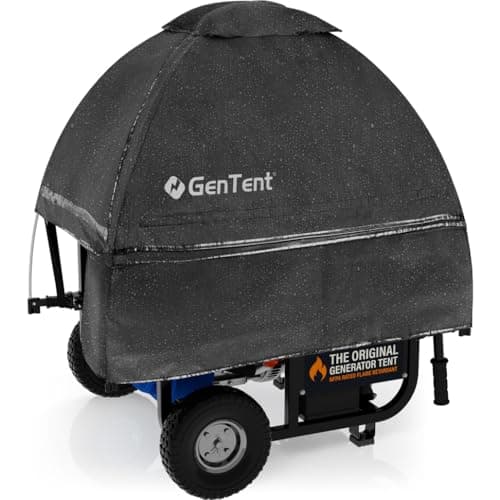
Published specifications for the GenTent Safety Canopy, open-frame
SpecificationPublished figure
FitsOpen-frame generators, 3,000–10,000 W
FabricNFPA 701 flame-certified
Wind ratingup to 110 mph
Rain ratingup to 12 in per hour
Snow loadup to 18 in
InstallationTool-free clamp mount

Source: GenTent — Safety Canopy product page. These are the manufacturer's published figures, not ours — we have not tested this unit.

02For enclosed inverter generators

GenTent Safety Canopy, inverter

The same NFPA 701 canopy concept sized for a fully encased inverter body.

Enclosed inverters have no tubular frame, so the open-frame kit has nothing to clamp to. This is the version that fits the smooth plastic body.

A quiet generator you cannot run in the weather is not much use, and weather is what causes outages. This is the item that makes an inverter usable in the conditions you bought it for.

Skip it ifyou have an open-frame machine. The two mount completely differently and are not interchangeable.

Published specifications for the GenTent Safety Canopy, inverter
SpecificationPublished figure
FitsFully encased inverter generators
FabricNFPA 701 flame-certified
PurposeRunning cover — keeps airflow and exhaust clear
InstallationTool-free mount

Source: GenTent — inverter Safety Canopy product page. These are the manufacturer's published figures, not ours — we have not tested this unit.

03The machine most often covered

Honda EU2200i

2,200W at a published 48–57 dB(A) and 47.4 lb — an enclosed inverter that needs the inverter canopy.

Included here because it is the machine people most often ask about covering, and because it is an enclosed inverter — the case that needs the inverter canopy rather than the open-frame one.

An enclosed case is not a weatherproof case. The enclosure is for sound damping; the air intakes and exhaust are still open, which is why the same rain rules apply.

Skip it ifyou need to run a house. 1,800W rated will not carry a fridge and a furnace fan together.

Published specifications for the Honda EU2200i
SpecificationPublished figure
Output2,200 W max / 1,800 W rated
TypeInverter (pure sine wave)
Noise48–57 dB(A)
Weight47.4 lb
Tank0.95 gal
Run timeup to 8.1 h on a full tank
FeaturesEco Throttle, CO-Minder, Bluetooth app monitoring

Source: Honda Power Equipment — EU2200i specifications. These are the manufacturer's published figures, not ours — we have not tested this unit.

How these were chosen

We did not test these. Nobody at Watt & Warden has plugged one in. What we did instead: read the manufacturer's published specifications, compile them into a table where the figures line up, and compute the numbers manufacturers leave out — runtime against a real appliance load, and what an hour of running actually costs.

Anything that could not be sourced was left out rather than estimated, and every pick names the buyer who should skip it. The full method is here, including where it is weaker than a publisher with a test bench.

Questions people actually ask

Can I run a generator with a cover on it?

Only with a purpose-made running cover, which is designed to keep water off while leaving the exhaust path and cooling intakes completely clear. A storage cover, a tarp or a bag does the opposite -- it traps exhaust and blocks airflow, which is how carbon monoxide poisoning happens.

What is the difference between a running cover and a storage cover?

A running cover is a canopy over and around the machine, made from flame-certified fabric, used while the engine runs. A storage cover is a zip-up bag for a parked generator that keeps dust and rodents out. Using a storage cover on a running machine is dangerous.

Can I put a tarp over my generator in the rain?

No. A tarp traps exhaust, blocks the cooling airflow an air-cooled engine needs, and can contact hot surfaces. It resolves the rain problem by creating a worse one. A purpose-made canopy with NFPA 701 fabric is the only safe answer.

Do generator covers fit all generators?

No, and the split matters. Open-frame machines need a kit that clamps to the frame tubes; fully encased inverter generators have no frame, so they need the inverter version that mounts to the smooth body. The two are not interchangeable.

Does a cover mean I can run the generator closer to the house?

No. A cover addresses weather, not carbon monoxide. The machine still belongs at least twenty feet from windows, doors and attached garages with the exhaust pointed away. If anything a canopy makes that easier to hold to, because it removes the excuse to move it under cover.

Sources

Every figure on this page comes from a published source. We have not tested this equipment, so the specifications are the manufacturer's and the statistics are the dataset's — the arithmetic on top of them is ours, and it is shown in full so you can check it. How we work this out.