Skip to content
Watt Warden

Accessories

The Best UPS Replacement Batteries (2026)

A four-year-old UPS reports itself healthy, passes its own self-test, and then holds the load for twenty seconds instead of ten minutes. Nothing tells you until the outage does.

By Sawyer V.Updated Published How we work this out
Batteries and a charger seen from above.

Watt & Warden earns a commission on qualifying purchases made through links on this page, at no extra cost to you. It never changes a ranking, and our picks include products we tell you to skip. Full disclosure.

Quick picks

#ProductBest forPrice
1
No photo

Best for APC Back-UPS Pro

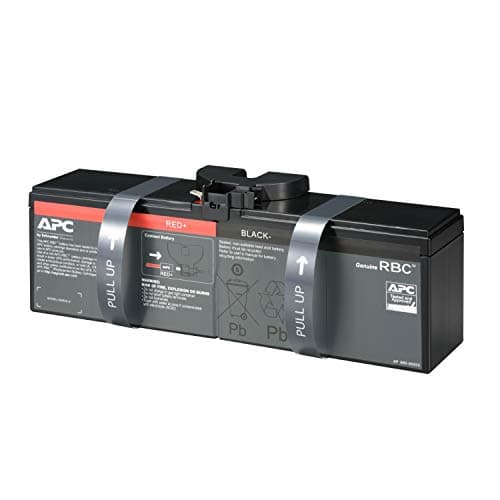
APC Replacement Battery Cartridge #163

The genuine APC cartridge for the BR1500 family, with a two-year warranty.

A BR1500MS2 or BR1500MS that has lost its runtime
2
No photo

Best for CyberPower 1500VA units

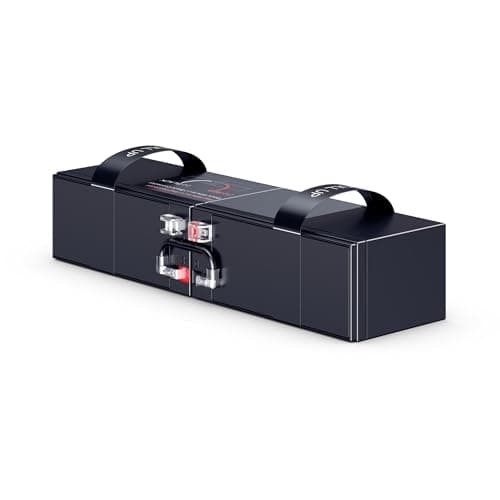
CyberPower RB1290X2

Two 12V 9Ah sealed cells, user-installable, matched to the CyberPower 1500VA family.

A CP1500AVRLCD, CP1350AVRLCD or BRG1500AVRLCD
3
No photo

When replacing the unit is right

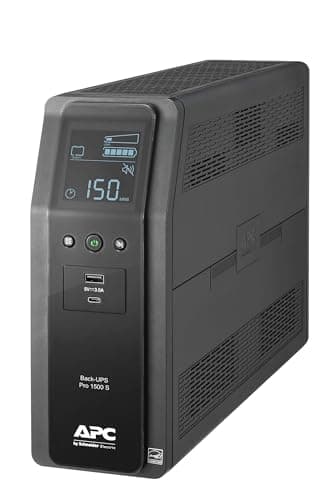
APC Back-UPS Pro BR1500MS2

1,500VA / 900W of pure sine wave backup with a user-replaceable battery.

A UPS old enough that the electronics are the next thing to go
4
No photo

The longest battery cover

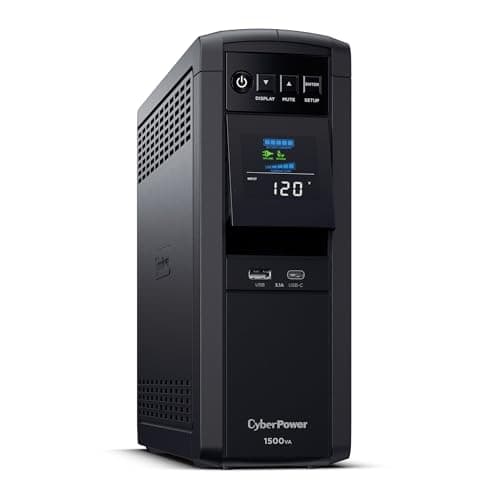
CyberPower CP1500PFCLCD

1,500VA / 1,000W pure sine, with the battery covered for the full three years.

Not thinking about this again for three years

Prices come from the retailer at page-build time and change constantly. Where no live price is available the button reads “Check price” rather than showing a number we cannot stand behind.

How UPS batteries fail

Not suddenly, and not visibly. That is the whole problem.

A UPS uses sealed lead-acid cells kept permanently on float charge. Over three to five years they lose capacity gradually — through grid corrosion, through electrolyte loss, and faster if the unit runs warm.

The unit's own self-test only confirms the battery can supply the load for a moment, not that it can supply it for ten minutes. So a four-year-old UPS can pass its test, show a green light, and then hold your desktop up for twenty seconds during a real outage.

Which means the trigger for replacement is a date, not a symptom.

Four signs it has gone

  • Age. Three years is the point to start paying attention; five is the point to replace regardless of behavior.
  • A runtime estimate that has collapsed. If the LCD used to say twenty minutes and now says four at the same load, the battery has lost most of its capacity.
  • The unit beeping or reporting "replace battery". This is late rather than early.
  • Physical swelling. A bulging cell or a cartridge that no longer seats properly is a stop-now condition — remove it and do not store it indoors.

The best habit is the simplest: write the install date on the case in marker. It turns a judgment call into a diary entry.

Replace the battery, or replace the unit?

The honest arithmetic, without prices, because this is a ratio question.

Unit ageWhat to doWhy
Under 5 yearsReplace the batteryThe electronics have most of their life left and the cartridge is a fraction of a new unit
5-8 yearsJudgment callReplace the battery if the unit is a good one and pure sine; replace the unit if it is a basic model
Over 8 yearsReplace the unitCapacitors age regardless of use, and they are not serviceable
Any age, simulated sine wave, modern PCReplace the unitA stepped waveform can shut down an active PFC desktop at changeover

That last row catches a lot of people. If the UPS under your desk is a cheap simulated sine wave model and the machine on top of it is a modern desktop, a new battery fixes the runtime and not the real problem — the PC battery backup page explains why.

Getting the right cartridge

Cartridge numbers are model-specific, not brand-specific. An APCRBC163 fits a defined list of units and nothing else, and the same is true of CyberPower's RB series.

Find your UPS model number on the label — usually on the base or the back — and match it against the cartridge's published compatibility list. Do not infer from capacity: two 1,500VA units from the same brand can take different cartridges.

Genuine versus compatible is a real choice. Third-party packs are widely available and cheaper; the cells inside vary in a way you cannot inspect, and the warranty behind them is usually shorter. For a device whose purpose is working when other things have failed, that is a reasonable place to pay the premium.

Fitting one, and disposing of the old one

The swap is straightforward on units designed for it: the unit stays powered or is shut down per the manual, a front or base panel comes off, the cartridge slides out on its connector and the new one slides in.

Two things matter. Note the orientation before removing anything, and be ready for the weight — a 1,500VA cartridge is heavier than it looks.

Sealed lead-acid batteries are one of the most successfully recycled products there is, and they must not go in household waste. Most retailers that sell them accept the old one back, and many hardware stores take them regardless of where you bought it.

Making the next one last longer

  • Keep it cool. Heat is the single biggest factor in lead-acid aging. A UPS in a closet next to a heat source will not reach five years.
  • Keep it off the floor and away from dust, which blocks the vents and raises the internal temperature.
  • Do not run it at full load. A unit loaded to half its watt rating runs cooler and gives disproportionately more runtime.
  • Run the self-test once or twice a year, and treat the runtime estimate as the number to watch.

The short version

  • Three to five years, silently. Replace on a date, not a symptom.
  • Match the cartridge to the model number, not to the VA rating.
  • Past eight years, replace the unit. Capacitors age too.
  • Heat is what kills them. Cool, off the floor, loaded to about half.
The picks in full

01Best for APC Back-UPS Pro

APC Replacement Battery Cartridge #163

The genuine APC cartridge for the BR1500 family, with a two-year warranty.

Genuine rather than compatible is the meaningful distinction here. Third-party cartridges for these units are widely sold and often cheaper, and they vary in cell quality in ways you cannot inspect.

For a device whose entire job is working when other things have failed, buying the manufacturer's part with the manufacturer's warranty is a defensible premium.

The swap itself is genuinely user-serviceable on most Back-UPS Pro units, which is one of the reasons that range is worth buying in the first place.

The honest catch: a cartridge for a 1,500VA unit is a meaningful fraction of a new UPS. Do the arithmetic below before assuming replacement is the right call.

Skip it ifyour unit is not on the compatibility list. Cartridge numbers are not interchangeable.

Published specifications for the APC Replacement Battery Cartridge #163
SpecificationPublished figure
TypeSealed lead-acid replacement battery cartridge
FitsAPC Back-UPS Pro BR1500MS2, BR1500MS and BGM1500 models
SourcingGenuine APC, not a compatible third-party cell pack
Warranty2 years
ServiceUser-replaceable without tools on most Back-UPS Pro units

Source: APC — genuine APCRBC163 replacement battery listing. These are the manufacturer's published figures, not ours — we have not tested this unit.

02Best for CyberPower 1500VA units

CyberPower RB1290X2

Two 12V 9Ah sealed cells, user-installable, matched to the CyberPower 1500VA family.

Two 12V 9Ah cells is the standard configuration behind a 1,500VA consumer UPS, and this is the manufacturer's pack for it.

At 11.8 lb it is heavier than people expect, which is worth knowing before you pull a unit out from under a desk one-handed.

The honest catch: the 18-month warranty is shorter than APC's two years on the equivalent part, and shorter than the three years CyberPower gives on its complete units.

Skip it ifyour unit is a PFC Sinewave model. Check the compatibility list first.

Published specifications for the CyberPower RB1290X2
SpecificationPublished figure
Contents2x 12 V / 9 Ah sealed lead-acid
FitsCP1500AVRLCD, CP1350AVRLCD, BRG1500AVRLCD, LX1500GU, CST150XLU
Dimensions5.9 x 2.6 x 3.9 in, 11.8 lb
Operating range32 to 104 degF, 0-95% humidity non-condensing
MaintenanceSealed and leak-proof, never needs fluid
Warranty18-month limited

Source: CyberPower — RB1290X2 replacement battery specifications. These are the manufacturer's published figures, not ours — we have not tested this unit.

03When replacing the unit is right

APC Back-UPS Pro BR1500MS2

1,500VA / 900W of pure sine wave backup with a user-replaceable battery.

Past about eight years, a cartridge into an old chassis is throwing good money after old capacitors. Electrolytic capacitors age whether the unit works or not, and they are not user-serviceable.

Buying a pure sine wave unit at that point also fixes a problem a lot of older UPS units have with modern desktops, which the PC battery backup page covers in detail.

The honest catch: APC warrants this unit for 36 months but its battery for only 12, which is the wrong way round on the component most likely to fail.

Skip it ifyour existing unit is two or three years old. Then a cartridge is clearly correct.

Published specifications for the APC Back-UPS Pro BR1500MS2
SpecificationPublished figure
Capacity1,500 VA / 900 W
WaveformPure sine wave (active PFC compatible)
Outlets10 NEMA 5-15R — 6 battery-backed, 4 surge-only
Surge rating1,080 joules
RegulationAVR, with an LCD load and battery display
Charging2 USB smart ports — Type A and Type C
BatteryUser-replaceable (APCRBC163)
Warranty36 months on the unit, 12 months on the battery

Source: Schneider Electric — APC Back-UPS Pro BR1500MS2 product page. These are the manufacturer's published figures, not ours — we have not tested this unit.

04The longest battery cover

CyberPower CP1500PFCLCD

1,500VA / 1,000W pure sine, with the battery covered for the full three years.

Three years covering the battery as well as the electronics is unusual, and on a component with a three-to-five year life it is most of the expected lifespan.

If you are replacing a UPS because its battery died early and uncovered, this is the specification to buy against next time.

The honest catch: the battery here is not marketed as user-serviceable the way APC's Back-UPS Pro cartridges are, so plan for a slightly more involved job when the time comes.

Skip it ifyou only need to protect network gear. This is more unit than that.

Published specifications for the CyberPower CP1500PFCLCD
SpecificationPublished figure
Capacity1,500 VA / 1,000 W
WaveformPure sine wave (PFC compatible)
Outlets12 NEMA 5-15R — 6 battery-backed, 6 surge-only
RegulationAutomatic voltage regulation (AVR)
Run timeabout 10 min at half load, 2.5 min at full load
Warranty3 years including the battery

Source: CyberPower — CP1500PFCLCD product specifications. These are the manufacturer's published figures, not ours — we have not tested this unit.

How these were chosen

We did not test these. Nobody at Watt & Warden has plugged one in. What we did instead: read the manufacturer's published specifications, compile them into a table where the figures line up, and compute the numbers manufacturers leave out — runtime against a real appliance load, and what an hour of running actually costs.

Anything that could not be sourced was left out rather than estimated, and every pick names the buyer who should skip it. The full method is here, including where it is weaker than a publisher with a test bench.

Questions people actually ask

How often do UPS batteries need replacing?

Every three to five years, and they degrade quietly rather than failing outright. A four-year-old unit can pass its own self-test and still hold the load for twenty seconds instead of ten minutes, because the test only proves the battery works for a moment. Write the install date on the case and replace on the date.

How do I know if my UPS battery is bad?

The most reliable indicator is the runtime estimate on the display at a constant load -- if it used to say twenty minutes and now says four, most of the capacity has gone. A 'replace battery' warning is a late signal rather than an early one, and any physical swelling means stop using it immediately.

Is it worth replacing a UPS battery or buying a new UPS?

Under five years, replace the battery -- the electronics have most of their life left and the cartridge costs a fraction of a new unit. Over eight years, replace the unit, because electrolytic capacitors age whether it is used or not and are not serviceable. In between it depends on how good the unit is.

Can I use a third-party UPS battery?

You can, and they are widely sold and cheaper. The cells inside vary in quality in ways you cannot inspect, and the warranty is usually shorter than the manufacturer's. For a device whose whole purpose is working when other things have failed, the genuine cartridge is a defensible premium.

How do I dispose of an old UPS battery?

Never in household waste. Sealed lead-acid batteries are among the most successfully recycled products there is, and most retailers that sell them accept the old one back. Many hardware stores take them regardless of where you bought it.

Sources

Every figure on this page comes from a published source. We have not tested this equipment, so the specifications are the manufacturer's and the statistics are the dataset's — the arithmetic on top of them is ours, and it is shown in full so you can check it. How we work this out.