Skip to content
Watt Warden

Sizing

How Much Power Do Power Tools Use?

A circular saw asks for twice its running watts the instant the blade meets wood. A compressor asks for three times. That multiplier, not the running figure, is what sizes the machine.

By Sawyer V.Updated Published How we work this out
A worker cutting wood with a circular saw.

Watt & Warden earns a commission on qualifying purchases made through links on this page, at no extra cost to you. It never changes a ranking, and our picks include products we tell you to skip. Full disclosure.

The numbers, from a manufacturer's chart

Champion publishes a wattage chart for exactly this purpose, and its figures are the ones this page uses. Two columns matter: what the tool draws while working, and what it demands in the moment the motor starts.

ToolRunning wattsStarting watts
Electric drill, 1/2 in400-600 W800-1,200 W
Hammer drill900-1,200 W1,800-2,400 W
Reciprocating saw960-1,200 W1,920-2,400 W
Circular saw, 7-1/4 in1,200-1,800 W2,400-3,600 W
Miter saw, 10 in1,200-1,800 W2,400-3,600 W
Angle grinder, 4-1/2 in900-1,800 W1,800-3,600 W
Table saw, 10 in1,800-3,000 W3,600-6,000 W
Air compressor, 1 HP1,500 W4,500 W
Air compressor, 2 HP2,500 W7,500 W
Air compressor, 3 HP3,500 W10,500 W

Figures from Champion Power Equipment's published generator wattage chart, linked below. Your specific tool states its amperage on the plate — multiply by 120 to get watts, as the nameplate guide explains.

The multiplier is the lesson

Look down the two columns and a pattern appears. Hand tools with universal motors — drills, saws, grinders — start at roughly twice their running draw. Air compressors, which have induction motors starting against pressure, want three times.

That is why a job-site generator is sized on the starting column. A 1 HP compressor that runs at 1,500W and starts at 4,500W will trip a 3,000W machine every time it kicks in, no matter how gently you use it. The starting-watts page covers why induction motors behave this way.

Sizing for a real site

Nobody runs one tool. The honest method is: take the largest starting figure on site, then add the running watts of everything else that will be on at that moment.

SetupWorst-case demandGenerator size
Drill, work light, charger~1,400 W at start2,000 W is enough
Circular saw plus light and charger~3,900 W at start4,000-4,500 W
Table saw plus a light~6,200 W at start6,500 W or more
2 HP compressor plus a saw running~9,300 W at start9,500 W or more

Worst case is the largest starting figure plus the running draw of everything else. The arithmetic uses the upper end of each published range, which is how sizing should be done.

For a full kit list and machines sized to it, see the job-site generator roundup and the job-site scenario page.

Can a battery run power tools?

Partly, and the honest split is useful.

What batteries do well: charging cordless tool packs, running LED work lights, powering a laptop or a small radio, and short bursts from a drill or a reciprocating saw. All of that fits inside 1,800W with room, and it happens indoors without fumes.

What batteries do badly: sustained cutting with a corded saw, anything with a compressor, and a full day of it. The energy is the problem as much as the output — a circular saw at 1,500W drains a 1kWh battery in about 35 minutes of actual cutting, and the surge at each start eats into the inverter's headroom.

A sensible site setup is both: a generator for the corded tools and a battery for the electronics and the charging, which keeps the noisy machine off for most of the day.

Watch the extension cord

Tool sizing goes wrong at the cord as often as at the generator. A saw pulling 15A through 100 feet of thin cord loses voltage, and a motor starved of voltage draws more current and runs hot.

Use 12-gauge for long runs at tool loads, keep the run as short as you can, and uncoil the cord completely — the cord guide covers gauge against distance.

The short version

  • Hand tools start at about 2x their running watts; compressors at about 3x.
  • A circular saw is a 3,600W start. A 10 inch table saw can be 6,000W.
  • Size on the biggest start plus everything else running.
  • Batteries charge tools and run lights; generators run saws and compressors.

Quick picks

#ProductBest forPrice
1
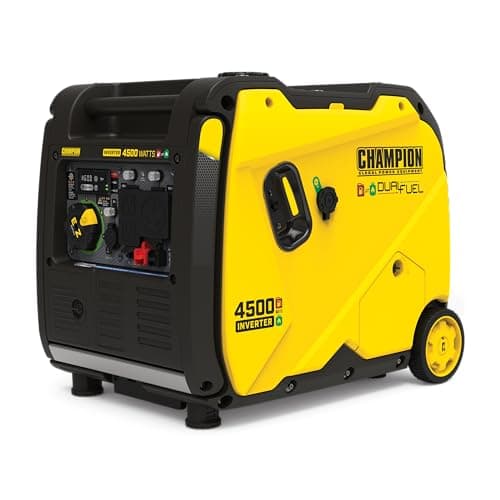
Champion 4500W dual fuel inverter generator

The realistic one-person answer

Champion 4500W dual fuel inverter generator

4,500 starting / 3,500 running watts of dual-fuel inverter power with electric start.

A saw, a drill and a work light
$988.62 · Check price on Amazon

#ad how this is funded · price as of October 20, 2026

2
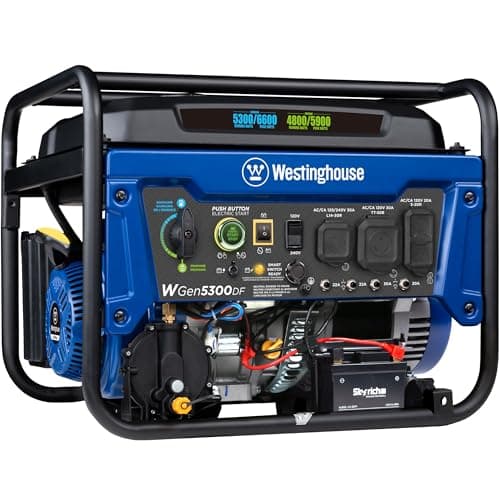
Westinghouse WGen5300DF

When the table saw shows up

Westinghouse WGen5300DF

5,300 running watts of dual fuel, transfer-switch ready for house duty later.

Bigger tools and a compressor
$649.00 · Check price on Amazon

#ad how this is funded · price as of October 20, 2026

3
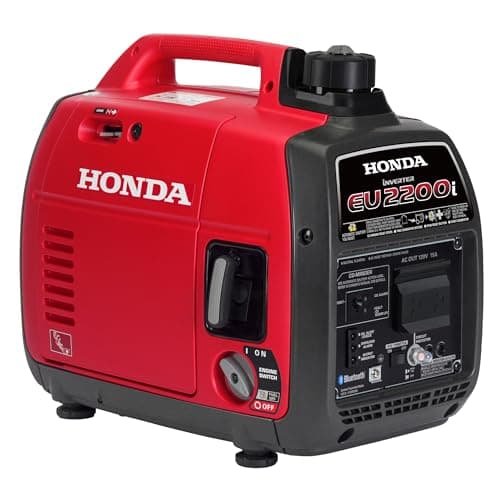
Honda EU2200i

The quiet one, with limits

Honda EU2200i

2,200 watts at 48 to 57 dB(A) — the machine neighbors tolerate.

Drills, sanders and chargers
$1,199.00 · Check price on Amazon

#ad how this is funded · price as of October 20, 2026

4
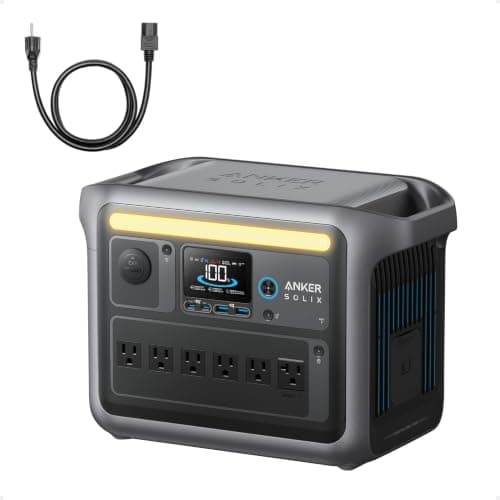
Anker SOLIX C1000

The battery option, honestly framed

Anker SOLIX C1000

1,056Wh with 1,800W continuous and 2,400W of SurgePad.

Cordless tool charging and light corded work
$499.99 · Check price on Amazon

#ad how this is funded · price as of October 20, 2026 · $599.99 17% off

5
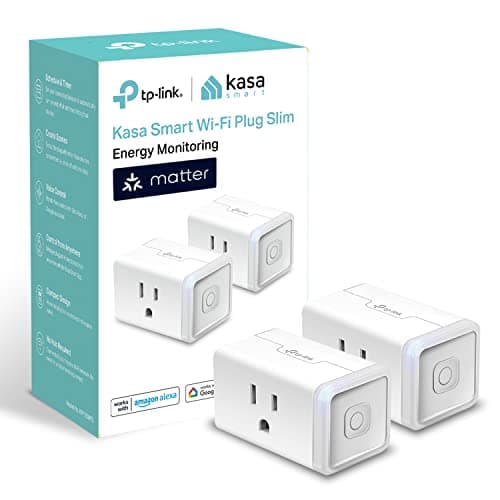
Kasa KP125M Smart Plug

Settle it for your own tools

Kasa KP125M Smart Plug

A 15A metering plug that logs real draw, so your sizing uses your numbers.

Measuring instead of estimating
$29.99 · Check price on Amazon

#ad how this is funded · price as of October 20, 2026

Prices come from the retailer at page-build time and change constantly. Where no live price is available the button reads “Check price” rather than showing a number we cannot stand behind.

The picks in full

01 — The realistic one-person answer

Champion 4500W dual fuel inverter generator

4,500 starting / 3,500 running watts of dual-fuel inverter power with electric start.

4,500 starting watts covers a 7-1/4 inch circular saw's published 2,400 to 3,600W start with room, and 3,500 running watts keeps a saw and a couple of smaller tools alive together.

Inverter output also means laptops, chargers and tool batteries are safe on it, which a conventional open-frame machine cannot always promise.

The honest catch: a 10 inch table saw can want up to 6,000W to start. Check the plate before assuming.

Skip it ifa 3 HP compressor is on the site. That is a 10,500W start.

Champion 4500W dual fuel inverter generator
$988.62 · Check price on Amazon

#ad how this is funded · price as of October 20, 2026

Published specifications for the Champion 4500W dual fuel inverter generator
SpecificationPublished figure
Output4,500 starting W / 3,500 running W (gasoline)
TypeInverter, RV ready
FuelGasoline or propane (dual fuel)
StartingElectric start
RV outlet120 V TT-30R, 30 A
Warranty3-year limited with free lifetime technical support

Source: Champion Power Equipment — 4500-watt dual fuel inverter specifications. These are the manufacturer's published figures, not ours — we have not tested this unit.

02 — When the table saw shows up

Westinghouse WGen5300DF

5,300 running watts of dual fuel, transfer-switch ready for house duty later.

A 10 inch table saw at 1,800 to 3,000W running and up to 6,000W starting is the tool that ends most small generators, and this size is where it stops being a problem.

Dual fuel is useful on site because propane stores indefinitely between jobs.

The honest catch: conventional output, so treat sensitive electronics with a surge protector.

Skip it ifyou carry the generator between jobs. This is a wheeled machine.

Westinghouse WGen5300DF
$649.00 · Check price on Amazon

#ad how this is funded · price as of October 20, 2026

Published specifications for the Westinghouse WGen5300DF
SpecificationPublished figure
Output (gasoline)5,300 running W / 6,600 peak W
Output (propane)4,800 running W / 5,900 peak W
Engine274cc 4-stroke OHV
Tank4.7 gal (18 L)
Run timeup to 14.5 h on a full tank
Transfer-switch outlet120/240 V L14-30R, 30 A
RV outlet120 V TT-30R, 30 A
StartingPush-button electric with remote key fob

Source: Westinghouse — WGen5300DF product specifications. These are the manufacturer's published figures, not ours — we have not tested this unit.

03 — The quiet one, with limits

Honda EU2200i

2,200 watts at 48 to 57 dB(A) — the machine neighbors tolerate.

2,200W covers a 1/2 inch drill (400 to 600W running), a sander, a work light and tool chargers comfortably.

For renovation work inside a neighborhood, the decibel figure is worth more than the watts.

The honest catch: a circular saw's start can exceed this machine's output. It will trip.

Skip it ifyou are cutting framing lumber all day. It is below the class.

Honda EU2200i
$1,199.00 · Check price on Amazon

#ad how this is funded · price as of October 20, 2026

Published specifications for the Honda EU2200i
SpecificationPublished figure
Output2,200 W max / 1,800 W rated
TypeInverter (pure sine wave)
Noise48–57 dB(A)
Weight47.4 lb
Tank0.95 gal
Run timeup to 8.1 h on a full tank
FeaturesEco Throttle, CO-Minder, Bluetooth app monitoring

Source: Honda Power Equipment — EU2200i specifications. These are the manufacturer's published figures, not ours — we have not tested this unit.

04 — The battery option, honestly framed

Anker SOLIX C1000

1,056Wh with 1,800W continuous and 2,400W of SurgePad.

Batteries are excellent at what job sites actually do most: charging cordless tool packs, running lights and powering a laptop.

No fumes, no noise, and legal to run indoors, which is a genuine advantage on interior work.

The honest catch: corded saws and compressors are the wrong loads for a 1kWh battery. That is generator work.

Skip it ifa saw is the main tool. The surge headroom is not there for sustained cutting.

Anker SOLIX C1000
$499.99 · Check price on Amazon

#ad how this is funded · price as of October 20, 2026 · $599.99 17% off

Published specifications for the Anker SOLIX C1000
SpecificationPublished figure
Usable capacity1,056 Wh
Cell chemistryLiFePO4 (LFP)
AC output1,800 W continuous / 2,400 W SurgePad
Cycle life3,000 cycles
Wall recharge80% in 43 min, full in 58 min
Max solar input600 W (full solar recharge ~1.8 h)
Ports11 total, including 6 AC on panel-equipped bundles

Source: Anker — SOLIX C1000 product specifications. These are the manufacturer's published figures, not ours — we have not tested this unit.

05 — Settle it for your own tools

Kasa KP125M Smart Plug

A 15A metering plug that logs real draw, so your sizing uses your numbers.

Published ranges are wide because tool motors vary. Twenty minutes with a meter converts the range into a number.

It also shows you the difference between a saw idling and a saw cutting, which is the whole lesson of this page.

The honest catch: it measures running draw well and momentary inrush poorly. Nothing at this price captures a true surge.

Skip it ifyour tools are 240V or draw more than 1,800W.

Kasa KP125M Smart Plug
$29.99 · Check price on Amazon

#ad how this is funded · price as of October 20, 2026

Published specifications for the Kasa KP125M Smart Plug
SpecificationPublished figure
Rating100-120 V, 15 A, 1,800 W maximum
MonitoringReal-time and historical consumption, per outlet
BillingRate entry for single or time-of-use estimates
ControlSchedules, auto-off timers and presets in the Kasa app
StandardsMatter, 2.4 GHz Wi-Fi, UL certified
VoiceAlexa, Google Assistant and Siri
Size2.6 x 1.5 x 1.6 in

Source: TP-Link — Kasa KP125M product specifications. These are the manufacturer's published figures, not ours — we have not tested this unit.

How these were chosen

We did not test these. Nobody at Watt & Warden has plugged one in. What we did instead: read the manufacturer's published specifications, compile them into a table where the figures line up, and compute the numbers manufacturers leave out — runtime against a real appliance load, and what an hour of running actually costs.

Anything that could not be sourced was left out rather than estimated, and every pick names the buyer who should skip it. The full method is here, including where it is weaker than a publisher with a test bench.

Questions people actually ask

How many watts does a circular saw use?

Champion's published chart puts a 7-1/4 inch circular saw at 1,200 to 1,800 running watts and 2,400 to 3,600 starting watts. The starting figure is what sizes a generator, because the motor demands it every time you pull the trigger.

What size generator do I need for power tools?

For a drill, a light and chargers, 2,000W. For a circular or miter saw plus accessories, 4,000 to 4,500W. For a 10 inch table saw, 6,500W or more. For a 2 HP air compressor, 9,500W or more -- compressors start at roughly three times their running draw.

Why does my generator trip when the compressor starts?

Because an air compressor's induction motor starts against pressure and demands about three times its running watts for a moment. Champion publishes 4,500 starting watts for a 1 HP compressor that runs at 1,500W. A generator sized to the running figure will trip every cycle.

Can a portable power station run a circular saw?

For short cuts, if its inverter is 1,800W or more with surge headroom -- but not for a day of framing. A saw at 1,500W drains a 1,000Wh battery in about 35 minutes of actual cutting, and each start eats into the surge headroom. Batteries suit cordless-tool charging and lights; saws suit generators.

Do cordless tools change the sizing?

Enormously, and for the better. Charging battery packs is a small, steady load of a few hundred watts that any power station or small generator handles, and it can be done indoors from a battery with no fumes. Most modern sites only need the generator for corded saws and compressors.

Sources

Every figure on this page comes from a published source. We have not tested this equipment, so the specifications are the manufacturer's and the statistics are the dataset's — the arithmetic on top of them is ours, and it is shown in full so you can check it. How we work this out.