Carbon monoxide behaves differently on the water
This is the reason marine use gets its own page rather than a paragraph, and the mechanisms are not the ones a household guide describes.
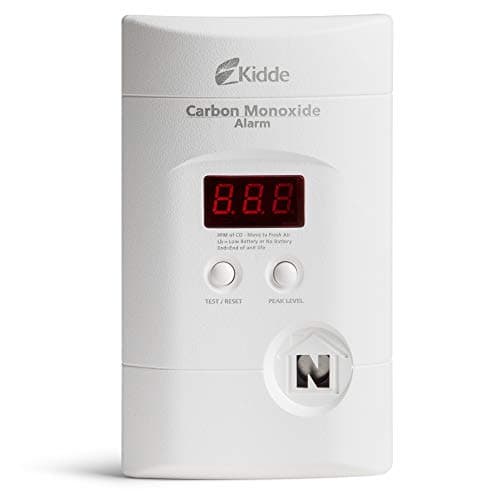
- The station wagon effect. A boat moving forward creates a low-pressure area behind the transom that draws exhaust back into the cockpit and cabin. It happens with the engine running normally, in open air, with nothing obviously wrong.
- Neighboring boats. At a dock or a raft-up, exhaust from the boat beside you enters through your open hatches. You have no control over their equipment at all.
- Enclosed cabins are small. A concentration that would disperse in a house builds fast in a few cubic meters.
- Swim platforms. People sit and swim directly behind exhaust outlets, at water level, where concentrations are highest.
Which leads to the conclusion this page exists to state plainly: a portable gasoline generator is a poor fit on a small boat. There is nowhere to put it that is twenty feet from an enclosure, the deck moves, and fuel vapor in a bilge is its own separate and serious hazard.
A battery has no exhaust, no fuel vapor and no fire triangle. On the water, that is not a convenience argument.
What a small boat actually uses
| Load | Typical draw | Per day aboard |
|---|
| Chartplotter and instruments | 10-30 W | ~150 Wh |
|---|
| VHF on standby | 1-5 W | ~50 Wh |
|---|
| Cabin and navigation lights, LED | 10-40 W | ~150 Wh |
|---|
| 12V compressor cooler | 40-60 W cycling | ~400 Wh |
|---|
| Phone and tablet charging | 10-20 W | ~80 Wh |
|---|
| Fan | 20-40 W | ~250 Wh |
|---|
| Water pump, intermittent | 50-100 W | ~50 Wh |
|---|
Working estimates from typical marine equipment power-supply ratings rather than manufacturer measurements. Bilge pumps are deliberately absent — those belong on the boat's own house battery with automatic float switches, not on a portable unit you might take ashore.
The total is roughly 1,100Wh a day, which a kilowatt-hour station covers for a day and a two-kilowatt-hour one covers for a weekend.
What salt does to equipment
Salt air is more corrosive than most people allow for, and it attacks the connections rather than the cases.
- Exposed contacts corrode. Cap unused connectors, and mate MC4 ends to each other rather than leaving them open.
- Rinse anything that gets spray with fresh water and dry it before stowing.
- Stow it below, not on deck. Almost no portable power station carries a weather rating, and a lot of them carry none at all.
- Ventilate the locker. A sealed locker traps humidity, and condensation inside electronics is worse than spray outside them.
- Prefer marine-rated cabling — tinned copper rather than bare — for anything permanently installed.
Motion, which nobody accounts for
A power station is a heavy object with a smooth base. In any seaway it will move, and a 30 lb box loose in a cabin is a genuine hazard to people and to the boat.
- Secure it before you leave the dock. Straps, a bungee across a locker, or a purpose-built chock.
- Low and central. Weight high up affects stability on a small boat more than the number suggests.
- Not against a bulkhead you need to open, and not blocking an exit.
- Cables secured too. A trailing cord in a cockpit is a trip hazard, and someone going over the side is the failure mode.
Solar suits a boat unusually well
Boats spend their days in the open with nothing shading them, which is close to ideal for a panel.
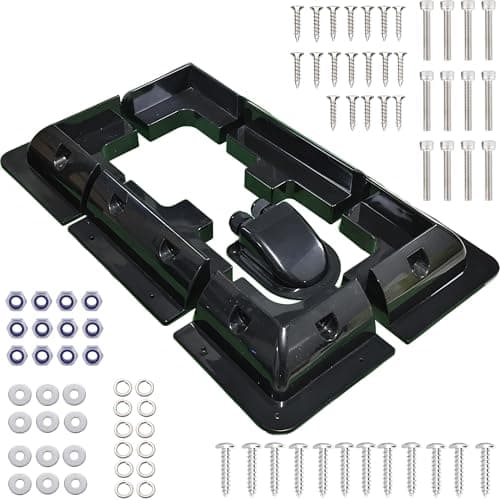
The constraints are shape and weight rather than area. Almost nothing on a boat is flat, which is why flexible panels dominate marine use despite their shorter service life, and why bonded corner mounts exist as an alternative to drilling a deck.
Two practical points:
Both of which mean sizing with generous margin rather than to a clear-sky, perfectly-aimed figure.
A portable station is not a house battery
Worth being clear about the boundary. A boat's house bank, wired to the engine alternator and driving the bilge pumps, navigation lights and starting circuit, is a different system with different rules — marine wiring standards, fusing, and permanently installed batteries in secured boxes.
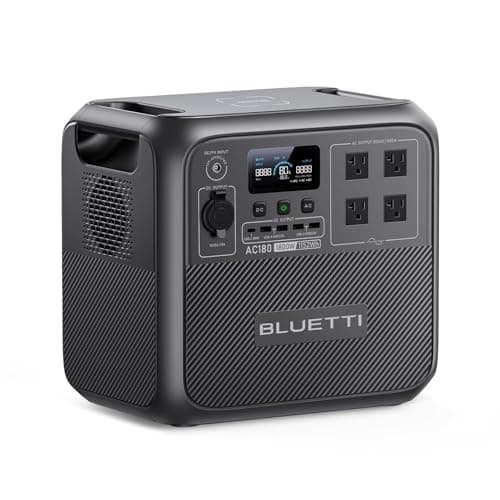
A portable power station sits alongside that as a convenience supply for AC devices, charging and a cooler. It is genuinely useful in that role and it should not be doing safety-critical work.
If your requirement is a proper house bank upgrade, that is an installation question for a marine electrician rather than a purchase from this site. The under-$1,000 bracket is the right place to start for the convenience role, and the camping and RV scenario covers the closest equivalent problem on land.