The short answer
The outage itself — the period with no power at all — damages almost nothing. An appliance with no electricity is simply off, and being off is not harmful.
What damages equipment is the electricity that is not quite right: the voltage sag that often precedes an outage, and the surge when power is restored. Both are brief, both are invisible, and both are cheap to defend against.
The three genuine risks
1. The restoration surge — the big one
Power does not come back gently. When a utility re-energizes a circuit, every device on it draws current at once, and the switching itself can produce a transient overvoltage.
That spike is what kills televisions, computers, routers and anything with a sensitive switching power supply. It happens after the outage is over, frequently while nobody is watching.
The defense: unplug sensitive equipment at the start of the outage, or leave it behind a decent surge protector. Note that a surge protector is a consumable — it absorbs energy each time it acts and eventually stops protecting, usually with no indication. If yours has taken a serious hit or is more than a few years old, replace it.
2. The brownout before the outage
Many outages do not begin cleanly. Voltage sags first — sometimes for seconds, sometimes for minutes — as the grid struggles before a protective device operates.
Undervoltage is genuinely hard on motors. A compressor or a pump running at reduced voltage draws more current to produce the same work, which heats the windings. Repeated brownouts shorten the life of a refrigerator, an air conditioner or a well pump considerably, and the damage is cumulative and invisible.
The defense: a UPS with automatic voltage regulation corrects sags without switching to battery. For large motor loads that is not practical at household scale, which is why an air conditioner that has survived years of brownouts eventually fails for no apparent reason.
3. Rapid cycling
When a utility is restoring a damaged circuit, power can come back and drop out repeatedly over a few minutes. That is harder on a compressor than a clean outage: restarting against system pressure that has not equalized is a heavy load, and doing it several times in a row is worse.
The defense: after the power returns, wait a few minutes before turning things back on, and bring them up gradually rather than all at once.
What survives an outage fine
- Refrigerators and freezers. The appliance is fine; the food is the concern. USDA guidance: four hours for a refrigerator, 48 for a full freezer, 24 for a half-full one, doors closed.
- Anything with a simple heating element. Kettles, toasters, space heaters. No electronics to upset.
- Anything battery-powered. Laptops, phones, cordless tools.
- Lighting. LED bulbs occasionally fail on a surge, but they are inexpensive and the failure is obvious.
What actually gets damaged
| Equipment | Risk | Defense |
|---|
| Desktop computer | Surge damage; data loss and file-system corruption | UPS with AVR |
|---|
| Television | Surge damage to the power supply board | Unplug, or a good surge protector |
|---|
| Cable modem and router | Surge; a modem can need re-provisioning | Small UPS |
|---|
| NAS or external drives | Data corruption from an unclean shutdown | UPS with automatic shutdown |
|---|
| Air conditioner or heat pump | Compressor stress from brownout and rapid cycling | Switch off at the thermostat during the outage |
|---|
| Well pump | Motor stress from undervoltage | Switch off at the breaker if a brownout is ongoing |
|---|
| Anything with a clock or a schedule | Lost settings rather than damage | Note the settings before storm season |
|---|
Risk categories are general electrical-engineering behavior rather than measured failure rates — we have not tested any of this, and we are not aware of a public dataset that quantifies household appliance failure by outage type. Treat this as a prioritized checklist, not a probability table.
The specific question about game consoles
People ask about consoles more than anything else, and the honest answer has two halves.
Hardware: a modern console has a reasonably robust power supply and usually survives a clean outage. It is as exposed to the restoration surge as any other device with switched-mode power.
Storage: this is the real risk. A console writing to its drive when power fails can corrupt the file system, and the usual outcome is a rebuild or, occasionally, a lost save. Consoles running from internal solid-state storage are somewhat more resilient than older mechanical drives, but the failure mode still exists.
A small UPS eliminates it. Sixty seconds of runtime is enough to shut down cleanly, and that is all the protection needed.
The checklist
- Unplug sensitive electronics at the start of the outage. The surge comes on restoration.
- Leave one lamp plugged in so you know when the power is back without checking anything else.
- Turn the air conditioning or heat pump off at the thermostat. This stops it restarting into an unstable supply.
- Wait a few minutes after restoration before turning things back on, and bring them up one at a time.
- Check surge protectors annually. They wear out, often silently.
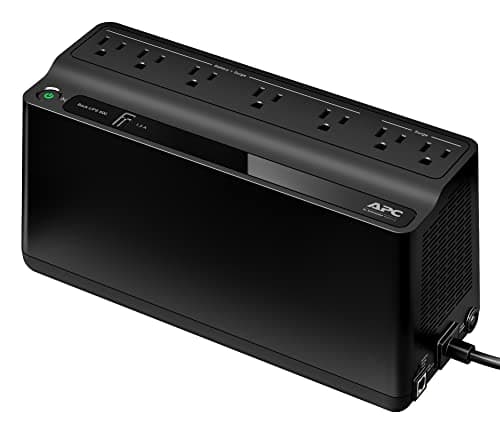
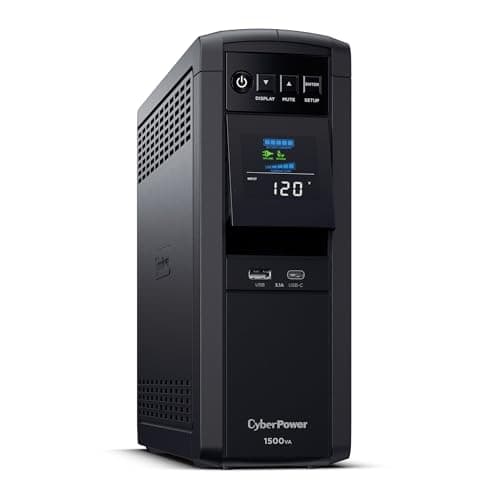
- Put a UPS on anything that must not shut down uncleanly — a computer, a NAS, network gear — the options are here.