Skip to content
Watt Warden

Power Stations

The Best Power Stations for Van Life (2026)

The difference between a van that works and a van that does not is charge rate, not capacity.

By Sawyer V.Updated Published How we work this out
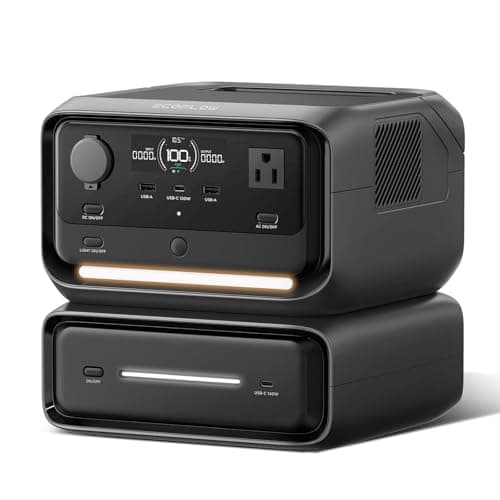
EcoFlow DELTA 3

Watt & Warden earns a commission on qualifying purchases made through links on this page, at no extra cost to you. It never changes a ranking, and our picks include products we tell you to skip. Full disclosure.

Quick picks

#ProductBest forPrice
1
EcoFlow DELTA 3

Best overall for a van

EcoFlow DELTA 3

1,024Wh that expands to 5kWh, with a published full AC recharge in 56 minutes and 500W of solar input.

A build that charges from the engine and expands later
$579.00 · Check price on Amazon

#ad how this is funded · price as of November 7, 2026 · $699.00 17% off

2
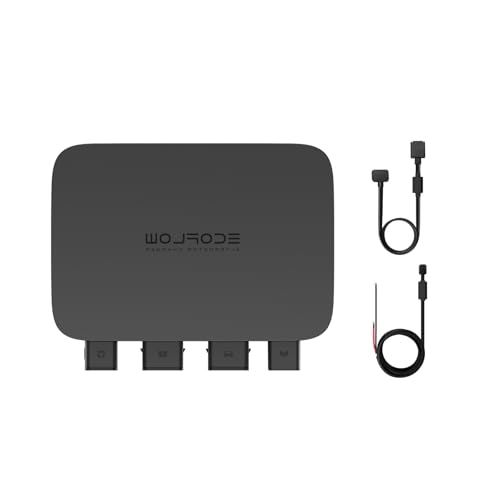
EcoFlow 800W Alternator Charger

The part that makes the van work

EcoFlow 800W Alternator Charger

800W of DC-DC charging — EcoFlow publishes 1 kWh in 1.3 hours, which turns a drive between campsites into a full battery.

Refilling the battery on every drive
$259.00 · Check price on Amazon

#ad how this is funded · price as of November 7, 2026

3
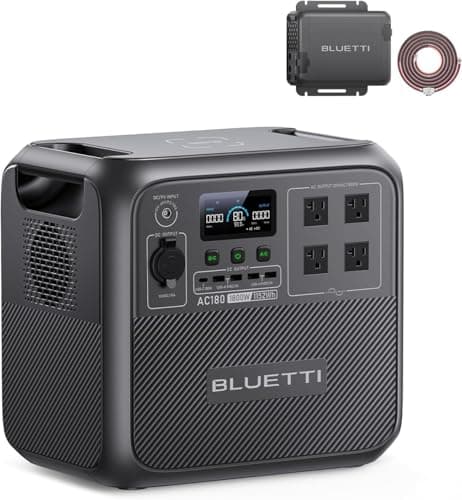
BLUETTI AC180

Best bundled with its own DC-DC charger

BLUETTI AC180

1,152Wh bundled with a 560W alternator charger, with BLUETTI publishing a 2.5-hour full charge from the car.

Buying the battery and the alternator charger as one thing
$899.00 · Check price on Amazon

#ad how this is funded · price as of November 7, 2026

4
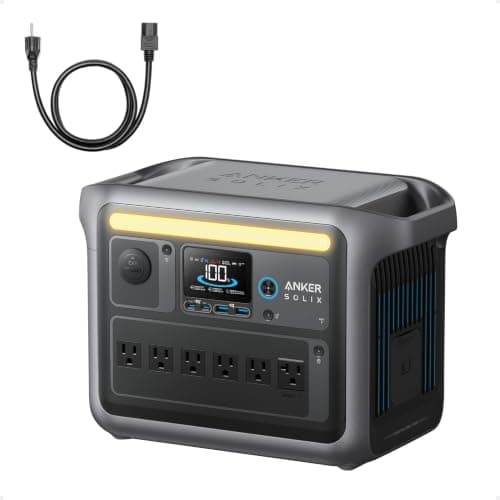
Anker SOLIX C1000

Best simple, no-build option

Anker SOLIX C1000

1,056Wh and 1,800W, 58 minutes to full on AC, and nothing to install — it lives on the floor and works.

A van you are not modifying
$499.99 · Check price on Amazon

#ad how this is funded · price as of November 7, 2026 · $599.99 17% off

5
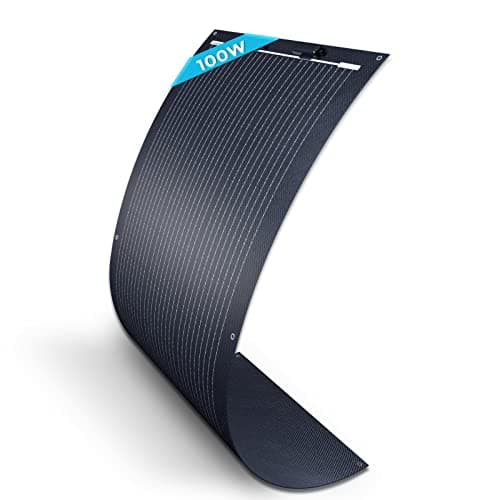
Renogy 100W flexible solar panel

Best panel for a van roof

Renogy 100W flexible solar panel

100W in a 0.1-inch bendable panel that follows a van roof's curve, which is where rigid panels fail.

A curved or low-clearance roof that rigid panels do not suit
$125.99 · Check price on Amazon

#ad how this is funded · price as of November 7, 2026 · $138.18 9% off

6
EcoFlow RIVER 3 Max

Best small second battery

EcoFlow RIVER 3 Max

572Wh with sub-10ms UPS switchover — small enough to be a second unit rather than a replacement.

A dedicated battery for the fridge, or a first van setup
$399.00 · Check price on Amazon

#ad how this is funded · price as of November 7, 2026

7
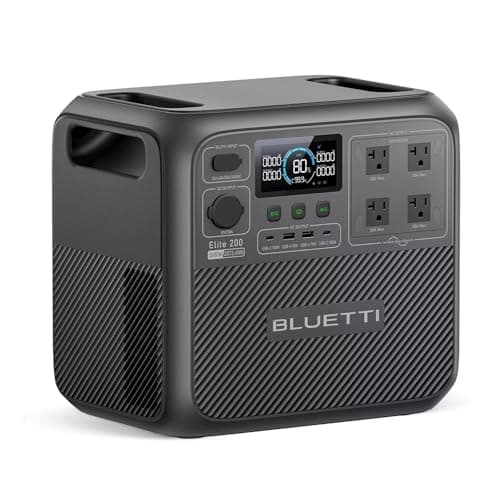
BLUETTI Elite 200 V2

Best for full-time, cooking included

BLUETTI Elite 200 V2

2,073.6Wh and 2,600W — the capacity at which electric cooking stops being a special occasion.

Living in it, year-round, with an induction hob
$899.00 · Check price on Amazon

#ad how this is funded · price as of November 7, 2026 · $1,399.00 36% off

Prices come from the retailer at page-build time and change constantly. Where no live price is available the button reads “Check price” rather than showing a number we cannot stand behind.

The verdict, in one paragraph

Buy around 1,000Wh and spend the next money on a DC-DC alternator charger rather than on more capacity. A van has no shore power and a roof that holds two or three panels at best, so the limiting factor is almost never how much you can store — it is how fast you can put it back. EcoFlow publishes 1 kWh in 1.3 hours at 800W from the alternator; no realistic van roof comes close to that in December.

Why this is not the RV answer

Van life and RV life get lumped together and they are different electrical problems. An RV has a 30A or 50A shore inlet, a roof you can cover in panels, and a built-in converter. A van has none of those.

RVCamper van
Shore power30A or 50A inlet, standardUsually none
Usable roof areaEnough for 600W+ of panelTypically 200-400W after vents
Main recharge routeShore power at a siteThe alternator, while driving
CookingPropane, usually plumbedPropane or induction, a real choice
Weight marginGenerousTight, and it is the hidden constraint

If your vehicle does have a shore inlet, the RV page is the right one — the answer there is sized around the inlet, not the alternator.

What a van actually spends in a day

The fridge is the only load that never stops, and it is the one that decides your minimum capacity. Everything else is a choice.

LoadPer dayOptional?
12V compressor fridge200-500 WhNo
Roof fan, overnight50-150 WhNot in summer
Lights, four hoursUnder 40 WhNo
Laptop and phones150-250 WhDepends on the job
Induction hob, 20 minutesAbout 500 WhYes — propane is the alternative
Diesel or propane heater fan50-150 WhNot in winter

A van that cooks on propane lives on 400 to 900Wh a day. A van that cooks on induction lives on 900 to 1,500Wh. That single decision is worth more than any product on this page.

Alternator, solar, or shore power?

All three, in that order of reliability for a van specifically.

  • Alternator. Works at night, in rain, in December, and in a city. The only requirement is that you drive, which van life involves by definition. A DC-DC charger at 500 to 800W turns an ordinary drive into a full battery.
  • Solar. Free and silent, and it works while you are parked and away — which is exactly when the fridge is running unattended. But van roof area is small, and winter output is a fraction of the rated figure. The panel sizing page does that arithmetic.
  • Shore power. Fastest when you have it, and you cannot plan around it. Treat a 56-minute recharge spec as a reason to stop for coffee, not as your charging strategy.

The short version

  • Propane cooking, part-time van: around 1,000Wh, plus a DC-DC charger.
  • Induction cooking, full-time: 2,000Wh and up, and check your payload before you buy.
  • Parked for days at a time: add solar, because the alternator cannot help a stationary van.
  • Not modifying the vehicle: one 1,000Wh station on the floor is a complete system, and there is nothing wrong with that.

The picks in full

01 — Best overall for a van

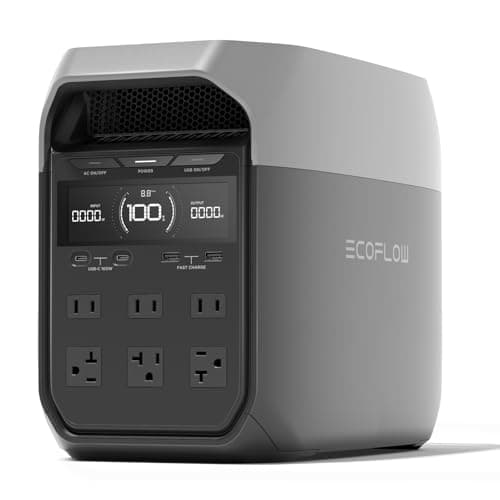
EcoFlow DELTA 3

1,024Wh that expands to 5kWh, with a published full AC recharge in 56 minutes and 500W of solar input.

A van build goes wrong in one of two ways: you buy too little and live rationing, or you buy a fixed system you cannot change. An expandable station avoids both — start at 1,024Wh, and add batteries to 5kWh when you know what you actually use.

The charge figures are what make it viable without shore power. 500W of solar input is more than most van roofs can physically carry, and the 56-minute AC recharge means a two-hour stop at a cafe with an outlet is a full battery.

The honest catch: X-Boost gets you 2,200W for resistive loads only, so the headline figure does not apply to a motor. And 27.6 lb per unit adds up quickly when you expand.

Skip it ifyou want a fixed 12V system with a lithium house bank. This is the modular answer.
EcoFlow DELTA 3
$579.00 · Check price on Amazon

#ad how this is funded · price as of November 7, 2026 · $699.00 17% off

Published specifications for the EcoFlow DELTA 3
SpecificationPublished figure
Capacity1,024 Wh, expandable to 5 kWh
AC output1,800 W rated / 3,600 W surge
X-Boost2,400 W
Max solar input500 W
AC charge0-100% in 56 minutes
Cycle life4,000 cycles to 80%+
UPSUnder 10 ms
Weight12.5 kg (27.6 lb)

Source: EcoFlow — DELTA 3 series buying guide (model comparison table). These are the manufacturer's published figures, not ours — we have not tested this unit.

02 — The part that makes the van work

EcoFlow 800W Alternator Charger

800W of DC-DC charging — EcoFlow publishes 1 kWh in 1.3 hours, which turns a drive between campsites into a full battery.

This is the pick that separates van life from camping. Solar is seasonal, weather-dependent and limited by roof area; the alternator is none of those things, and you are already running the engine.

EcoFlow publishes 1 kWh in 1.3 hours at 800W and calls it eight times faster than a cigarette-lighter charger. On a 1,024Wh station that is a full refill in a normal drive between two places you wanted to be anyway.

The honest catch: 800W off an alternator is a real load on the vehicle's charging system, and the install is not a plug-in job. Budget for having it done properly.

Skip it ifyour van sits parked for weeks. Then solar is the answer, not the alternator.

EcoFlow 800W Alternator Charger
$259.00 · Check price on Amazon

#ad how this is funded · price as of November 7, 2026

Published specifications for the EcoFlow 800W Alternator Charger
SpecificationPublished figure
Charge rate800 W
Type3-in-1 DC-DC charger
Charge time EcoFlow publishes1 kWh in 1.3 hours
Versus a lighter socket8x faster, per the listing
Also doesCar battery charger and jump starter

Source: EcoFlow — 800W Alternator Charger listing (3-in-1 DC-DC, 1 kWh in 1.3 h, 8x a cigarette-lighter charger, jump starter). These are the manufacturer's published figures, not ours — we have not tested this unit.

03 — Best bundled with its own DC-DC charger

BLUETTI AC180

1,152Wh bundled with a 560W alternator charger, with BLUETTI publishing a 2.5-hour full charge from the car.

The bundle is the point. Most people buy the station, live with the lighter-socket trickle for a season, and only then discover the DC-DC charger. This pairs them from the start.

1,152Wh with a published 2.5-hour full charge via car is a sustainable loop without a single solar panel, which is exactly the pattern that suits a van that moves most days.

The honest catch: 560W is slower than the 800W option above, and this listing shows a long dispatch window. If you need it for a trip next week, check the date before ordering.

Skip it ifyou already own a DC-DC charger. Buy the battery on its own instead.

BLUETTI AC180
$899.00 · Check price on Amazon

#ad how this is funded · price as of November 7, 2026

Published specifications for the BLUETTI AC180
SpecificationPublished figure
Usable capacity1,152 Wh (32 V, 36 Ah)
Cell chemistryLiFePO4 (LFP)
AC output1,800 W continuous / 2,700 W surge, 4 outlets
Cycle life3,500+ cycles to 80% capacity
Weight35.3 lb
Fast charge0–80% in 45 min
Max solar input500 W
Warranty5 years on registration
In the boxAC180 plus a Charger 1 560 W DC-DC alternator charger — the bare unit is no longer listed on its own

Source: BLUETTI — AC180 product specifications (1,152Wh, 1,800W, 2,700W surge, 3,500+ cycles, 35.3 lbs, 0-80% in 45 min, 500W solar, 5-year warranty). These are the manufacturer's published figures, not ours — we have not tested this unit.

04 — Best simple, no-build option

Anker SOLIX C1000

1,056Wh and 1,800W, 58 minutes to full on AC, and nothing to install — it lives on the floor and works.

Not every van is a build. Plenty of people sleep in a vehicle they also need to look ordinary, or are renting, or simply do not want to cut holes in anything.

A 1,056Wh station is a complete electrical system with no installation: 1,800W of inverter runs an induction hob at low power or a laptop and lights all week, and the 58-minute recharge means any outlet you find is worth stopping for.

The honest catch: without a DC-DC charger, your recharge options are solar and shore power, and both of those are somebody else's schedule.

Skip it ifyou want a system rather than an appliance.

Anker SOLIX C1000
$499.99 · Check price on Amazon

#ad how this is funded · price as of November 7, 2026 · $599.99 17% off

Published specifications for the Anker SOLIX C1000
SpecificationPublished figure
Usable capacity1,056 Wh
Cell chemistryLiFePO4 (LFP)
AC output1,800 W continuous / 2,400 W SurgePad
Cycle life3,000 cycles
Wall recharge80% in 43 min, full in 58 min
Max solar input600 W (full solar recharge ~1.8 h)
Ports11 total, including 6 AC on panel-equipped bundles

Source: Anker — SOLIX C1000 product specifications. These are the manufacturer's published figures, not ours — we have not tested this unit.

05 — Best panel for a van roof

Renogy 100W flexible solar panel

100W in a 0.1-inch bendable panel that follows a van roof's curve, which is where rigid panels fail.

Van roofs curve, and height matters at every parking garage and drive-through. A flexible panel at a tenth of an inch thick solves both problems that a framed panel creates.

100W is also the right unit of purchase for a van: two or three of these is realistically the whole roof once you allow for a vent and a fan.

The honest catch: flexible panels have a shorter service life than rigid ones and they run hotter when bonded flat to a roof, which costs output. The flexible vs rigid page goes through the trade honestly.

Skip it ifyour roof is flat and you can clear a garage. Rigid panels last longer.

Renogy 100W flexible solar panel
$125.99 · Check price on Amazon

#ad how this is funded · price as of November 7, 2026 · $138.18 9% off

Published specifications for the Renogy 100W flexible solar panel
SpecificationPublished figure
Rated output100 W, 12 V
FlexBends up to 240 degrees
Thickness0.1 in
Weightabout 4 lb — roughly a quarter of a rigid 100W panel
CellsHalf-cut PERC monocrystalline
Ingress ratingIP67 junction box and connectors
Load rating5,400 Pa snow, 2,400 Pa wind

Source: Renogy — 100W flexible solar panel listing. These are the manufacturer's published figures, not ours — we have not tested this unit.

06 — Best small second battery

EcoFlow RIVER 3 Max

572Wh with sub-10ms UPS switchover — small enough to be a second unit rather than a replacement.

Two batteries beat one big one in a van more often than people expect. The fridge is a continuous, non-negotiable load; everything else is discretionary. Separating them means a bad evening with the induction hob never costs you the food.

At 572Wh this runs a 12V compressor fridge for a day or more on its own, and it is small enough to move to wherever it is needed.

The honest catch: two small batteries cost more per watt-hour than one large one, and neither can help the other.

Skip it ifthis is your only battery and you cook electrically.

EcoFlow RIVER 3 Max
$399.00 · Check price on Amazon

#ad how this is funded · price as of November 7, 2026

Published specifications for the EcoFlow RIVER 3 Max
SpecificationPublished figure
Usable capacity572 Wh
AC output990 W
ClassCompact station for electronics, lights and a CPAP

Source: EcoFlow — RIVER 3 Max listing. These are the manufacturer's published figures, not ours — we have not tested this unit.

07 — Best for full-time, cooking included

BLUETTI Elite 200 V2

2,073.6Wh and 2,600W — the capacity at which electric cooking stops being a special occasion.

The fork in a full-time van build is how you cook. Propane is cheaper and needs almost no electricity; induction is cleaner, safer in a sealed space and needs a lot.

2,073.6Wh with 2,600W of continuous output is the point at which induction becomes practical: a 1,500W hob for twenty minutes is 500Wh, which is a quarter of this battery and most of a 1,000Wh one.

The honest catch: it is heavy, and in a van weight is payload. Work out your margin before you add 60 lb of battery to a build.

Skip it ifyou cook on propane. Then this is twice the battery you need.

BLUETTI Elite 200 V2
$899.00 · Check price on Amazon

#ad how this is funded · price as of November 7, 2026 · $1,399.00 36% off

Published specifications for the BLUETTI Elite 200 V2
SpecificationPublished figure
Usable capacity2,073.6 Wh
Cell chemistryAutomotive-grade LiFePO4 (LFP)
AC output2,600 W continuous / 3,900 W power lifting
Cycle life6,000+ cycles
Fast charge0–80% in 50 min via dual AC/DC input

Source: BLUETTI — Elite 200 V2 product specifications. These are the manufacturer's published figures, not ours — we have not tested this unit.

How these were chosen

We did not test these. Nobody at Watt & Warden has plugged one in. What we did instead: read the manufacturer's published specifications, compile them into a table where the figures line up, and compute the numbers manufacturers leave out — runtime against a real appliance load, and what an hour of running actually costs.

Anything that could not be sourced was left out rather than estimated, and every pick names the buyer who should skip it. The full method is here, including where it is weaker than a publisher with a test bench.

Questions people actually ask

What size power station do I need for van life?

It depends on how you cook. A van that cooks on propane spends 400 to 900Wh a day -- fridge, fan, lights, laptop -- so around 1,000Wh is comfortable. A van that cooks on induction spends 900 to 1,500Wh a day, because a 1,500W hob for twenty minutes alone is about 500Wh, so 2,000Wh is the realistic floor.

How do you charge a power station in a van?

From the alternator, primarily. A DC-DC charger at 500 to 800W turns a normal drive into a full battery -- EcoFlow publishes 1 kWh in 1.3 hours at 800W, and BLUETTI publishes a 2.5-hour full charge for its 1,152Wh unit from the car. Solar is the secondary source for days you stay parked; shore power is opportunistic and cannot be planned around.

Is a power station better than a fixed 12V system in a van?

For most people, yes, at least to start. A station is a complete electrical system with no installation, nothing to cut, and it can leave the van. A fixed lithium bank with a separate inverter and charger is cheaper per watt-hour at large capacities and integrates better, but it is a build rather than a purchase.

How much solar can a van roof actually hold?

Typically 200 to 400W once you allow for a roof vent and a fan, against 600W or more on an RV. That small area is the reason the alternator matters more in a van than in any other vehicle, and why flexible panels that follow the roof curve are common despite their shorter service life.

Can I cook with induction on a power station?

Yes, with enough inverter and enough capacity. A 1,500W hob needs an inverter rated above that -- note that EcoFlow's X-Boost figure applies to resistive loads only -- and twenty minutes of cooking is about 500Wh. That is a quarter of a 2,000Wh station and half of a 1,000Wh one, which is why full-time induction builds start at 2,000Wh.

Should I run my van fridge on a separate battery?

It is worth considering. The fridge is the only load that never stops, and separating it means an evening of heavy use never costs you the food. The trade is that two smaller batteries cost more per watt-hour than one larger one, and neither can help the other when it runs down.

Sources