
Skip to content
Watt Warden

Power Stations

Backup Power for Older Adults Living Alone

The best battery for an older adult is rarely the biggest one. It is the one that can be carried to the right room and switched on without reading anything.

By Sawyer V.Updated Published How we work this out
An older woman reading in bed under a blanket.

Watt & Warden earns a commission on qualifying purchases made through links on this page, at no extra cost to you. It never changes a ranking, and our picks include products we tell you to skip. Full disclosure.

What actually matters here

The usual buying criteria — watt-hours per dollar, expansion ceilings, solar input — matter much less in this context than four practical things.

  1. Weight. Can it be carried to the bedroom, or the bathroom, by the person who will need it? Under 10 lb is a different product from 35 lb.
  2. Simplicity. One button that turns the AC outlets on, a clear display, and no requirement to pair a phone app. Apps are a failure point when a phone is at 4% and the lights are off.
  3. The medical list. A CPAP, an oxygen concentrator, a nebulizer or refrigerated medication each set a different floor for capacity and output.
  4. Being charged when needed. A unit that refills quickly and lives plugged in beats a larger one that sits at 40%.

Sizing against the loads that matter

DeviceTypical drawWhat it needs
CPAP, humidifier off30-60 W250Wh covers a night; pure sine output
CPAP with heated humidifier60-120 WRoughly double — or switch the humidifier off
Oxygen concentrator300-600 W continuousA 1kWh-class unit at minimum, and a plan beyond it
Refrigerated medication150 W average, 600-1,200 W to start1,000Wh and an 1,800W inverter
Phone, lamp, router40 W togetherAny unit here
Stairlift or powered reclinerVaries — check the plateSurge headroom, not capacity

Device draws come from the appliance wattage chart. Any life-sustaining equipment deserves a conversation with the supplier about their own backup guidance — the medical devices page covers that properly.

Set it up before it is needed

The failure mode in this scenario is not capacity. It is a battery in a closet at 30% charge that nobody can find in the dark.

  • Leave it plugged in where it will be used — modern LiFePO4 units tolerate this, and the storage page covers the detail.
  • Label the outlets with what plugs into them, in large type, and leave the cables attached.
  • Practice once in daylight. Turn it on, plug in the CPAP, confirm it runs. Five minutes now is worth a great deal at 2am.
  • Keep a flashlight beside it, not across the house — the lights roundup covers the sensible ones.
  • Tell someone else the plan. A family member who can talk it through on the phone is part of the system.

When a battery is not the right answer

If the household depends on equipment that must not stop — an oxygen concentrator, a ventilator, a powered bed — then a battery is one layer of a plan rather than the plan. Register with the utility's medical priority list, ask the equipment supplier what they recommend, and treat a generator or a relocation plan as the answer for long outages.

For heating and cooling, the same limits apply as anywhere else: a battery runs fans, not furnaces — staying warm and staying cool cover what actually works.

The short version

  • Weight and simplicity beat capacity for most households in this situation.
  • A CPAP needs about 250Wh a night with the humidifier off.
  • Refrigerated medication needs a 1kWh unit with an 1,800W inverter.
  • Set it up, label it and practice before the first outage.

Quick picks

#ProductBest forPrice
1
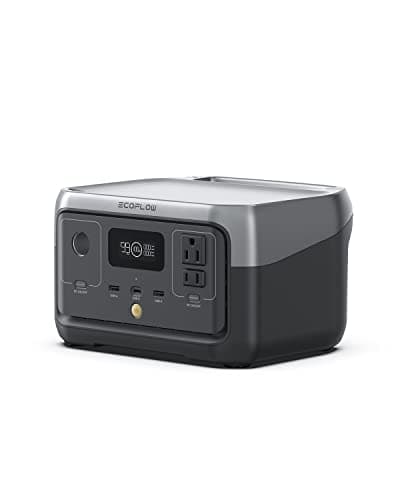
EcoFlow RIVER 2

Easiest to live with

EcoFlow RIVER 2

256Wh at 7.7 lb that refills in about an hour.

A phone, a lamp and a CPAP through a night
$198.99 · Check price on Amazon

#ad how this is funded · price as of October 20, 2026 · $249.00 20% off

2
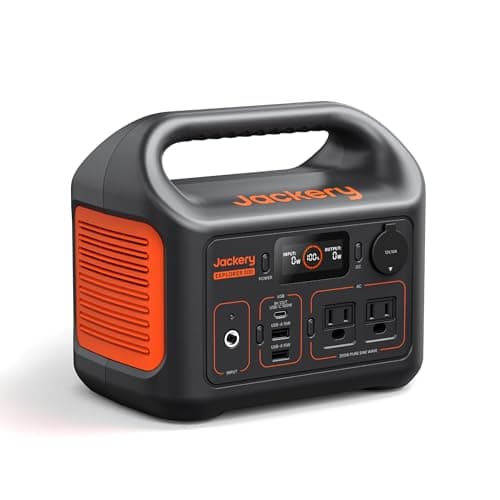
Jackery Explorer 300

A little more capacity, still light

Jackery Explorer 300

292Wh and a 300W inverter, light enough to carry in one hand.

Phones, the router, lights and a CPAP
$259.00 · Check price on Amazon

#ad how this is funded · price as of October 20, 2026 · $289.00 10% off

3
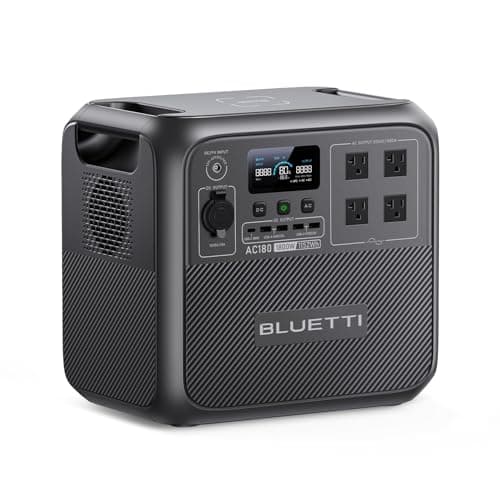
BLUETTI AC180

When the fridge matters too

BLUETTI AC180

1,152Wh, 1,800W continuous and 2,700W of surge.

Medication that needs refrigeration
$449.00 · Check price on Amazon

#ad how this is funded · price as of October 20, 2026 · $499.00 10% off

4
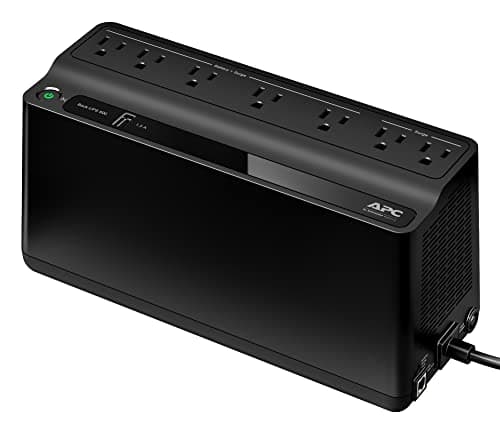
APC Back-UPS BE600M1

The one that needs no attention at all

APC Back-UPS BE600M1

600VA of battery backup for a modem and a router.

Keeping the phone line and internet alive automatically
$83.99 · Check price on Amazon

#ad how this is funded · price as of October 20, 2026

Prices come from the retailer at page-build time and change constantly. Where no live price is available the button reads “Check price” rather than showing a number we cannot stand behind.

The picks in full

01 — Easiest to live with

EcoFlow RIVER 2

256Wh at 7.7 lb that refills in about an hour.

Under eight pounds is the number that matters. A battery that can be lifted with one hand gets moved to the bedside, which is where it is needed at 2am.

Refilling in about an hour also means it is usually full when the next outage arrives.

The honest catch: 256Wh is one night of small loads and no more.

Skip it ifa powered medical device needs more than a few hours.
EcoFlow RIVER 2
$198.99 · Check price on Amazon

#ad how this is funded · price as of October 20, 2026 · $249.00 20% off

Published specifications for the EcoFlow RIVER 2
SpecificationPublished figure
Capacity256 Wh; the Amazon listing states 243 Wh rated
Output300 W continuous, 600 W X-Boost
ChemistryLiFePO4, 3,000+ cycles to 80%
AC recharge0–100% in about 1 hour
Weight7.7 lb
Solar inputup to 110 W
Warranty5 years
Amazon listing name"RIVER 2 240" — the same unit, listed on its rated capacity

Source: EcoFlow — RIVER 2 published specifications (256Wh, 300W, X-Boost 600W, 7.7 lbs, 3000+ cycles, 5 years). These are the manufacturer's published figures, not ours — we have not tested this unit.

02 — A little more capacity, still light

Jackery Explorer 300

292Wh and a 300W inverter, light enough to carry in one hand.

Simple front-panel buttons, no app required, and enough energy for the communications-and-comfort list through a normal outage.

Keeping the internet alive matters more than people expect: it is how family check in.

The honest catch: nothing with a motor runs on it.

Skip it ifthe refrigerator is the concern. A 300W inverter cannot start one.

Jackery Explorer 300
$259.00 · Check price on Amazon

#ad how this is funded · price as of October 20, 2026 · $289.00 10% off

Published specifications for the Jackery Explorer 300
SpecificationPublished figure
Usable capacity292 Wh
AC output300 W
ClassSmall station for electronics, lights and a CPAP

Source: Jackery — Explorer 300 product page. These are the manufacturer's published figures, not ours — we have not tested this unit.

03 — When the fridge matters too

BLUETTI AC180

1,152Wh, 1,800W continuous and 2,700W of surge.

Insulin and other refrigerated medication change the calculation entirely: this is the smallest class that reliably starts a refrigerator compressor.

Set it up next to the fridge in advance and leave it there.

The honest catch: 35.3 lb. This one lives where it is placed rather than being carried around.

Skip it ifnobody in the household can move 35 lb. Then keep it on a low shelf or a cart.

BLUETTI AC180
$449.00 · Check price on Amazon

#ad how this is funded · price as of October 20, 2026 · $499.00 10% off

Published specifications for the BLUETTI AC180
SpecificationPublished figure
Usable capacity1,152 Wh (32 V, 36 Ah)
Cell chemistryLiFePO4 (LFP)
AC output1,800 W continuous / 2,700 W surge, 4 outlets
Cycle life3,500+ cycles to 80% capacity
Weight35.3 lb
Fast charge0–80% in 45 min
Max solar input500 W
Warranty5 years on registration

Source: BLUETTI — AC180 product specifications. These are the manufacturer's published figures, not ours — we have not tested this unit.

04 — The one that needs no attention at all

APC Back-UPS BE600M1

600VA of battery backup for a modem and a router.

A small UPS behind the router carries the internet through short outages without anyone doing anything — and for a household where VoIP is the phone, that is a safety feature.

It sits behind the equipment permanently and is invisible until needed.

The honest catch: minutes to an hour of runtime, depending on the load — size it properly.

Skip it ifyour phone service does not depend on the internet.

APC Back-UPS BE600M1
$83.99 · Check price on Amazon

#ad how this is funded · price as of October 20, 2026

Published specifications for the APC Back-UPS BE600M1
SpecificationPublished figure
Capacity600 VA / 330 W
Outlets7 total — 5 battery-backed, 2 surge-only
Run timeabout 23 min at a 100 W load
Transfer time6–10 ms typical
Battery life3–5 years depending on use
ExtrasUSB charging port

Source: APC — Back-UPS BE600M1 product specifications. These are the manufacturer's published figures, not ours — we have not tested this unit.

How these were chosen

We did not test these. Nobody at Watt & Warden has plugged one in. What we did instead: read the manufacturer's published specifications, compile them into a table where the figures line up, and compute the numbers manufacturers leave out — runtime against a real appliance load, and what an hour of running actually costs.

Anything that could not be sourced was left out rather than estimated, and every pick names the buyer who should skip it. The full method is here, including where it is weaker than a publisher with a test bench.

Questions people actually ask

What size power station does a CPAP need?

About 250Wh covers a full night with the humidifier switched off, at a 30 to 60W draw. Running the heated humidifier can double or triple that, so either switch it off on battery or buy a 500Wh-plus unit. Pure sine wave output is worth insisting on for any medical device.

What is the best power station for an older person living alone?

Usually the lightest one that covers the real load list. A 250 to 300Wh unit under 10 lb can be carried to the bedside and runs a CPAP, a lamp, a phone and the router through a night. Capacity only needs to rise if refrigerated medication or an oxygen concentrator is involved.

Can a power station run an oxygen concentrator?

A stationary concentrator draws 300 to 600W continuously, which needs a 1kWh-class unit for a few hours and a much larger one for a night. Treat a battery as one layer of the plan: ask the equipment supplier for their guidance and register with your utility's medical priority program.

Should the battery be left plugged in all the time?

For modern LiFePO4 units, yes -- keeping it charged and in the room where it will be used solves the commonest failure, which is a battery found at 30% in the dark. Check your manual, since a few makers still prefer storage at a partial charge.

Is a UPS better than a power station for this?

They do different jobs. A small UPS behind the router keeps the internet alive automatically with no one involved, which matters when the phone runs over the internet. A power station holds far more energy and can be carried to a bedside. Many households benefit from both.

Sources

Every figure on this page comes from a published source. We have not tested this equipment, so the specifications are the manufacturer's and the statistics are the dataset's — the arithmetic on top of them is ours, and it is shown in full so you can check it. How we work this out.