Skip to content
Watt Warden

Power Stations

The Best Power Stations for a Shed (2026)

Running a buried circuit to a shed is a permit, a trench and an electrician. A battery is none of those, and for most sheds it is enough.

By Sawyer V.Updated Published How we work this out
Anker SOLIX C1000

Watt & Warden earns a commission on qualifying purchases made through links on this page, at no extra cost to you. It never changes a ranking, and our picks include products we tell you to skip. Full disclosure.

Quick picks

#ProductBest forPrice
1
Anker SOLIX C1000

Best overall for a working shed

Anker SOLIX C1000

1,056Wh and 1,800W — the first capacity at which a shed stops being a storage building and starts being a workshop.

Lights, a bench and corded power tools
$499.99 · Check price on Amazon

#ad how this is funded · price as of November 7, 2026 · $599.99 17% off

2
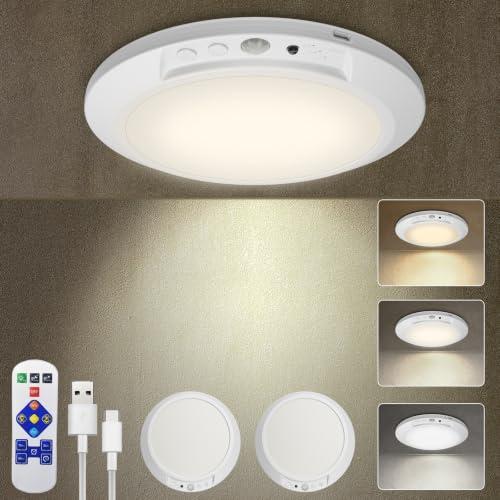
L.JUJAM motion sensor ceiling light, 2 pack

Best lighting, and the cheapest answer overall

L.JUJAM motion sensor ceiling light, 2 pack

Rechargeable ceiling lights that mount with no wiring and come on when you walk in — for many sheds this is the whole project.

A shed you only need to see inside
$23.93 · Check price on Amazon

#ad how this is funded · price as of November 7, 2026 · $26.59 10% off

3
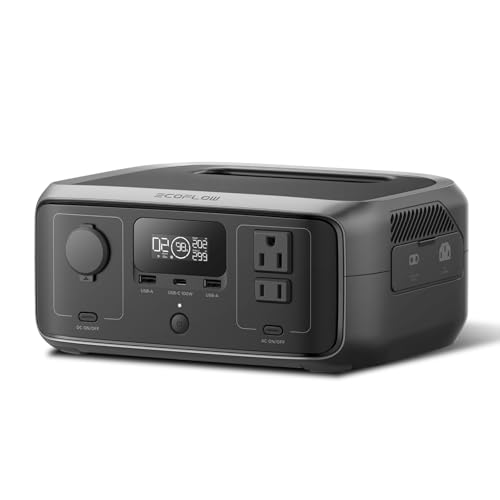
EcoFlow RIVER 3

Best small station

EcoFlow RIVER 3

245Wh and 550W of LiFePO4 — enough for several tool-battery charges and a day of light, at a price that undercuts any wiring job.

Charging tool batteries and running a radio
$249.00 · Check price on Amazon

#ad how this is funded · price as of November 7, 2026 · $299.00 17% off

4
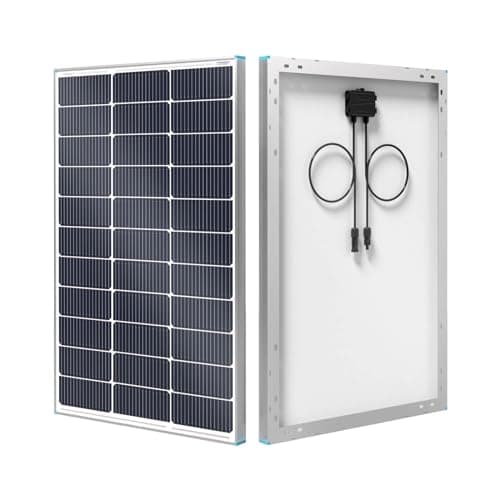
Renogy 100W N-Type Monocrystalline Solar Panel

Best way to keep it charged without a cord

Renogy 100W N-Type Monocrystalline Solar Panel

100W of rigid panel — enough to keep a small station topped up indefinitely for lighting-scale use.

A shed far enough from the house that carrying it is tedious
$89.99 · Check price on Amazon

#ad how this is funded · price as of November 7, 2026 · $99.29 9% off

5
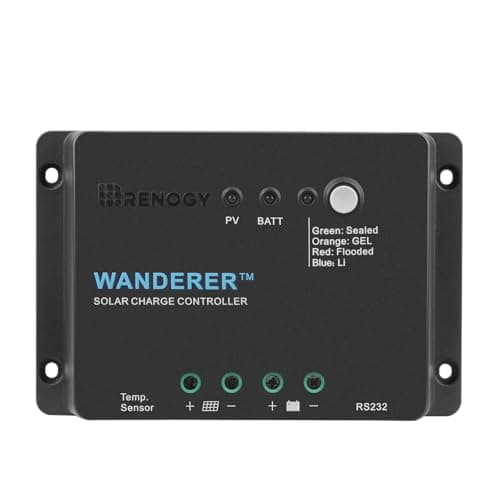
Renogy Wanderer Li 30A

Best for a permanent 12V shed system

Renogy Wanderer Li 30A

A 30A PWM charge controller with lithium support — the piece that turns a panel and a battery into a system that looks after itself.

A shed with its own battery and 12V lights, left in place
$32.99 · Check price on Amazon

#ad how this is funded · price as of November 7, 2026

6
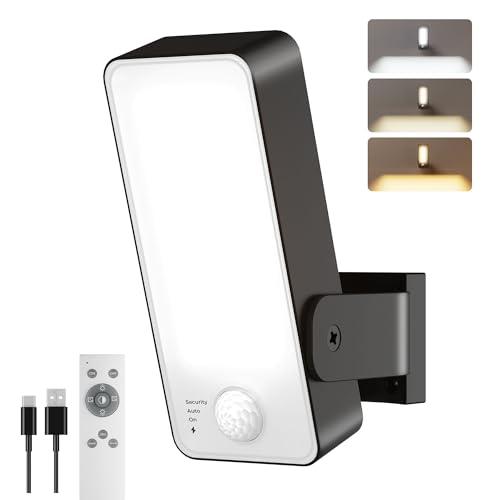
Rechargeable motion sensor outdoor wall light, 10,000mAh

Best for the walk out there

Rechargeable motion sensor outdoor wall light, 10,000mAh

10,000mAh of rechargeable battery on the outside wall, with motion activation and a remote.

Getting to the shed in the dark without a torch
$29.99 · Check price on Amazon

#ad how this is funded · price as of November 7, 2026

7
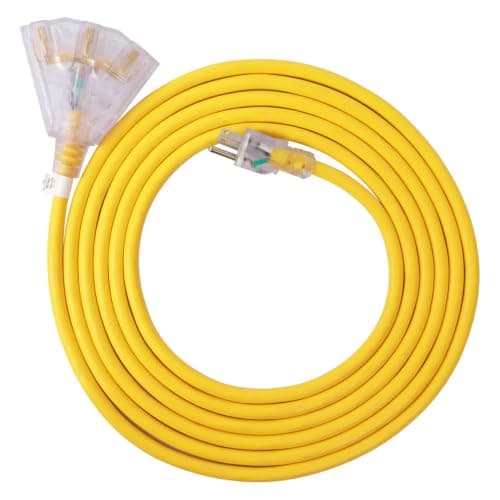
EP 25 ft outdoor extension cord, 14/3 SJTW, 3 outlets

The answer if the shed is close

EP 25 ft outdoor extension cord, 14/3 SJTW, 3 outlets

25 ft of 14/3 SJTW with three outlets — the honest cheapest answer for a shed near the house.

A shed within cord reach of the house
$23.99 · Check price on Amazon

#ad how this is funded · price as of November 7, 2026

Prices come from the retailer at page-build time and change constantly. Where no live price is available the button reads “Check price” rather than showing a number we cannot stand behind.

The verdict, in one paragraph

If the shed only needs light, buy rechargeable motion lights and stop — that is the whole project for a lot of people. If it is a workshop, a 1,000Wh station with an 1,800W inverter covers lights, cordless tool charging and intermittent corded tools for a full day, and it costs less than a trench, a permit and an electrician. A buried circuit is only worth it for the loads a battery genuinely cannot carry: a table saw with dust extraction, a welder, or a heater.

What a shed actually uses

The surprise is the gap between the output a tool needs for a few seconds and the energy it uses in a day. Both columns matter, and most people only think about the first.

LoadOutput neededEnergy in a typical session
LED shed lighting, 4 hoursUnder 30 WUnder 120 Wh
18V 5Ah tool battery chargeUnder 150 WAbout 110 Wh
Radio, all dayUnder 20 WUnder 150 Wh
Soldering iron, an hourUnder 100 WUnder 100 Wh
Circular saw, 90 seconds of cutting1,200-1,800 WAbout 40 Wh
Shop vac, 10 minutes1,000-1,400 WAbout 200 Wh
Electric space heater, an hour750-1,500 W750-1,500 Wh

Read the circular saw row carefully. It is the highest output figure in the table and nearly the lowest energy figure, because nobody cuts continuously. That is why an 1,800W inverter on a 1,056Wh battery is a sensible shed combination and a 600W inverter on the same battery is not.

The heater row is the exception that proves the rule, and the space heater page goes through why a battery and a resistive heater are a bad match in any building.

Battery, extension cord, or a proper circuit?

Three routes, and the right one depends almost entirely on distance and on whether you want power every day.

Extension cordPower stationBuried circuit
Best ifShed is within one cordShed is detached and used occasionallyYou work out there daily
CostLowestMiddleHighest — trench, permit, electrician
CapacityUnlimitedWhat you boughtUnlimited
Permanent?No — and must not beNo, which is sometimes the pointYes
Works if you rentYesYesUsually not
Useful elsewhereYesYes — it is also your outage batteryNo

The last row is the honest argument for the battery. A power station bought for a shed is also the thing that runs the refrigerator when the grid goes down, which no amount of buried cable will do. The outage roundup is where that second job gets sized.

Four things worth knowing

  • Cold kills shed batteries, slowly. A station left in an unheated shed all winter will lose usable capacity and will likely refuse to charge below freezing. Bring it in, or accept the loss.
  • Buy the inverter for the surge, the battery for the day. Those are two different numbers and a shed needs a high first one and a modest second one.
  • Light the path, not just the shed. The walk out there in the dark is half the problem and it is solved for very little.
  • Do not bury an extension cord. Outdoor extension cord is rated for temporary use. A permanent run needs the right cable in the right conduit at the right depth, which is the circuit you were avoiding.

The picks in full

01 — Best overall for a working shed

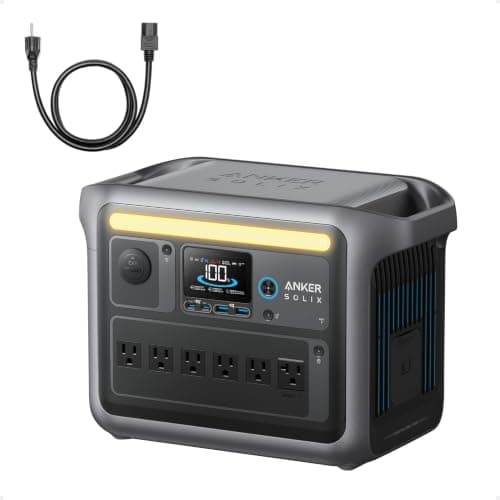
Anker SOLIX C1000

1,056Wh and 1,800W — the first capacity at which a shed stops being a storage building and starts being a workshop.

1,800W continuous with a published 2,400W peak covers the realistic corded tools: a circular saw, a router, a bench grinder. Those are short-duration loads, which is the thing people get wrong — a saw running for ninety seconds costs almost nothing in watt-hours, it just needs the output while it runs.

1,056Wh is therefore a full day of intermittent shed work with the lights on throughout, and the 58-minute recharge means it is ready again by the next morning.

The honest catch: it will not run a table saw and a dust extractor together, and it will not run a welder at all. Those are the loads that genuinely need a circuit.

Skip it ifall you want is light. That is a tenth of this.
Anker SOLIX C1000
$499.99 · Check price on Amazon

#ad how this is funded · price as of November 7, 2026 · $599.99 17% off

Published specifications for the Anker SOLIX C1000
SpecificationPublished figure
Usable capacity1,056 Wh
Cell chemistryLiFePO4 (LFP)
AC output1,800 W continuous / 2,400 W SurgePad
Cycle life3,000 cycles
Wall recharge80% in 43 min, full in 58 min
Max solar input600 W (full solar recharge ~1.8 h)
Ports11 total, including 6 AC on panel-equipped bundles

Source: Anker — SOLIX C1000 product specifications. These are the manufacturer's published figures, not ours — we have not tested this unit.

02 — Best lighting, and the cheapest answer overall

L.JUJAM motion sensor ceiling light, 2 pack

Rechargeable ceiling lights that mount with no wiring and come on when you walk in — for many sheds this is the whole project.

Start here, because a large share of people searching for shed power want light and nothing else. These need no circuit, no battery station and no installation beyond a magnet or two screws.

Motion activation is the detail that matters in a shed, where your hands are full and the switch is behind whatever you just put down. Three selectable color temperatures and dimming means you can set it warm for storage or cold for work.

The honest catch: the listing publishes neither a lumen figure nor a battery capacity, so plan to recharge them on a schedule rather than when they die.

Skip it ifyou need task lighting over a bench for hours at a time.

L.JUJAM motion sensor ceiling light, 2 pack
$23.93 · Check price on Amazon

#ad how this is funded · price as of November 7, 2026 · $26.59 10% off

Published specifications for the L.JUJAM motion sensor ceiling light, 2 pack
SpecificationPublished figure
PowerRechargeable battery, no wiring
Quantity2 lights
Color temperature3 selectable (3CCT), dimmable
ControlMotion sensor plus remote
Listed forShed, closet, stairs, hallway, porch, RV and tent

Source: L.JUJAM — motion sensor ceiling light listing (2 pack, rechargeable, 3CCT dimmable, remote, shed use). These are the manufacturer's published figures, not ours — we have not tested this unit.

03 — Best small station

EcoFlow RIVER 3

245Wh and 550W of LiFePO4 — enough for several tool-battery charges and a day of light, at a price that undercuts any wiring job.

Most modern shed work is cordless, and the real electrical requirement is somewhere to charge the batteries. A typical 18V 5Ah tool pack is about 90Wh, so 245Wh is two full charges plus lighting.

550W of output also covers a radio, a phone, a soldering iron and a heat gun on low, which is most of what a hobby shed asks for.

The honest catch: 550W is a hard ceiling. Anything with a universal motor — a circular saw, a shop vac — will trip it.

Skip it ifyou want to run a corded saw.

EcoFlow RIVER 3
$249.00 · Check price on Amazon

#ad how this is funded · price as of November 7, 2026 · $299.00 17% off

Published specifications for the EcoFlow RIVER 3
SpecificationPublished figure
Capacity245 Wh
AC output550 W, X-Boost to 600 W
Cell chemistryLiFePO4 (LFP)
AC rechargeFull in about 1 hour
Listed forCamping, RVs and home use

Source: EcoFlow — RIVER 3 retail listing (245Wh, 550W, X-Boost 600W, 1-hour fast charge, LiFePO4). These are the manufacturer's published figures, not ours — we have not tested this unit.

04 — Best way to keep it charged without a cord

Renogy 100W N-Type Monocrystalline Solar Panel

100W of rigid panel — enough to keep a small station topped up indefinitely for lighting-scale use.

Solar fits a shed better than almost any other application, because the loads are intermittent and the building has a roof that nobody minds you putting a panel on.

100W across four useful summer hours is about 400Wh, which is more than a lighting-and-charging shed uses in a week. It turns the station from something you carry back and forth into something that lives out there.

The honest catch: December is a different story. Expect a small fraction of the rated output, and plan to bring the station in to charge over winter.

Skip it ifthe shed is twenty yards from the house. An extension cord is cheaper and works in December.

Renogy 100W N-Type Monocrystalline Solar Panel
$89.99 · Check price on Amazon

#ad how this is funded · price as of November 7, 2026 · $99.29 9% off

Published specifications for the Renogy 100W N-Type Monocrystalline Solar Panel
SpecificationPublished figure
Rated output100 W
Cell typeN-type monocrystalline, 16BB
Conversion efficiencyUp to 25%
Ingress ratingIP67
DesignSmaller and lighter than the previous generation, per the listing
Nominal system voltageNot stated in the listing we checked

Source: Renogy — 100W N-type 16BB solar panel retail listing. These are the manufacturer's published figures, not ours — we have not tested this unit.

05 — Best for a permanent 12V shed system

Renogy Wanderer Li 30A

A 30A PWM charge controller with lithium support — the piece that turns a panel and a battery into a system that looks after itself.

There are two architectures for a shed and this is the second one. A panel, a 12V battery and a charge controller is cheaper per watt-hour than a power station and can be left permanently in place with 12V LED strips wired off it.

The Wanderer Li handles lithium chemistries manually alongside AGM, gel and flooded automatically, and carries the protections that make an unattended system safe to leave: overcharge, over-discharge, short circuit and reverse polarity.

The honest catch: it is PWM, not MPPT, which harvests meaningfully less in cold or cloudy conditions. The MPPT vs PWM page sets out when the upgrade pays.

Skip it ifyour power station has built-in MPPT. Then it already does this job.

Renogy Wanderer Li 30A
$32.99 · Check price on Amazon

#ad how this is funded · price as of November 7, 2026

Published specifications for the Renogy Wanderer Li 30A
SpecificationPublished figure
Rating30 A, 12 V
TypePWM, four-stage charging
ChemistriesLiFePO4, AGM, gel and flooded
StagesBulk, boost, float, plus auto equalization every 25 days
EnclosureIP32, 5.5 x 3.9 x 1.8 in, 0.27 lb
Temperature range-20 to 113 degF
ProtectionOvercharge, over-discharge, short circuit, overload, reverse polarity

Source: Renogy — Wanderer Li 30A PWM charge controller. These are the manufacturer's published figures, not ours — we have not tested this unit.

06 — Best for the walk out there

Rechargeable motion sensor outdoor wall light, 10,000mAh

10,000mAh of rechargeable battery on the outside wall, with motion activation and a remote.

The part of the problem that gets forgotten. A lit shed is no use if the approach to it is unlit mud in February, and running an exterior circuit for one light is the same trench you were avoiding.

10,000mAh is a large battery for a motion light, which is what allows it to last a winter between charges on a path that is walked a few times a day.

The honest catch: no lumen figure and no IP rating are published on the listing we checked, so site it under an eave rather than fully exposed.

Skip it ifthe shed is lit from the house already.

Rechargeable motion sensor outdoor wall light, 10,000mAh
$29.99 · Check price on Amazon

#ad how this is funded · price as of November 7, 2026

Published specifications for the Rechargeable motion sensor outdoor wall light, 10,000mAh
SpecificationPublished figure
Battery10,000 mAh rechargeable
Modes3, including a red alert mode
Color temperature3 selectable (3CCT), dimmable
ControlMotion sensor plus remote
Listed forPorch, backyard and garage

Source: Motion sensor outdoor wall light — retail listing (10,000mAh rechargeable, 3 modes with red alert, 3CCT dimmable, remote). These are the manufacturer's published figures, not ours — we have not tested this unit.

07 — The answer if the shed is close

EP 25 ft outdoor extension cord, 14/3 SJTW, 3 outlets

25 ft of 14/3 SJTW with three outlets — the honest cheapest answer for a shed near the house.

Worth saying before anyone spends money on a battery: if the shed is within one cord of an exterior outlet, a heavy outdoor extension cord run when you need it is cheaper, faster and unlimited in capacity.

14 gauge is the specification that matters — thinner cord drops voltage over distance, which makes tools run hot and work badly.

The honest catch, and it is a safety one: this is for temporary use. Chaining cords, running them permanently, or burying one is how this goes wrong. If the shed needs power every day, it needs a circuit.

Skip it ifthe run is long enough that you would be chaining cords. Then buy the battery.

EP 25 ft outdoor extension cord, 14/3 SJTW, 3 outlets
$23.99 · Check price on Amazon

#ad how this is funded · price as of November 7, 2026

Published specifications for the EP 25 ft outdoor extension cord, 14/3 SJTW, 3 outlets
SpecificationPublished figure
Length25 ft
Gauge14/3 (14 AWG, 3 conductor)
JacketSJTW, rated for outdoor use
Outlets3
Plug3-prong grounded
RatingNot stated in the listing title we checked

Source: EP — 25 ft 14/3 outdoor extension cord retail listing. These are the manufacturer's published figures, not ours — we have not tested this unit.

How these were chosen

We did not test these. Nobody at Watt & Warden has plugged one in. What we did instead: read the manufacturer's published specifications, compile them into a table where the figures line up, and compute the numbers manufacturers leave out — runtime against a real appliance load, and what an hour of running actually costs.

Anything that could not be sourced was left out rather than estimated, and every pick names the buyer who should skip it. The full method is here, including where it is weaker than a publisher with a test bench.

Questions people actually ask

What size power station do I need for a shed?

For lighting and cordless tool charging, 245Wh is enough -- a typical 18V 5Ah tool pack is about 90Wh and LED lighting is under 30W. For a working shed with corded tools, 1,000Wh with an 1,800W inverter is the right combination, because tools need high output for seconds at a time but very little energy across a day.

Can a power station run power tools in a shed?

Yes, intermittent ones. A circular saw needs 1,200 to 1,800W while it runs but only uses about 40Wh across ninety seconds of actual cutting, so an 1,800W inverter on a 1,000Wh battery handles a day of it. What a battery cannot do is a table saw and a dust extractor together, or a welder, or a resistive heater.

How do I get electricity to a shed without digging a trench?

Three ways. Rechargeable motion-sensor lights if you only need to see inside -- which covers a lot of sheds. A power station for lights, charging and tools. Or a heavy outdoor extension cord run temporarily, if the shed is within one cord of an exterior outlet. A buried circuit is only worth it if you work out there daily.

Is solar worth it for a shed?

It is one of the better applications for it, because shed loads are intermittent and the building already has a roof. A 100W panel across four useful summer hours is about 400Wh, which is more than a lighting-and-charging shed uses in a week. Winter output is a small fraction of that, so plan to bring the station indoors over winter.

Can I leave a power station in an unheated shed?

You can, but it costs you. Lithium cells lose usable capacity in the cold, and most stations refuse to accept charge below freezing -- so a station that lives in a shed through winter may simply not recharge out there. The practical compromise is to bring it indoors between November and March.

Can I bury an extension cord to a shed?

No. Outdoor extension cord is rated for temporary use above ground; burying it, or leaving it permanently in place, is outside what it is built and listed for. A permanent supply needs the correct cable in the correct conduit at the correct depth, installed to code -- which is exactly the job a power station lets you avoid.

Sources