Runtime, not lumens
Lantern marketing leads with peak brightness because it is a big number. For outage use it is close to irrelevant.
A room only needs enough light to move around safely and read by. That is somewhere around 50 to 100 lumens from a diffuse source — far less than people assume, because your eyes adapt within minutes when there is no competing light.
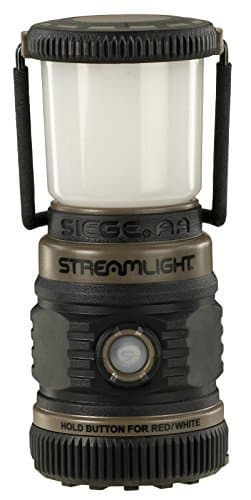
| Setting | Output | Published runtime | What it is for |
|---|
| High | 200 lumens | 7 hours | Working on something, briefly |
|---|
| Medium | 100 lumens | 15.5 hours | A kitchen table for an evening |
|---|
| Low | 50 lumens | 37 hours | Ambient room light — the setting you should live on |
|---|
| Red | 0.7 lumens | 192 hours | Overnight marker, preserves night vision |
|---|
| Red SOS | 0.7 lumens | 288 hours | Signaling |
|---|
Streamlight's published figures for the Siege AA. The pattern — quartering the output roughly quintuples the runtime — holds across the category, which is why the low setting is the one that decides whether a lantern covers a multi-day outage.
Never candles
This is the one hard rule on the page. Candle use spikes during outages and so do house fires, and the mechanism is always the same: a candle near something flammable, in a dark house, with a household that has stopped watching it because the outage has become normal.
An LED lantern costs less than a month of candles, produces more usable light, cannot be knocked over into a curtain, and does not consume oxygen in a house that may already be sealed up against cold.
The same reasoning applies to fuel lanterns indoors. Anything that burns produces carbon monoxide, which is the hazard the alarms on this site exist for.
How many, and where
One lantern is a mistake people make once. The right answer is several cheap ones rather than one expensive one, placed before you need them:
- One per occupied room. Carrying a single light around means every other room is dark, including the stairs.
- One at the top and bottom of the stairs. Falls are the most common outage injury and stairs are where they happen.
- A headlamp each. Hands free beats hand held for anything you actually need to do, and it costs almost nothing.
- One in each vehicle. Different failure, same solution.
- Somewhere findable in the dark. A drawer you can open by feel, not the back of a closet.
Battery format is a strategy decision
| Replaceable AA / AAA | Built-in rechargeable |
|---|
| Multi-day outage | Better — swap cells and keep going | Needs a recharge source |
|---|
| Storage for years | Cells leak — store them outside the light | Self-discharges slowly; top up twice a year |
|---|
| Running cost | Ongoing | Effectively nil |
|---|
| Also charges a phone | No | Often yes |
|---|
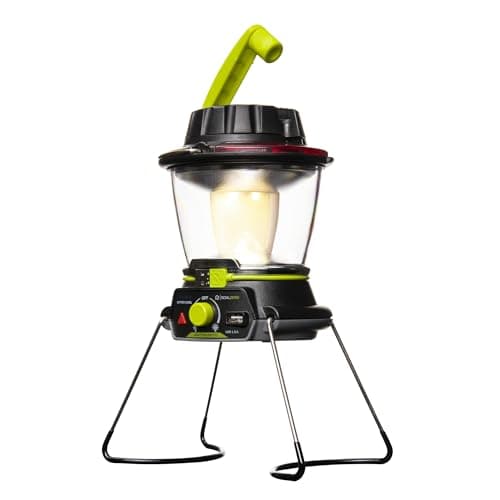
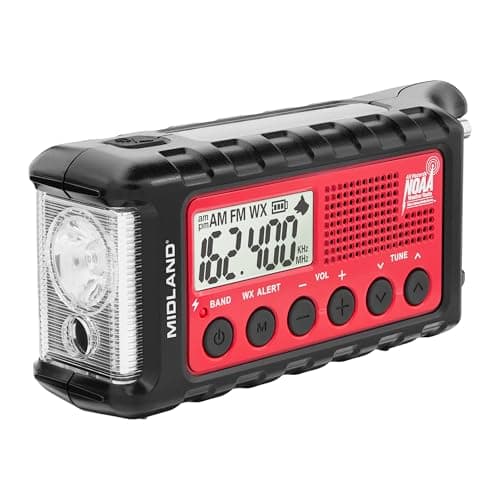
The strongest household setup is both: replaceable-cell lanterns as the base, and one rechargeable unit with a crank as the thing that cannot run out. Standardizing on AA rather than mixing AA, AAA, C and D is worth more than any individual product choice.
If you own a power station
Then lighting is nearly free. A few LED bulbs or a strip light on a battery draw perhaps 30 to 60 watts total — a rounding error against a kilowatt-hour, and it lights whole rooms properly rather than in pools.
Keep the lanterns anyway. They are what works in the first ten minutes before anything is set up, in the rooms the extension cords do not reach, and on the night the battery is empty. The home backup comparison covers the larger purchase.
What we deliberately left out
- Anything rated only in "super bright" marketing lumens with no runtime table. If a manufacturer will not publish hours at each level, that is the answer.
- Solar-only lanterns. Useful in summer camping, a poor bet in a winter storm where you get four hours of thick overcast.
- Fuel lanterns for indoor use. Combustion indoors is the thing this whole category exists to avoid.
The full accessory list ranks lighting against the rest of the kit.