Skip to content
Watt Warden

Accessories

The Best Surge Protectors for Generators (2026)

The surge you should worry about is not from the generator. It is the one that arrives when utility power returns, into a house full of equipment nobody unplugged.

By Sawyer V.Updated Published How we work this out
A power strip with plugs on a floor.

Watt & Warden earns a commission on qualifying purchases made through links on this page, at no extra cost to you. It never changes a ranking, and our picks include products we tell you to skip. Full disclosure.

Quick picks

#ProductBest forPrice
1
No photo

Best for a generator feed

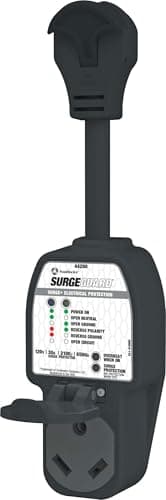
Southwire Surge Guard 44280 portable surge protector

30A, 120V, 2,100 joules, with fault display for reverse polarity, open ground and open neutral.

Reading the supply before your equipment does
2
No photo

Best for sensitive electronics

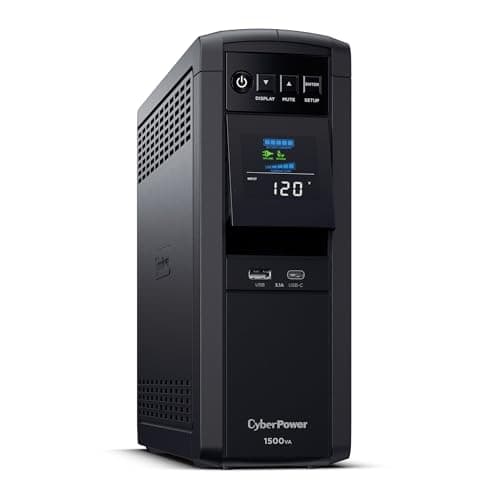
CyberPower CP1500PFCLCD

1,500VA / 1,000W of pure-sine backup with automatic voltage regulation.

A desktop, a NAS, a recorder
3
No photo

Clean power at the source

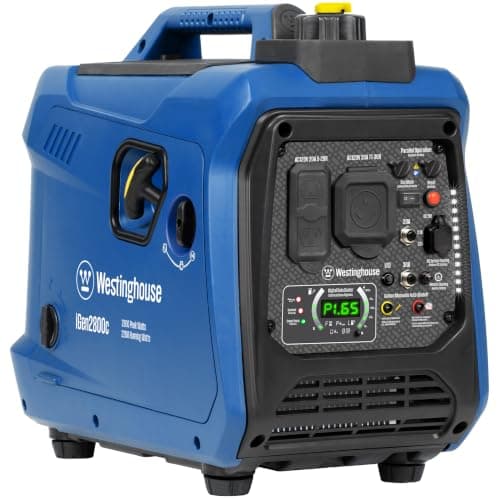
Westinghouse iGen2200

1,800 running watts at as low as 52 dBA, with less than 3% total harmonic distortion.

Avoiding the problem rather than filtering it
4
No photo

Prevents the worst transient

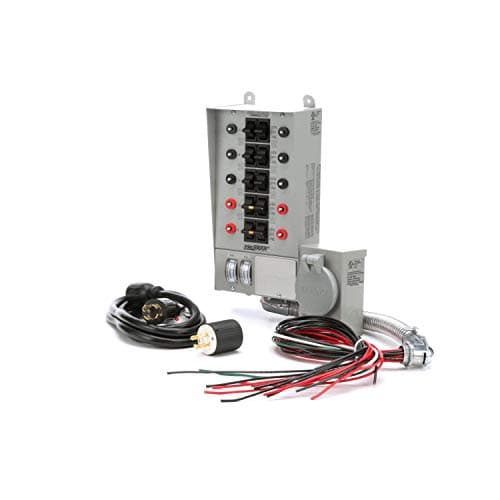
Reliance Controls 31410CRK Pro/Tran

A 10-circuit manual transfer switch with break-before-make double-throw switching.

A safe changeover in both directions

Prices come from the retailer at page-build time and change constantly. Where no live price is available the button reads “Check price” rather than showing a number we cannot stand behind.

Generator power is not utility power

Three ways it differs, and only one of them is a surge.

1. Voltage sags and overshoots. When a large motor starts, a generator's output dips until the governor catches up; when the load drops away, it overshoots briefly. Utility supply has enormous inertia behind it and does neither to any meaningful degree.

2. Waveform quality varies. A conventional generator produces AC directly from a spinning alternator, and the result can be far from a clean sine wave. An inverter synthesizes it electronically and publishes a distortion figure — the architecture comparison covers why.

3. The wiring is temporary. Cords, inlet boxes and adapters that spend most of the year in a garage, assembled in the dark by someone who is cold. This is where open grounds and reversed polarity actually come from.

Diagnostics matter more than joules

A household surge strip is designed for one job: clamping a voltage spike arriving on a properly wired circuit. Its joule rating describes how much energy it can absorb before it stops protecting.

On a generator feed, the more likely problem is a wiring fault, and a joule rating says nothing about that.

FaultWhat it meansConsequence
Open groundNo grounding conductor continuityAn appliance fault energizes the casing instead of tripping a breaker
Reverse polarityHot and neutral swappedEquipment energized where it should be neutral, even switched off
Open neutralNo neutral return pathVoltage imbalance across legs — can destroy 120V equipment
Low or high voltageSupply out of rangeMotors overheat; electronics behave unpredictably

None of these is a surge, and none is detected by a surge strip. The first is the reason cords and adapters matter more than ground rods — a broken ground path is invisible until it matters.

The surge that actually causes damage

Here is the part most people have backwards.

The risky moment is not while the generator runs. It is when utility power returns — into a house where everything got switched on during the outage, where the supply may stabilize over several seconds, and where restoration switching upstream can produce genuine transients.

Which produces the most valuable advice on this page, and it costs nothing:

  • Unplug sensitive electronics at the start of an outage, not the end. TVs, computers, anything with a control board.
  • Leave one lamp on so you know when power returns.
  • Bring things back gradually once the supply has been steady for a few minutes.
  • Reverse the transfer switch sequence deliberately — circuits back to LINE one at a time rather than all at once.

What outages actually do to appliances covers the mechanisms in detail.

What to protect, and with what

EquipmentWhat it needs
Whole generator feedA diagnostic surge protector between the machine and the load
Desktop, NAS, recorderA UPS with automatic voltage regulation
TV and audioA quality surge strip, or unplug them
Fridge, freezer, furnaceNothing special — motors tolerate this better than electronics, though modern control boards are less forgiving than they were
Tool battery chargersClean waveform above all — this is an inverter-generator argument
Anything on a power stationAlready protected — the inverter output is regulated and clean

That last row is worth noticing. A power station's output does not sag when a motor starts and does not overshoot when it stops — it is electronically regulated by design. Running sensitive equipment from a battery rather than directly from a generator sidesteps most of this page.

What surge protection does not do

  • It does not fix a dirty waveform. A surge protector clamps spikes; it does not reshape a distorted sine wave. That is a generator specification, not an accessory.
  • It does not protect against a direct lightning strike. Nothing at this price does. Unplugging does.
  • It does not last forever. Surge protectors degrade with each event absorbed, and many keep passing power after they have stopped protecting. Units with a protection-status indicator are worth preferring, and any strip that has taken a big hit should be replaced.
  • It does not replace grounding. Most surge protection works by diverting energy to ground, so on a circuit with an open ground it may not function at all — which is exactly why the diagnostics matter.

Where to spend, in order

  1. An inverter generator, if you are still buying. Clean power at the source beats filtering it afterwards, and the published THD figure is the specification to compare.
  2. A UPS on anything that must not blink. It handles voltage regulation and the transfer gap together.
  3. A diagnostic surge protector on the generator feed, if you are running a house or a job site through temporary wiring.
  4. Unplugging. Free, and more effective than anything above for the return-of-power transient.

The full accessory list puts this in order against everything else — and it sits below a carbon monoxide alarm, a cord and a cover, which are all more consequential.
The picks in full

01Best for a generator feed

Southwire Surge Guard 44280 portable surge protector

30A, 120V, 2,100 joules, with fault display for reverse polarity, open ground and open neutral.

The diagnostics matter more than the joule rating here, and that is the argument for this class of product over a household surge strip.

Reverse polarity, open ground and open neutral are exactly the faults a temporary supply produces — a damaged cord, a miswired inlet, a worn outlet — and they are invisible without something that reads them. An open ground in particular removes the protection that turns an appliance fault into a tripped breaker rather than a shock.

2,100 joules of surge protection between a generator and a few thousand dollars of electronics is cheap insurance.

Skip it ifeverything you plug in is cheap and easily replaced. It protects the load, not the machine.

Published specifications for the Southwire Surge Guard 44280 portable surge protector
SpecificationPublished figure
Rating30 A, 120 V
Surge protection2,100 joules
DiagnosticsFault display for reverse polarity, open ground and open neutral
UseBetween a generator or pedestal and the load
FormPortable, weather-resistant housing

Source: Southwire — Surge Guard 44280 listing. These are the manufacturer's published figures, not ours — we have not tested this unit.

02Best for sensitive electronics

CyberPower CP1500PFCLCD

1,500VA / 1,000W of pure-sine backup with automatic voltage regulation.

Automatic voltage regulation is the feature that matters on generator power specifically. A generator's output sags when a large load starts and overshoots slightly when it stops, and AVR corrects both continuously rather than only during an outage.

It also bridges the moment you switch from generator back to utility, which is when the worst transients occur.

Skip it ifyou only need protection rather than backup — a surge strip is cheaper.

Published specifications for the CyberPower CP1500PFCLCD
SpecificationPublished figure
Capacity1,500 VA / 1,000 W
WaveformPure sine wave (PFC compatible)
Outlets12 NEMA 5-15R — 6 battery-backed, 6 surge-only
RegulationAutomatic voltage regulation (AVR)
Run timeabout 10 min at half load, 2.5 min at full load
Warranty3 years including the battery

Source: CyberPower — CP1500PFCLCD product specifications. These are the manufacturer's published figures, not ours — we have not tested this unit.

03Clean power at the source

Westinghouse iGen2200

1,800 running watts at as low as 52 dBA, with less than 3% total harmonic distortion.

The best protection is not needing it. An inverter generator synthesizes a clean sine wave electronically and publishes its total harmonic distortion — under 3% here — where a cheap conventional machine publishes nothing and can produce a waveform that damages switch-mode supplies.

Buying clean power costs less than replacing what dirty power destroys.

Skip it ifyou need house-sized output on a budget.

Published specifications for the Westinghouse iGen2200
SpecificationPublished figure
Output1,800 running W / 2,200 peak W
Noiseas low as 52 dBA
Weight46 lb
Tank1.2 gal
Run timeup to 12 h
WaveformLess than 3% THD
ParallelCapable with a second unit

Source: Westinghouse — iGen2200 published specifications. These are the manufacturer's published figures, not ours — we have not tested this unit.

04Prevents the worst transient

Reliance Controls 31410CRK Pro/Tran

A 10-circuit manual transfer switch with break-before-make double-throw switching.

Break-before-make matters for equipment as well as for lineworkers. A switch that momentarily bridged both sources would produce a genuinely destructive transient; one that opens before it closes cannot.

It also gives you a controlled changeover when utility power returns, rather than a house full of equipment being re-energized all at once.

Skip it ifeverything you power has a plug.

Published specifications for the Reliance Controls 31410CRK Pro/Tran
SpecificationPublished figure
Circuits10 — six 15 A and four 20 A single-pole breakers
Rating30 A, up to 7,500 W
MeteringTwo watt meters for balancing the load
SwitchingBreak-before-make double-throw, Line / Off / Gen
BackfeedMechanically prevented — the grid cannot be energized
InstallationLicensed electrician; a permit is usually required

Source: Reliance Controls — Pro/Tran 31410CRK product page. These are the manufacturer's published figures, not ours — we have not tested this unit.

How these were chosen

We did not test these. Nobody at Watt & Warden has plugged one in. What we did instead: read the manufacturer's published specifications, compile them into a table where the figures line up, and compute the numbers manufacturers leave out — runtime against a real appliance load, and what an hour of running actually costs.

Anything that could not be sourced was left out rather than estimated, and every pick names the buyer who should skip it. The full method is here, including where it is weaker than a publisher with a test bench.

Questions people actually ask

Do I need a surge protector for a generator?

For a house or job site feed running through temporary wiring, a diagnostic one is worth having -- but for the fault detection rather than the joule rating. Open ground, reverse polarity and open neutral are what temporary wiring actually produces, and a plain surge strip detects none of them.

Can a generator damage electronics?

A conventional generator with a poor waveform can damage switch-mode power supplies in laptops, TVs and appliance control boards. Voltage sags when large motors start and overshoots when they stop are the other mechanism. An inverter generator publishing a low total harmonic distortion figure avoids most of it.

When is the surge risk highest during an outage?

When utility power returns, not while the generator runs -- into a house where everything got switched on during the outage, with a supply that may stabilize over several seconds and restoration switching upstream. Unplug sensitive electronics at the start of an outage rather than the end.

What does an open ground mean and why does it matter?

No continuity in the grounding conductor -- usually a damaged cord, a cut ground pin or a miswired inlet. It matters because it removes the low-impedance path that turns an appliance fault into a tripped breaker; without it, the current path can be you. It is also invisible without something that reads it.

Do surge protectors wear out?

Yes. They degrade with each event absorbed, and many keep passing power after they have stopped protecting -- so a strip that has taken a big hit should be replaced whether or not it still works. Prefer units with a protection-status indicator, and note that most need an intact ground to function at all.

Sources

Every figure on this page comes from a published source. We have not tested this equipment, so the specifications are the manufacturer's and the statistics are the dataset's — the arithmetic on top of them is ours, and it is shown in full so you can check it. How we work this out.