Skip to content
Watt Warden

Solar

Solar Generator vs Power Station: Are They the Same Thing?

Almost the same thing, and the difference is a bundle rather than a technology. Knowing that saves you from paying for a panel you do not need, or buying a battery that cannot take one.

By Sawyer V.Updated Published How we work this out
Battery packs arranged side by side for comparison.

Watt & Warden earns a commission on qualifying purchases made through links on this page, at no extra cost to you. It never changes a ranking, and our picks include products we tell you to skip. Full disclosure.

Quick picks

#ProductBest forPrice
1
No photo

The power station side

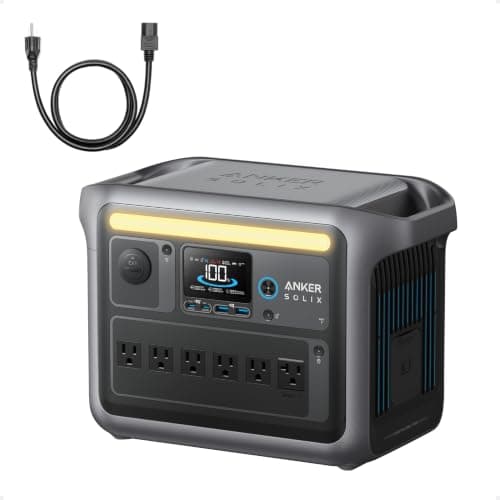
Anker SOLIX C1000

1,056Wh and 1,800W with 600W of solar input — bought as a battery, panel-ready when you want one.

Buying the battery on its own merits
2
No photo

The solar half, bought separately

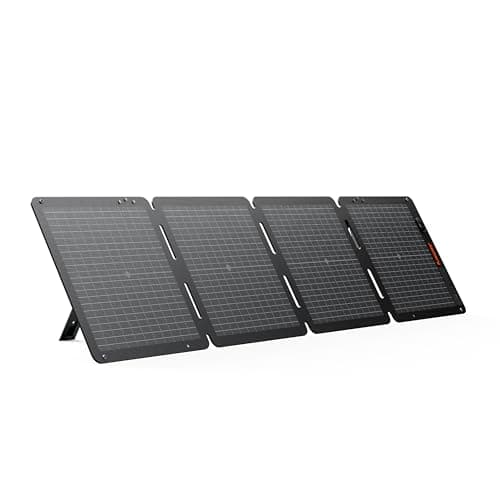
Jackery SolarSaga 100W

100W bifacial, IP68, 4.52 lb — roughly 400–500Wh of harvest across a good summer day.

Adding a recharge path when you decide you need one
3
No photo

When the bundle genuinely wins

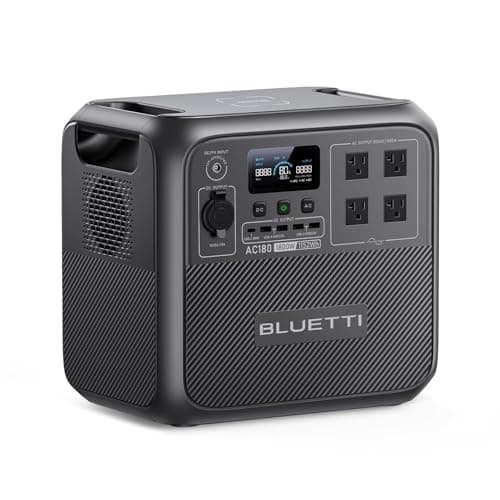
BLUETTI AC180

1,152Wh and 1,800W with 500W solar input — sold both bare and bundled.

Buying both at once without the compatibility question

Prices come from the retailer at page-build time and change constantly. Where no live price is available the button reads “Check price” rather than showing a number we cannot stand behind.

The short answer

They are the same device. A “solar generator” is a portable power station — a lithium battery with an inverter and a charge controller — sold in a box with one or more folding solar panels.

Nothing is generated. The panel recharges the battery; the battery does every bit of the work. If you take the panels away, you have a power station. If you buy panels for a power station, you have a solar generator.

Why the name exists at all

“Generator” is the word people search for when their power goes out, and “solar” signals quiet, clean and fuelless. The combination is a search-and-marketing artifact rather than a description of a different technology.

It is not dishonest exactly — the bundle is a real product you can buy — but it does obscure the thing that matters: you are evaluating two components with completely different jobs, and they should be judged separately.

What actually differs between the two listings

PropertyPower station“Solar generator”
The battery and inverterThe productIdentical unit
Solar input capabilityPresent on essentially all modern unitsIdentical
Panels in the boxNoYes, one or more
Compatibility already settledYou check the input rangeManufacturer has matched them
PriceLowerHigher, by roughly the panels
What decides whether it runs your fridgeThe inverter, in both cases. The panels are irrelevant to this.

Both columns describe the same hardware. Compare bundles by pricing the bare station and the panels separately and checking whether the bundle actually saves anything — sometimes it does, sometimes it is the same money for a smaller panel than you would have chosen.

How to buy, knowing this

Choose the battery first, on its own merits. Capacity in watt-hours, inverter output in watts, surge headroom, cycle life and its endpoint, weight, charge speed. This decides whether the thing runs your refrigerator — Champion's published starting range for a domestic fridge is 800–1,200W, and no panel changes that. The battery comparison.

Then decide whether you need panels at all. The answer is set by outage length, not by preference: for a four-hour outage the battery never empties and the panel contributes nothing. The case both ways.

If you do want panels, check the input range. The station publishes a maximum solar input in watts and an accepted voltage window. Panels have to fall inside it, and the connector has to match or adapt. This is the single question a bundle answers for you, and it is a legitimate reason to buy one.

When the bundle is the better buy

  • You want both and do not want to check specifications. Compatibility is pre-solved. That is worth a modest premium.
  • The bundle price is genuinely lower than the two parts separately. Sometimes it is. Price both before assuming.
  • You already know your outages are long. If you are certain you need the recharge path, buying it once is simpler.

When to buy them separately

  • You are not sure you need panels. Buy the battery, get through one real outage, then decide with evidence.
  • You want more panel than the bundle includes. Bundles commonly pair a large battery with a single 100W panel, which is a top-up rather than a refill. Refilling a 1,000Wh station in a day needs more like 200–300W.
  • You already own compatible panels from another purchase.

The thing neither name tells you

Neither a power station nor a solar generator runs a house. Both are capped by the inverter — 300W at the small end, about 2,600W at the large end — which excludes central air conditioning, an electric range and an electric water heater at 3,000–4,500W on Champion's published figures.

If those are on your list, the honest answer is a generator or a standby installation, and no amount of solar changes it. Generator versus power station and the whole-home scenario deal with that properly.

The picks in full

01The power station side

Anker SOLIX C1000

1,056Wh and 1,800W with 600W of solar input — bought as a battery, panel-ready when you want one.

Bought as a bare station, this is judged on the specifications that do the work: capacity, inverter output, surge headroom, cycle life and charge speed.

The 600W solar input is the number that matters for the other half — it is the ceiling on how fast any array can refill it, and it is the highest here.

Skip it ifyou want a bundle and do not intend to compare the parts. A bundle is fine if you have checked what is in it.

Published specifications for the Anker SOLIX C1000
SpecificationPublished figure
Usable capacity1,056 Wh
Cell chemistryLiFePO4 (LFP)
AC output1,800 W continuous / 2,400 W SurgePad
Cycle life3,000 cycles
Wall recharge80% in 43 min, full in 58 min
Max solar input600 W (full solar recharge ~1.8 h)
Ports11 total, including 6 AC on panel-equipped bundles

Source: Anker — SOLIX C1000 product specifications. These are the manufacturer's published figures, not ours — we have not tested this unit.

02The solar half, bought separately

Jackery SolarSaga 100W

100W bifacial, IP68, 4.52 lb — roughly 400–500Wh of harvest across a good summer day.

A panel bought later, once a real outage has told you whether the battery empties, is a better-informed purchase than a panel bundled in on day one.

Check the compatibility before buying across brands: voltage and current must fall inside the station's charge controller range.

Skip it ifyour outages are hours. There is nothing for it to refill, and the money buys nothing.

Published specifications for the Jackery SolarSaga 100W
SpecificationPublished figure
Rated output100 W
Cell typeMonocrystalline, bifacial
Conversion efficiencyup to 25%
Ingress ratingIP68
Weight4.52 lb
CompatibilityJackery Explorer stations

Source: Jackery — SolarSaga 100W product specifications. These are the manufacturer's published figures, not ours — we have not tested this unit.

03When the bundle genuinely wins

BLUETTI AC180

1,152Wh and 1,800W with 500W solar input — sold both bare and bundled.

The honest case for a bundle: the manufacturer has already answered the compatibility question, the connector fits, and the input range matches. For a buyer who does not want to check voltage windows, that is worth something real.

Skip it ifyou already own compatible panels. Then the bundle premium buys you a second set.

Published specifications for the BLUETTI AC180
SpecificationPublished figure
Usable capacity1,152 Wh (32 V, 36 Ah)
Cell chemistryLiFePO4 (LFP)
AC output1,800 W continuous / 2,700 W surge, 4 outlets
Cycle life3,500+ cycles to 80% capacity
Weight35.3 lb
Fast charge0–80% in 45 min
Max solar input500 W
Warranty5 years on registration

Source: BLUETTI — AC180 product specifications. These are the manufacturer's published figures, not ours — we have not tested this unit.

How these were chosen

We did not test these. Nobody at Watt & Warden has plugged one in. What we did instead: read the manufacturer's published specifications, compile them into a table where the figures line up, and compute the numbers manufacturers leave out — runtime against a real appliance load, and what an hour of running actually costs.

Anything that could not be sourced was left out rather than estimated, and every pick names the buyer who should skip it. The full method is here, including where it is weaker than a publisher with a test bench.

Questions people actually ask

Is a solar generator the same as a power station?

Yes. A solar generator is a portable power station sold in a bundle with one or more folding solar panels. The battery and inverter are identical hardware; nothing is generated, and the panel only recharges the battery.

Do I need to buy the solar bundle?

Only if your outages outlast the battery. For a short outage the battery never empties, so the panel contributes nothing you needed. Buying the station alone and adding panels later, after a real outage has told you whether it emptied, is usually the better-informed purchase.

Can I add solar panels to a power station later?

Almost always -- modern stations have a solar input. Check the published maximum input in watts and the accepted voltage window, and make sure the connector matches or adapts. That compatibility check is the one thing a bundle genuinely does for you.

Is a bundle cheaper than buying separately?

Sometimes, and sometimes it is the same money for a smaller panel than you would have chosen. Price the bare station and the panels separately before assuming the bundle saves anything -- bundles commonly pair a large battery with a single 100W panel, which is a top-up rather than a refill.

Sources

Every figure on this page comes from a published source. We have not tested this equipment, so the specifications are the manufacturer's and the statistics are the dataset's — the arithmetic on top of them is ours, and it is shown in full so you can check it. How we work this out.