The problem, in one comparison
Three products, three different units, no obvious way to rank them:
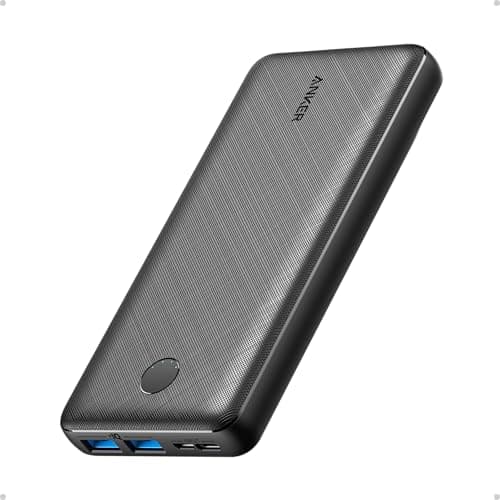
- A power bank rated 20,000 mAh
- A deep-cycle battery rated 100 Ah
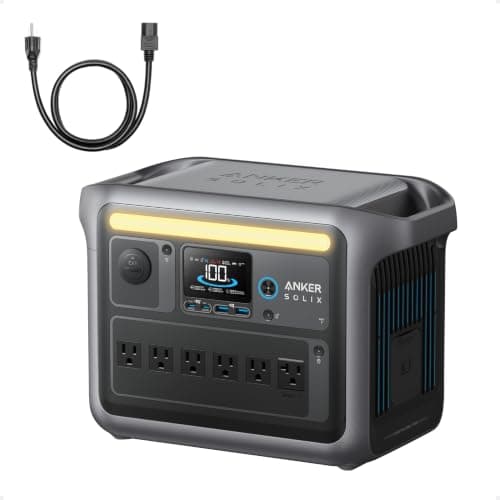
- A power station rated 1,056 Wh
Which holds the most energy? It is genuinely not obvious, and the answer is not the one most people guess.
What each unit actually measures
An amp-hour is a quantity of charge, not a quantity of energy. It tells you how much current a battery can supply for how long — 100Ah means 100 amps for an hour, or 5 amps for 20 hours.
But amps alone do not tell you how much work you can do, because the same current at a higher voltage carries more energy. A charge rating without a voltage is an incomplete specification.
A watt-hour is a quantity of energy. It already accounts for voltage, which is why it is directly comparable across any product at any voltage. This is the unit you want.
The conversion
One multiplication:
Watt-hours = amp-hours × volts
And for milliamp-hours, which is what small devices use:
Watt-hours = milliamp-hours ÷ 1,000 × volts
The only difficulty is knowing which voltage to use, and the answer is the nominal voltage of the cells themselves rather than the output voltage of any socket.
| Product | Nominal cell voltage | Why |
|---|
| USB power bank | 3.6 or 3.7 V | A single lithium cell, or cells in parallel |
|---|
| 12V lead-acid or LiFePO4 battery | 12 V nominal | Six lead cells, or four LiFePO4 cells in series |
|---|
| 24V battery bank | 24 V nominal | Two 12V batteries in series |
|---|
| Power station | Already stated in Wh | No conversion needed — this is why they are easy |
|---|
Nominal voltages are the conventional figures for each chemistry. Real voltage varies with state of charge — a 12V lead-acid battery sits nearer 12.7V full and 11.8V discharged — which is one reason a converted figure is an approximation rather than an exact value.
The three products, converted
| Product | Rating | In watt-hours |
|---|
| Power bank | 20,000 mAh at 3.6 V | ~72 Wh |
|---|
| Deep-cycle battery | 100 Ah at 12 V | ~1,200 Wh |
|---|
| Power station | Stated directly | 1,056 Wh |
|---|
Now they are comparable. The deep-cycle battery holds slightly more than the power station and roughly seventeen times what the power bank does — which is not what the raw numbers suggested.
Two deductions the raw figures hide
Converted watt-hours are still not usable watt-hours, and two adjustments matter.
1. Depth of discharge. A lead-acid battery should not be taken below about 50% state of charge without shortening its life dramatically. So a 100Ah lead-acid battery offers roughly 600Wh of usable energy, not 1,200.
LiFePO4 tolerates much deeper discharge, which is why a 100Ah LiFePO4 battery is genuinely a different product from a 100Ah lead-acid one at the same nominal rating.
2. Conversion losses. Turning DC into AC costs energy. This site uses 85% inverter efficiency as its stated planning assumption, listed on the methodology page.
Apply both and the deep-cycle example delivers around 510Wh to an AC appliance — less than half its nameplate figure, and less than the power station whose rating already reflects usable capacity.
That is the real reason power stations and bare batteries are hard to compare: they are quoting different things.
Why 24V systems exist
The conversion also explains a design choice that otherwise looks arbitrary.
Power equals volts times amps. So delivering 1,200W at 12V takes 100 amps, and at 24V it takes 50. Halving the current means:
- Thinner cable for the same loss, which is a real cost saving on a large installation.
- Less voltage drop over long runs.
- Smaller fuses and connectors.
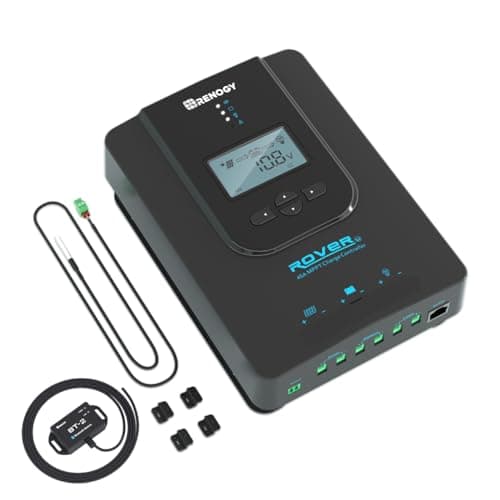
- More array on the same charge controller — the Renogy Rover 40A takes 520W at 12V and 1,040W at 24V for exactly this reason.
Which is why cabins and larger off-grid systems move to 24V or 48V while RVs and boats mostly stay at 12V. The charge controller page covers the consequence.
Practical rules
- Convert everything to watt-hours before comparing anything. It is one multiplication and it makes the category legible.
- Distrust an Ah or mAh figure with no voltage stated. It is an incomplete specification, whether or not that is deliberate.
- Halve a lead-acid figure for usable capacity.
- Take 15% off for the inverter when the load is AC.
- Prefer manufacturers who publish real-world figures — charge counts, runtimes at a stated load — over those who publish only the largest available number.
With everything in watt-hours, sizing a battery becomes arithmetic rather than guesswork.