Skip to content
Watt Warden

Outage Prep

Backup Power for an Aquarium

The instinct is to keep everything running. The fish need one thing urgently, one thing eventually, and nothing else at all - which turns a large load into a small one.

By Sawyer V.Updated Published How we work this out
A home aquarium fish tank lit softly.

Watt & Warden earns a commission on qualifying purchases made through links on this page, at no extra cost to you. It never changes a ranking, and our picks include products we tell you to skip. Full disclosure.

The priority order

Getting this right is what turns an apparently large problem into a small one. Not everything in an aquarium matters equally when the power stops.

  1. Oxygen — urgent. Without water movement, gas exchange at the surface effectively stops, and dissolved oxygen falls. This is the fastest-acting threat, and it is met by the smallest load in the whole system.
  2. Temperature — important, but slower. A body of water has enormous thermal mass. A tank cools over hours, not minutes.
  3. Biological filtration — matters over hours to days. The bacteria in a filter need oxygenated water flowing through the media, and they begin to die back without it.
  4. Lighting — irrelevant. Fish are fine in the dark. In a planted tank, plants stop photosynthesizing, which reduces oxygen production but also reduces demand. Leave the lights off.

Most people, faced with an outage, plug in the light first because it is the thing they can see. It is the one component that should stay off.

Oxygen is the cheap emergency

A battery-operated or mains air pump running an airstone costs a handful of watts and does the single most important job.

The mechanism worth understanding: it is not the bubbles themselves that oxygenate the water — it is the surface agitation they cause. Gas exchange happens at the water surface, and a still surface exchanges very little.

Which means a couple of free measures also help:

  • Lower the water level slightly so any returning filter flow splashes rather than flows smoothly.
  • Stir the surface by hand periodically. Crude, free, and genuinely effective in a pinch.
  • Stop feeding. Uneaten food decomposes and consumes oxygen, and fish are fine for days without eating. This is the single most useful thing you can do for free.
  • Do not disturb the substrate. Releasing trapped gas into a low-oxygen tank makes things worse.

Temperature: slower than you think, and manageable

Water's thermal mass is the aquarist's ally here. A reasonably sized tank in a heated house loses temperature slowly, and most fish tolerate a gradual drop of a few degrees far better than a rapid change.

The measures, in order of value:

  • Insulate the tank. Blankets or towels around the sides and over the top. Free, and it slows the loss substantially.
  • Heat the room instead of the tank, if you have any heating at all. The tank follows the room.
  • Run the heater in bursts from a battery. An aquarium heater is typically 50 to 300W depending on tank size — expensive to run continuously on a battery, affordable in short cycles.
  • Do not add hot water directly. Rapid change is worse than gradual cooling, and tap water needs conditioning.

The load arithmetic follows the same logic as block-running a fridge: heat the mass, switch off, let it coast.

What it all draws

ComponentTypical drawPriority
Air pump2-8 WFirst — days from any battery
Filter, hang-on or canister5-30 WThird
Powerhead or circulation pump5-25 WAlternative to an air pump
Heater50-300 W, cyclingSecond — the load that decides your battery
Lighting10-100 WLeave it off
Protein skimmer, marine10-40 WUseful on a reef tank; not urgent

Working estimates from typical aquarium equipment ratings rather than manufacturer measurements — the ranges are wide because tank size drives everything. Your own equipment's labels are the figures to use.

A pump and a filter together is under 40W, which any battery covers for days. The heater is the only component that changes the size of the purchase.

Marine and reef tanks are harder

Worth being honest that this page is written mainly for freshwater.

A reef tank has more demanding requirements: higher circulation, tighter temperature tolerance, and livestock that is both less forgiving and considerably more valuable. Corals in particular tolerate less variation than most fish.

Practically that means:

  • Circulation matters more, and a battery-backed powerhead is worth having rather than just an air pump.
  • Temperature tolerance is narrower, so insulation and burst heating matter more.
  • The value at risk is higher, which changes the equipment budget calculation entirely.

A reef keeper should size for the real load rather than the minimum, and the kilowatt-hour tier is the sensible starting point rather than the ceiling.

The plan

  1. Keep an air pump and airstone for the tank, permanently, with spare tubing. It is the cheapest insurance in the hobby.
  2. Put it on a UPS, which covers every short outage automatically without you being home.
  3. Have a battery for longer events, sized on the heater rather than the pump.
  4. Insulate first, heat second. Blankets are free and they reduce how much heating you need to buy.
  5. Stop feeding as soon as the power goes.
  6. Leave the lights off throughout.

Done that way, an aquarium is one of the smaller backup loads in a house rather than one of the larger ones — and the same battery that covers it covers the fridge, which is the purchase that actually makes sense. Sizing it properly works both together.

Quick picks

#ProductBest forPrice
1
No photo

For a small tank, cheaply

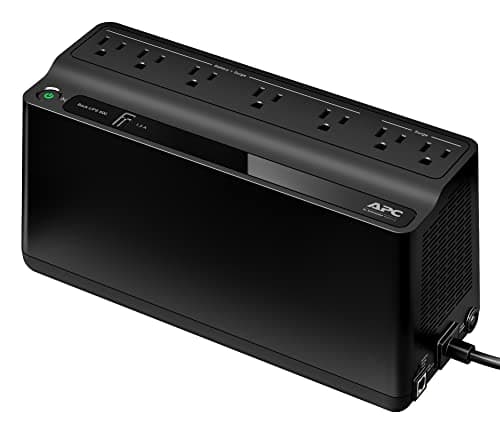
APC Back-UPS BE600M1

600VA / 330W with about 23 minutes at 100W — far longer at an air pump's few watts.

An air pump through a short outage
2
No photo

Best small station for a tank

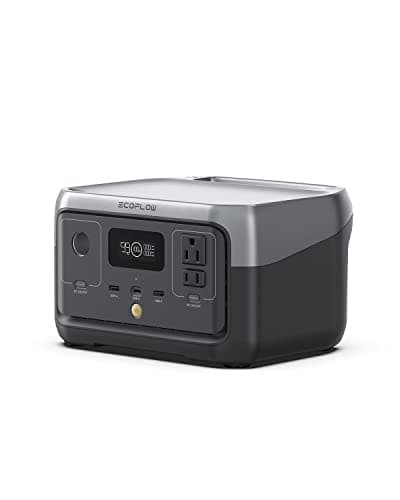
EcoFlow RIVER 2

256Wh, 7.7 lb, 300W continuous with 600W X-Boost, and a full recharge in about an hour.

A pump and a heater in bursts, overnight
3
No photo

For a large or heavily stocked tank

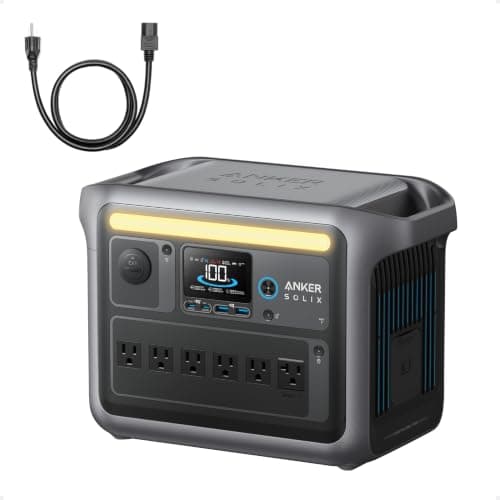
Anker SOLIX C1000

1,056Wh of LiFePO4 with 1,800W output and a fast recharge.

Heating and circulation for a day

Prices come from the retailer at page-build time and change constantly. Where no live price is available the button reads “Check price” rather than showing a number we cannot stand behind.

The picks in full

01For a small tank, cheaply

APC Back-UPS BE600M1

600VA / 330W with about 23 minutes at 100W — far longer at an air pump's few watts.

An air pump draws a handful of watts, so a small UPS runs one for far longer than its rating implies. For the short outages that make up most of what households experience, that alone solves the problem.

The 6-10 ms transfer time is incidental here — fish do not mind a flicker — but it means the same unit protects a router.

Skip it ifyou have a heated tropical tank and outages that run for hours.

Published specifications for the APC Back-UPS BE600M1
SpecificationPublished figure
Capacity600 VA / 330 W
Outlets7 total — 5 battery-backed, 2 surge-only
Run timeabout 23 min at a 100 W load
Transfer time6–10 ms typical
Battery life3–5 years depending on use
ExtrasUSB charging port

Source: APC — Back-UPS BE600M1 product specifications. These are the manufacturer's published figures, not ours — we have not tested this unit.

02Best small station for a tank

EcoFlow RIVER 2

256Wh, 7.7 lb, 300W continuous with 600W X-Boost, and a full recharge in about an hour.

256Wh runs an air pump for days. Where it earns its place is the heater: 300W of continuous output covers a typical aquarium heater, and you run it in short bursts rather than continuously.

The one-hour recharge means a brief return of power refills it entirely, which for a multi-day outage matters more than capacity.

Skip it ifyou have a large heated tank. Then go up a tier.

Published specifications for the EcoFlow RIVER 2
SpecificationPublished figure
Capacity256 Wh
Output300 W continuous, 600 W X-Boost
ChemistryLiFePO4, 3,000+ cycles to 80%
AC recharge0–100% in about 1 hour
Weight7.7 lb
Solar inputup to 110 W

Source: EcoFlow — RIVER 2 published specifications. These are the manufacturer's published figures, not ours — we have not tested this unit.

03For a large or heavily stocked tank

Anker SOLIX C1000

1,056Wh of LiFePO4 with 1,800W output and a fast recharge.

Heating is the load that scales, and a large tropical tank in a cold house is the case where a kilowatt-hour stops being overkill.

The same unit covers the fridge, which is the honest reason to buy at this tier rather than a tank-specific one.

Skip it ifyour tank is small and unheated. A UPS does that for a fraction of the cost.

Published specifications for the Anker SOLIX C1000
SpecificationPublished figure
Usable capacity1,056 Wh
Cell chemistryLiFePO4 (LFP)
AC output1,800 W continuous / 2,400 W SurgePad
Cycle life3,000 cycles
Wall recharge80% in 43 min, full in 58 min
Max solar input600 W (full solar recharge ~1.8 h)
Ports11 total, including 6 AC on panel-equipped bundles

Source: Anker — SOLIX C1000 product specifications. These are the manufacturer's published figures, not ours — we have not tested this unit.

How these were chosen

We did not test these. Nobody at Watt & Warden has plugged one in. What we did instead: read the manufacturer's published specifications, compile them into a table where the figures line up, and compute the numbers manufacturers leave out — runtime against a real appliance load, and what an hour of running actually costs.

Anything that could not be sourced was left out rather than estimated, and every pick names the buyer who should skip it. The full method is here, including where it is weaker than a publisher with a test bench.

Questions people actually ask

What does a fish tank need most in a power outage?

Oxygen, urgently. Without water movement, gas exchange at the surface effectively stops and dissolved oxygen falls -- and it is met by the smallest load in the system, an air pump drawing a handful of watts. Temperature comes second, filtration third, and lighting not at all.

How long can fish survive without a filter?

Longer than most people fear, provided the water is oxygenated. The urgent problem is oxygen rather than filtration -- the bacteria in the filter media begin to die back over hours to days without oxygenated flow, which is a slower problem you can address once the pump is running.

Should I keep the aquarium light on during an outage?

No -- it is the one component that should stay off. Fish are fine in the dark. In a planted tank the plants stop photosynthesizing, which reduces oxygen production but also reduces demand. Most people plug in the light first because it is what they can see.

How do I keep a fish tank warm without power?

Insulate first -- blankets or towels around the sides and over the top slow the loss substantially and cost nothing. Heat the room rather than the tank if you can. Then run the heater in short bursts from a battery rather than continuously. Never add hot water directly; rapid change is worse than gradual cooling.

What size power station do I need for an aquarium?

The heater decides it. A pump and filter together are under 40W, which any battery covers for days. A heater at 50-300W cycling is what scales with tank size -- a 256Wh station covers a small heated tank overnight in bursts, and a kilowatt-hour covers a large one for a day.

Sources

Every figure on this page comes from a published source. We have not tested this equipment, so the specifications are the manufacturer's and the statistics are the dataset's — the arithmetic on top of them is ours, and it is shown in full so you can check it. How we work this out.