Skip to content
Watt Warden

Power Stations

The Best Power Stations for Outdoor Christmas Lights (2026)

The yard with no outdoor outlet is a solved problem, and the solution is far smaller than the one most people buy.

By Sawyer V.Updated Published How we work this out
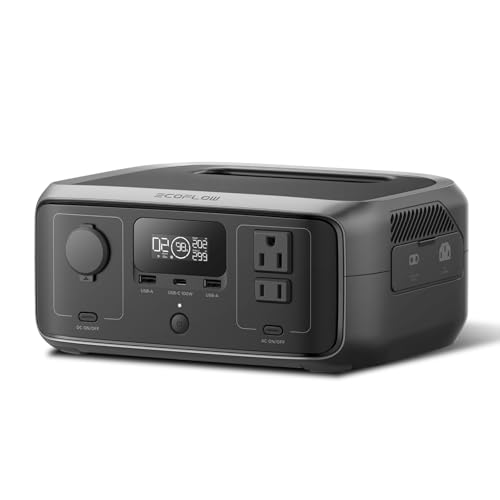
EcoFlow RIVER 3

Watt & Warden earns a commission on qualifying purchases made through links on this page, at no extra cost to you. It never changes a ranking, and our picks include products we tell you to skip. Full disclosure.

Quick picks

#ProductBest forPrice
1
EcoFlow RIVER 3

Best overall for a yard display

EcoFlow RIVER 3

245Wh against a published 4.8W per 100-count LED set is roughly ten evenings of a 500-bulb display before it needs a charge.

An LED display on a timer, four to six hours a night
$249.00 · Check price on Amazon

#ad how this is funded · price as of November 7, 2026 · $299.00 17% off

2
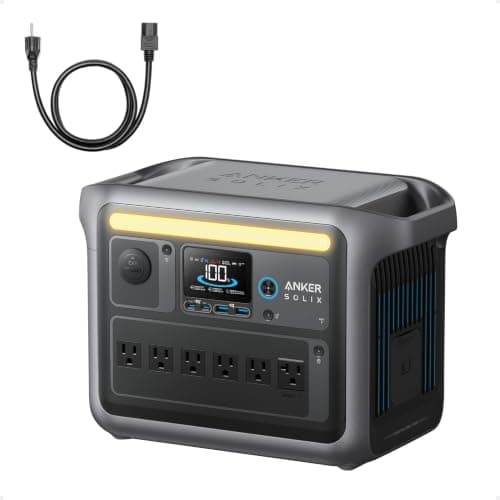
Anker SOLIX C1000

Best for a display with an inflatable

Anker SOLIX C1000

1,056Wh and 1,800W — the capacity to run a blower all evening and the headroom to start it.

Blow-up decorations, projectors and mixed displays
$499.99 · Check price on Amazon

#ad how this is funded · price as of November 7, 2026 · $599.99 17% off

3
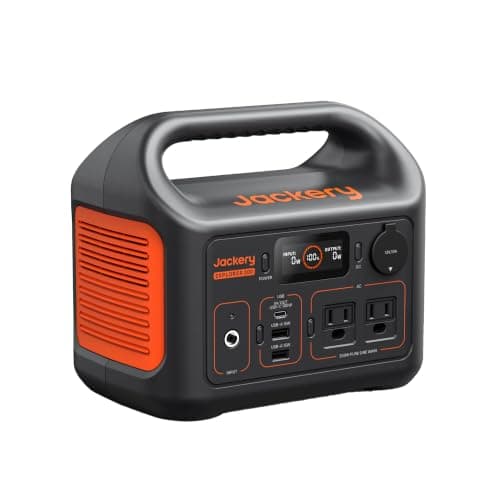
Jackery Explorer 300

Best for a single tree or a wreath

Jackery Explorer 300

292Wh and 300W — plenty for several hundred LEDs, and light enough to move with the decoration.

One decorated tree, a porch, or a window display
$289.00 · Check price on Amazon

#ad how this is funded · price as of November 7, 2026

4
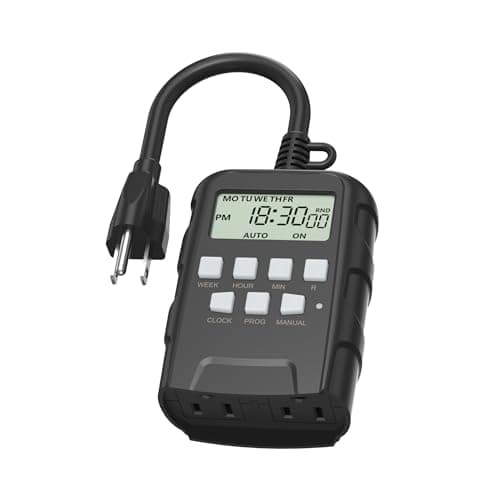
BN-LINK outdoor 7-day programmable timer, 2 outlets

The accessory that doubles your runtime

BN-LINK outdoor 7-day programmable timer, 2 outlets

A 7-day outdoor timer with 8 on/off programs — the cheapest watt-hours on this page, because the ones you never spend are free.

Anyone running a display from a battery at all
$15.99 · Check price on Amazon

#ad how this is funded · price as of November 7, 2026

5
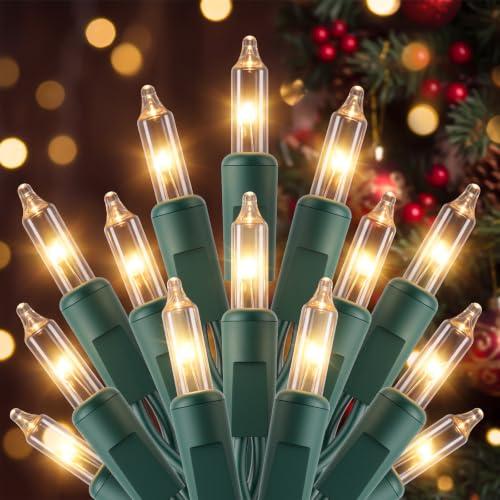
Minetom LED Christmas lights, 100 count, 20 ft

The light set the arithmetic is built on

Minetom LED Christmas lights, 100 count, 20 ft

A connectable 100-count LED set — the unit that turns a 40.8W string into a 4.8W one.

Replacing an incandescent display you are tired of powering
$9.99 · Check price on Amazon

#ad how this is funded · price as of November 7, 2026

6
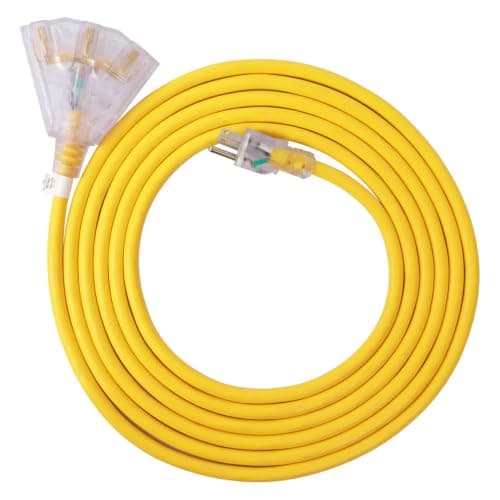
EP 25 ft outdoor extension cord, 14/3 SJTW, 3 outlets

Best way to get the power to the yard

EP 25 ft outdoor extension cord, 14/3 SJTW, 3 outlets

25 ft of 14/3 SJTW with three outlets — the cord that lets a station sit in the garage instead of in the snow.

Keeping the battery indoors and the display outdoors
$23.99 · Check price on Amazon

#ad how this is funded · price as of November 7, 2026

7
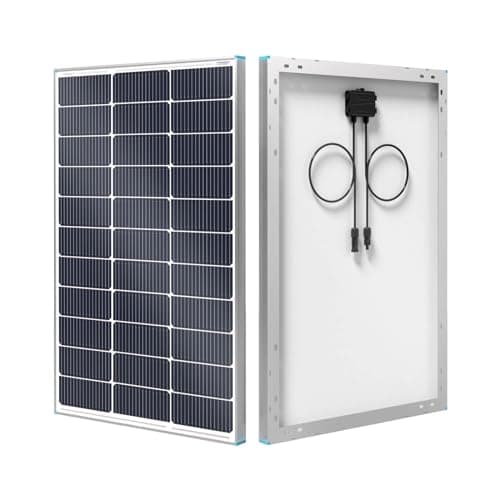
Renogy 100W N-Type Monocrystalline Solar Panel

Best for a display that never comes indoors

Renogy 100W N-Type Monocrystalline Solar Panel

100W of panel, which on a short December day is enough to put back what a modest LED display spends overnight.

A display at a cabin, a fence line or a far corner of a lot
$89.99 · Check price on Amazon

#ad how this is funded · price as of November 7, 2026 · $99.29 9% off

Prices come from the retailer at page-build time and change constantly. Where no live price is available the button reads “Check price” rather than showing a number we cannot stand behind.

The verdict, in one paragraph

If your display is LEDs on a timer, buy the smallest station with a real AC outlet — around 250Wh — and spend the difference on the timer. A published 100-count LED set draws 4.8W, so 500 bulbs for five hours is 120Wh a night, and a 245Wh battery covers two evenings on one charge. If there is an inflatable in the display, skip straight to 1,000Wh, because a blower motor runs continuously and surges on start.

The per-set wattage, published

These are retail electrical ratings, not estimates, and they are the entire reason this is cheap to do.

SetPublished drawSets you may connect
100-count clear incandescent mini120V, 0.34A, 40.8 WUp to 5 (210 W cap)
100-count LED mini120V, 0.04A, 4.8 WUp to 43 (210 W cap)

Note the right-hand column: both sets stop at the same 210W end-to-end cap, but the LED set reaches it after 43 strings rather than 5. That cap is a wiring limit on the string, not a limit on your battery, and it applies whether you plug into a wall or a power station. The full wattage breakdown goes through it properly.

How many evenings a battery gives you

Five hours a night, which is what a timer set to dusk-plus-five delivers. Capacity divided by nightly spend, rounded down.

DisplayPer night245 Wh1,056 Wh
300 LEDs (3 sets)72 Wh3 nights14 nights
500 LEDs (5 sets)120 Wh2 nights8 nights
1,000 LEDs (10 sets)240 Wh1 night4 nights
300 incandescent (3 sets)612 WhUnder 1 night1 night
500 LEDs + one inflatable blowerRoughly 400-600 WhNot viableAbout 2 nights

The inflatable row is the only one with a range rather than a figure, because blower wattage is almost never published on the box. Measure it with a plug-in meter before you plan around it.

Three things that go wrong

  • The battery sits outside. Power stations are indoor objects. Lithium loses capacity in the cold and most units refuse to charge below freezing. Keep it in the garage and run a cord out.
  • Nobody uses a timer. A display left on from dusk to dawn spends two to three times what the same display on a timer spends, for an audience of nobody.
  • The inverter is left switched on. An idle inverter burns watts doing nothing. If your station lets you schedule or auto-off the AC port, use it; if not, the external timer does the same job from the other side.

Battery, or run a proper outdoor circuit?

Worth saying plainly: if you decorate the same yard every year and there is no exterior outlet, an electrician adding one weatherproof GFCI receptacle is a permanent fix and will likely cost less than the 1,000Wh station.

The battery wins in three situations: a rented property where you cannot alter the wiring, a display somewhere with no service at all — a fence line, a dock, a cabin — and a household that wanted a power station anyway and is glad of a December use for it. If you are in the last group, buy it for the outage first and let the lights be the bonus.
The picks in full

01 — Best overall for a yard display

EcoFlow RIVER 3

245Wh against a published 4.8W per 100-count LED set is roughly ten evenings of a 500-bulb display before it needs a charge.

Start with the number that decides everything. A published 100-count LED mini set draws 4.8W. Five of them — 500 bulbs, enough for a tree and a porch rail — is 24W. Run that five hours a night and the display costs 120Wh an evening.

245Wh therefore covers two full evenings outright, and with a daytime charge from the house it covers the season. This is the smallest station on the page that still has a real AC outlet, which is the one thing a light display actually needs.

The honest catch: 550W of inverter rules out an inflatable with a blower motor, and rules out any incandescent display of meaningful size.

Skip it ifyour display is incandescent. At 40.8W per set this lasts about one evening.

EcoFlow RIVER 3
$249.00 · Check price on Amazon

#ad how this is funded · price as of November 7, 2026 · $299.00 17% off

Published specifications for the EcoFlow RIVER 3
SpecificationPublished figure
Capacity245 Wh
AC output550 W, X-Boost to 600 W
Cell chemistryLiFePO4 (LFP)
AC rechargeFull in about 1 hour
Listed forCamping, RVs and home use

Source: EcoFlow — RIVER 3 retail listing (245Wh, 550W, X-Boost 600W, 1-hour fast charge, LiFePO4). These are the manufacturer's published figures, not ours — we have not tested this unit.

02 — Best for a display with an inflatable

Anker SOLIX C1000

1,056Wh and 1,800W — the capacity to run a blower all evening and the headroom to start it.

Inflatables are the load that breaks the small-battery plan. A blower runs continuously the whole time the thing is up, and it is a motor, so it draws a surge on start.

1,800W continuous with a published 2,400W peak handles that comfortably, and 1,056Wh means you are not rationing. The published 58-minute recharge means it is full again before the next evening even if you forget it overnight.

The honest catch: this is a serious home-backup battery doing seasonal duty. If you want one object that does both jobs, that is a good reason; if you only want lights, it is too much.

Skip it ifyour display is strings of LEDs only. You are buying four times the battery you need.

Anker SOLIX C1000
$499.99 · Check price on Amazon

#ad how this is funded · price as of November 7, 2026 · $599.99 17% off

Published specifications for the Anker SOLIX C1000
SpecificationPublished figure
Usable capacity1,056 Wh
Cell chemistryLiFePO4 (LFP)
AC output1,800 W continuous / 2,400 W SurgePad
Cycle life3,000 cycles
Wall recharge80% in 43 min, full in 58 min
Max solar input600 W (full solar recharge ~1.8 h)
Ports11 total, including 6 AC on panel-equipped bundles

Source: Anker — SOLIX C1000 product specifications. These are the manufacturer's published figures, not ours — we have not tested this unit.

03 — Best for a single tree or a wreath

Jackery Explorer 300

292Wh and 300W — plenty for several hundred LEDs, and light enough to move with the decoration.

292Wh of LiFePO4, which at 4.8W per 100-count LED set is about twelve hours of a 500-bulb display — two and a half evenings on one charge.

Its virtue in this job is that it is small enough to live inside the porch, under the tree or behind the planter, rather than being a thing you have to hide.

The honest catch: 300W of inverter is a hard ceiling. Six incandescent sets would exceed it outright, and an inflatable is out of the question.

Skip it ifyou are running anything with a motor.

Jackery Explorer 300
$289.00 · Check price on Amazon

#ad how this is funded · price as of November 7, 2026

Published specifications for the Jackery Explorer 300
SpecificationPublished figure
Usable capacity292 Wh
AC output300 W
ClassSmall station for electronics, lights and a CPAP

Source: Jackery — Explorer 300 product page. These are the manufacturer's published figures, not ours — we have not tested this unit.

05 — The light set the arithmetic is built on

Minetom LED Christmas lights, 100 count, 20 ft

A connectable 100-count LED set — the unit that turns a 40.8W string into a 4.8W one.

The single biggest change you can make to a battery-powered display is not the battery. ENERGY STAR publishes that LED light strings use about 92% less energy than incandescent, and the per-set figures bear it out: 40.8W for a published 100-count incandescent set against 4.8W for a published 100-count LED set.

That factor of eight-and-a-half is the difference between a battery that lasts the evening and one that lasts the fortnight.

The honest catch: the listing does not publish a wattage for this specific set. The 4.8W figure above comes from a published 100-count LED set's own electrical rating, which is typical for the class but is not this product's own number.

Skip it ifyou already run LEDs. There is nothing to gain from swapping like for like.

Minetom LED Christmas lights, 100 count, 20 ft
$9.99 · Check price on Amazon

#ad how this is funded · price as of November 7, 2026

Published specifications for the Minetom LED Christmas lights, 100 count, 20 ft
SpecificationPublished figure
Count100 LEDs
Length20 ft
WeatherWaterproof, per the listing
ConnectableYes — sets join end to end
ColorWarm white, green wire
WattageNot stated in the listing we checked

Source: Minetom — 100-count LED Christmas light set listing (20 ft, waterproof, connectable, warm white). These are the manufacturer's published figures, not ours — we have not tested this unit.

06 — Best way to get the power to the yard

EP 25 ft outdoor extension cord, 14/3 SJTW, 3 outlets

25 ft of 14/3 SJTW with three outlets — the cord that lets a station sit in the garage instead of in the snow.

Almost no power station carries an ingress rating. The practical answer is to keep the battery under cover and run the cord out, which is also better for the cells: lithium behaves far worse at -10 degC than it does at 10 degC.

Three outlets on the far end means one cord serves a tree, a rail and a wreath without a daisy chain of adapters in the wet.

The honest catch: 25 ft is short for a large yard, and chaining two cords is exactly the practice that starts fires. Buy the length you actually need.

Skip it ifthe battery will be outside anyway in a weatherproof box.

EP 25 ft outdoor extension cord, 14/3 SJTW, 3 outlets
$23.99 · Check price on Amazon

#ad how this is funded · price as of November 7, 2026

Published specifications for the EP 25 ft outdoor extension cord, 14/3 SJTW, 3 outlets
SpecificationPublished figure
Length25 ft
Gauge14/3 (14 AWG, 3 conductor)
JacketSJTW, rated for outdoor use
Outlets3
Plug3-prong grounded
RatingNot stated in the listing title we checked

Source: EP — 25 ft 14/3 outdoor extension cord retail listing. These are the manufacturer's published figures, not ours — we have not tested this unit.

07 — Best for a display that never comes indoors

Renogy 100W N-Type Monocrystalline Solar Panel

100W of panel, which on a short December day is enough to put back what a modest LED display spends overnight.

A 500-bulb LED display on a five-hour timer spends about 120Wh a night. A 100W panel in December, where the sun is low and the day is short, will not make its rated 100W — but two to four useful hours of winter sun is still 100 to 200Wh.

That is the break-even point, and it is why a solar top-up works for a lights display when it would be useless for a refrigerator.

The honest catch: an overcast week in December will not keep up, and a panel under snow produces nothing at all. Treat it as a top-up, not a supply.

Skip it ifyou can carry the battery to an outlet. A wall socket is faster and free.

Renogy 100W N-Type Monocrystalline Solar Panel
$89.99 · Check price on Amazon

#ad how this is funded · price as of November 7, 2026 · $99.29 9% off

Published specifications for the Renogy 100W N-Type Monocrystalline Solar Panel
SpecificationPublished figure
Rated output100 W
Cell typeN-type monocrystalline, 16BB
Conversion efficiencyUp to 25%
Ingress ratingIP67
DesignSmaller and lighter than the previous generation, per the listing
Nominal system voltageNot stated in the listing we checked

Source: Renogy — 100W N-type 16BB solar panel retail listing. These are the manufacturer's published figures, not ours — we have not tested this unit.

How these were chosen

We did not test these. Nobody at Watt & Warden has plugged one in. What we did instead: read the manufacturer's published specifications, compile them into a table where the figures line up, and compute the numbers manufacturers leave out — runtime against a real appliance load, and what an hour of running actually costs.

Anything that could not be sourced was left out rather than estimated, and every pick names the buyer who should skip it. The full method is here, including where it is weaker than a publisher with a test bench.

Questions people actually ask

Can a power station run Christmas lights?

Easily, if the lights are LED. A published 100-count LED mini set draws 4.8W, so 500 bulbs is 24W and a 245Wh station runs them for about ten hours -- two evenings on a timer. Incandescent sets are a different problem: the same published source gives 40.8W per 100-count set, eight and a half times as much.

What size power station do I need for outdoor Christmas lights?

Work out the nightly spend first. Sets multiplied by watts multiplied by hours. A 500-bulb LED display on a five-hour timer is 120Wh a night, so 245Wh covers two nights and 1,056Wh covers eight. Add an inflatable and you need 1,000Wh or more, because a blower motor runs the whole time and surges on start.

How long will a battery run Christmas lights?

Divide capacity by draw. 245Wh of battery against a 24W display of 500 LEDs is about ten hours. Against a 122W display of 300 incandescent bulbs it is two hours. The lights you chose matter more than the battery you buy.

Can I leave a power station outside in winter?

It is not a good idea. Almost no power station publishes an ingress rating, and lithium cells lose usable capacity in the cold -- most units refuse to charge at all below freezing. Keep the station under cover and run a 14-gauge outdoor extension cord to the display.

How many Christmas light sets can I connect end to end?

That limit comes from the string, not the battery. Published retail sets state a 210-watt end-to-end cap: up to 5 connected incandescent sets, or up to 43 LED sets. Exceeding it overloads the wiring in the string regardless of what is supplying the power.

Is solar worth it for a Christmas display?

For a modest LED display, yes -- it is one of the few seasonal loads small enough for a 100W panel to keep up with. A 500-bulb display spends about 120Wh a night, and even a short December day of two to four useful hours puts back 100 to 200Wh. For an incandescent display or anything with a motor, no.

Sources